
Hanbel: The Moroccan Flat-Woven Blanket Rug
Last updated
A hanbel is a flat-woven wool textile from Morocco, made without pile. The word covers a family of pieces that served as blankets, bed and bench covers, tent hangings and floor rugs, and they are some of the most finely worked textiles of the Moroccan countryside. Abroad they are usually sold as Moroccan kilims. They are lighter, thinner and more intricate than the country's pile rugs, and they are used differently. This page explains what a hanbel is, the styles you are likely to meet, how to use and care for one, and what we can and cannot offer.
What a hanbel is
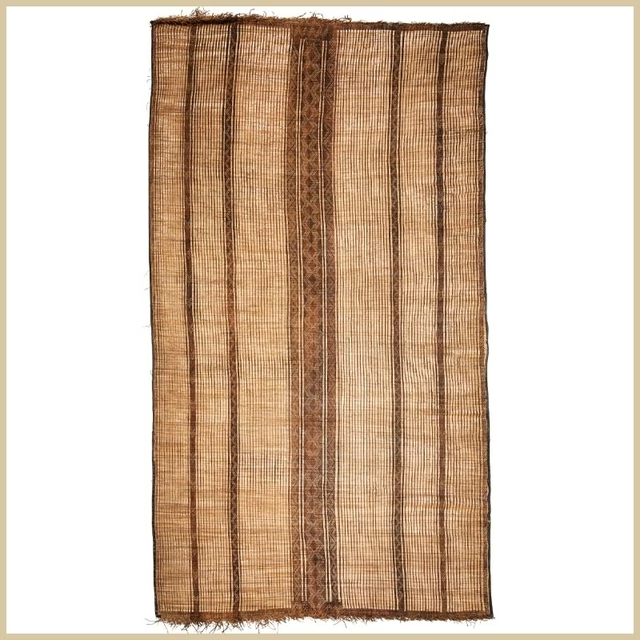
It is woven, not knotted. Coloured wefts are packed down over the warps to form bands, and small geometric motifs are often added in a supplementary technique that stands slightly proud of the surface. The cloth is thin enough to fold and drape.
A typical hanbel is long in proportion and banded across its width: plain stripes alternate with bands of tiny diamonds, zigzags and chevrons. Red grounds are common, with pattern in white, black, yellow and green. Some carry sequins, or rows of small wool tufts.
Regional styles
The best known are those of the Zemmour, between Rabat and Meknes: red, densely banded and very fine. Tribes of the Middle Atlas made heavier pieces, sometimes with strips of pile. From the south come black and white banded weaves that are often sold as Zanafi.
Attribution is rarely certain. The same motifs travel, and dealers' labels are approximate. As with pile rugs, it is wiser to judge the piece in front of you, its fineness, condition and colour, than to rely on a name.
Using a hanbel
As a rug, a hanbel suits places where a thin, light textile is an advantage: a bedroom, a study, a hallway with little traffic, under a table. It needs a non-slip pad, and it is not a rug for boots or dogs.
Many people use them as they were first used: as a bedspread, a throw over a sofa or a bench, or a wall hanging. Hung behind a bed or along a corridor, the fine banding can be seen properly, and the piece is spared wear.
Care
Shake a hanbel out regularly and vacuum it lightly with suction only, through a mesh screen if it has sequins or tufts. Keep it out of strong sun, which fades reds. When it is stored, fold it along different lines each time and protect it against moths, since a folded wool textile left undisturbed is exactly what they look for.
Do not machine-wash it. Blot spills with cold water and a little wool detergent, and take anything serious to a specialist textile cleaner. Old pieces with weak areas should be backed with cloth before they are hung.
The hanbel and our collection
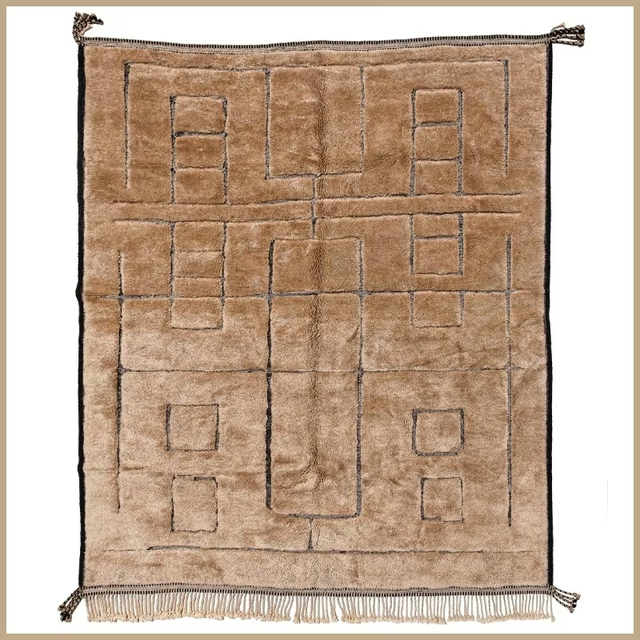
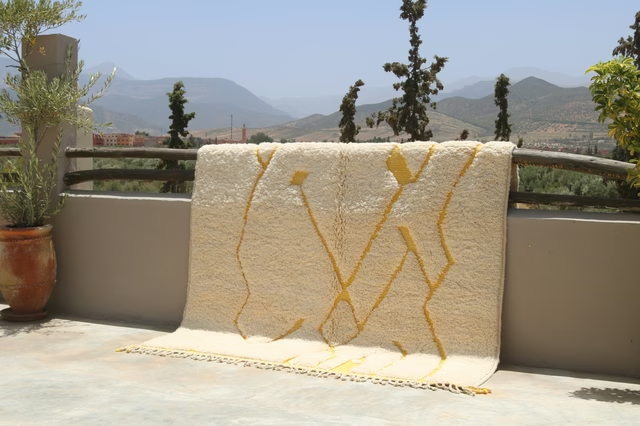
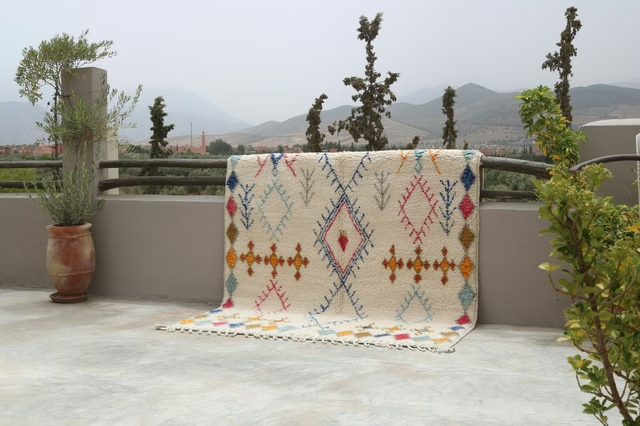
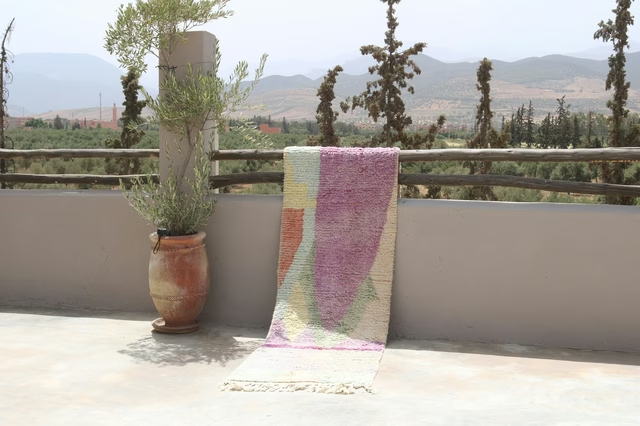
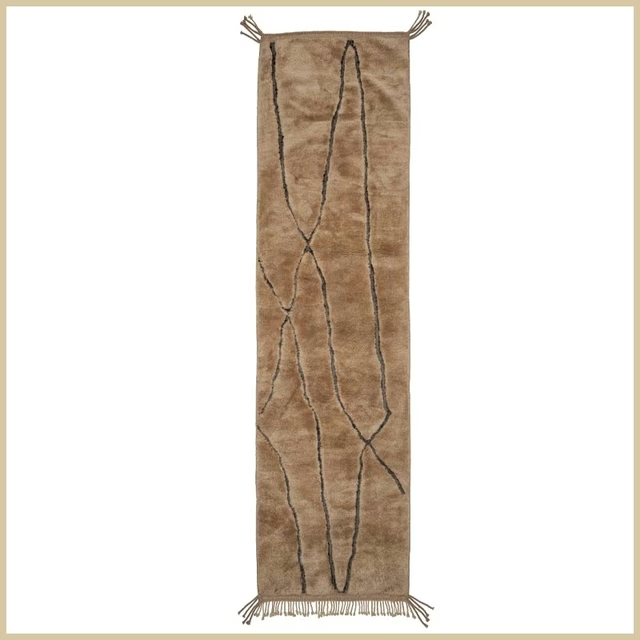
We do not stock hanbels. Our collection is hand-knotted pile rugs only, 275 of them, and the rugs shown on this page come from it. We describe the hanbel here because people looking for Moroccan textiles ought to know the difference before they buy.
If you want the colour and close pattern of a hanbel in a pile rug, look at the Azilal rugs. Our bespoke studio also includes a banded Zanafi pattern. Each rug is one of a kind, with its exact measurements on its own page. Delivery is free worldwide, duties and taxes included.
What you can verify about us
- Origin
- Made in MoroccoHand-knotted Berber rugs from the Atlas regions. Every rug is one of a kind.
- Construction
- Hand-knotted woolVerified at every stage — never machine-tufted.
- Delivery
- Duties includedFree shipping; import duties and taxes are included in the price.
- Returns
- 14 daysIn condition received, full refund of the purchase price.
Frequently Asked
Questions
- What is a hanbel?
- A Moroccan flat-woven wool textile without pile, used as a blanket, cover or rug.
- Is a hanbel the same as a kilim?
- It is the Moroccan equivalent. Kilim is the Turkish term for a flat weave.
- Can a hanbel be used on the floor?
- Yes, in rooms with little traffic, with a non-slip pad. Many are better used as covers or wall hangings.
- Do you sell hanbels?
- No. We sell hand-knotted pile rugs.
Sources & References
What this page rests on
- 1. Bayram Demiral — Kilimin Ekfrasis ve Göstergelerarasılık Bağlamında Kullanımı (Usage of Rug in the Context of Ekphrasis and Intersemiotics)Academic analysis of kilim weaving in literary and visual semiotic context.
- 2. Musée du Quai Branly — Jacques Chirac (Paris) — Berber and North African textile collectionMajor French museum holding of Berber and Maghreb weaving traditions.
- 3. Bruno Barbatti — textile historian — Tapis du Maroc — Le langage des symboles (1996) — Scheidegger & SpiessThe reference work on the symbolic vocabulary of Berber rug motifs.
- 4. Cynthia Becker — Boston University — Amazigh Arts in Morocco: Women Shaping Berber Identity (2006) — University of Texas PressAnthropological study of Atlas weaving as Amazigh women's craft tradition.

The person behind the piece
“Before you buy, I’ll send you a video of the actual rug in natural light — not a stock photo. I answer the messages myself.”
I’m Youssef. I started ARINID because this market is full of middlemen and machine-made imitations sold as the real thing — and I grew up close enough to the looms to know the difference.
Every piece we list is one of a kind, hand-knotted in Morocco. If you want to talk through sizing for your room, I’m on the other end of the message. A rug at this level is a thirty-year decision. You should be able to look the person selling it to you in the eye.
Youssef
Founder, ARINID
The next step
See every rug we currently offer
Each piece is hand-knotted in Morocco and delivered to your door, with shipping, duties and taxes included.