Taznakht Carpet: The Fine-Wool Rugs of the Siroua Mountains
A Taznakht carpet takes its name from a small market town south of the High Atlas, on the road between Ouarzazate and the Souss. It is the market where the rugs of the surrounding mountains have long been gathered and sold, and its name has become shorthand for the whole region. Taznakht rugs are finer, flatter and more precisely drawn than the deep-pile rugs of the Middle Atlas, and they are the Moroccan rugs most often compared to tribal carpets from further east. This page explains where they come from, how they are made, and what to check before buying one.
From the Atelier
Currently in our collection
Where Taznakht is, and who weaves there
Taznakht lies in Ouarzazate province, in the dry country between the Jebel Siroua and the Anti-Atlas. The weavers belong to the Aït Ouaouzguite, a confederation of Berber tribes whose villages are scattered across the Siroua massif. Rugs come down from those villages to the Taznakht market, which is why dealers speak of Taznakht rugs, Aït Ouaouzguite rugs and Siroua rugs almost interchangeably.
The region has one advantage every weaver in Morocco knows about: its wool. The small Siroua sheep gives a long, fine, lustrous fleece, and a rug made from it has a sheen and a suppleness that coarser mountain wool cannot match. Weaving here is still village work, done at home on upright looms.
Three techniques, sometimes in one rug
The first is flat weave, with no pile at all: thin, light, tightly packed, close to a kilim. The second is knotted pile, clipped short, so that the drawing stays crisp. Compared with a Beni Ourain, a Taznakht pile rug is thin underfoot and far more detailed.
The third is the one the region is known for. A Glaoua rug combines flat-woven bands, bands of knotted pile and rows of twining in a single piece, so the surface rises and falls as you cross it. The name comes from the Glaoui lords who once ruled this side of the Atlas. No other Moroccan weaving puts three textures side by side in this way.
Colour and drawing
Where the Middle Atlas works in cream and a few dark lines, Taznakht works in colour. Saffron yellow is the signature, set against madder red, orange, black and the white of the wool. Older pieces were dyed with plants: saffron and pomegranate for yellow, madder for red, henna for orange. Much of today's production uses synthetic dyes, and a good seller will say which.
The drawing is small, dense and orderly. Diamonds, triangles, combs and stepped figures are arranged in bands or inside a framed field, often with a border, which is rare elsewhere in Berber weaving. The effect is closer to a page of careful handwriting than to the loose sketch of an Azilal.
How to judge one
Turn it over. On a knotted or mixed-technique rug the back should show the pattern clearly, in small knots that are never perfectly even, with no cloth glued on. Run your hand across the face: Siroua wool feels smooth and slightly cool, with a soft shine, not dry or chalky. A flat weave should be firm and tight enough that you cannot easily push a finger between the wefts.
Ask about age and dyes. The word vintage is used loosely, and a rug of ten years is not an old rug. Very even, very bright colour usually means synthetic dye, which is not a fault but should be stated. Check the edges and ends, where a thin rug wears first, and expect a rug of this kind to need a non-slip underlay on a smooth floor.
Where a Taznakht rug works
Because it is thin, it goes where a deep-pile rug cannot. Doors clear it. Dining chairs slide across it and crumbs stay on the surface. It suits a hallway, a study, a dining room, or a wall, where the fine drawing can be read like a textile. Under a sofa it gives pattern and colour without height.
It is not the rug to sink bare feet into. For softness and warmth in a living room or bedroom, the thick wool of the Middle Atlas does that job better. Many houses use both: a deep rug where people sit, a flat one where they walk.
What we carry
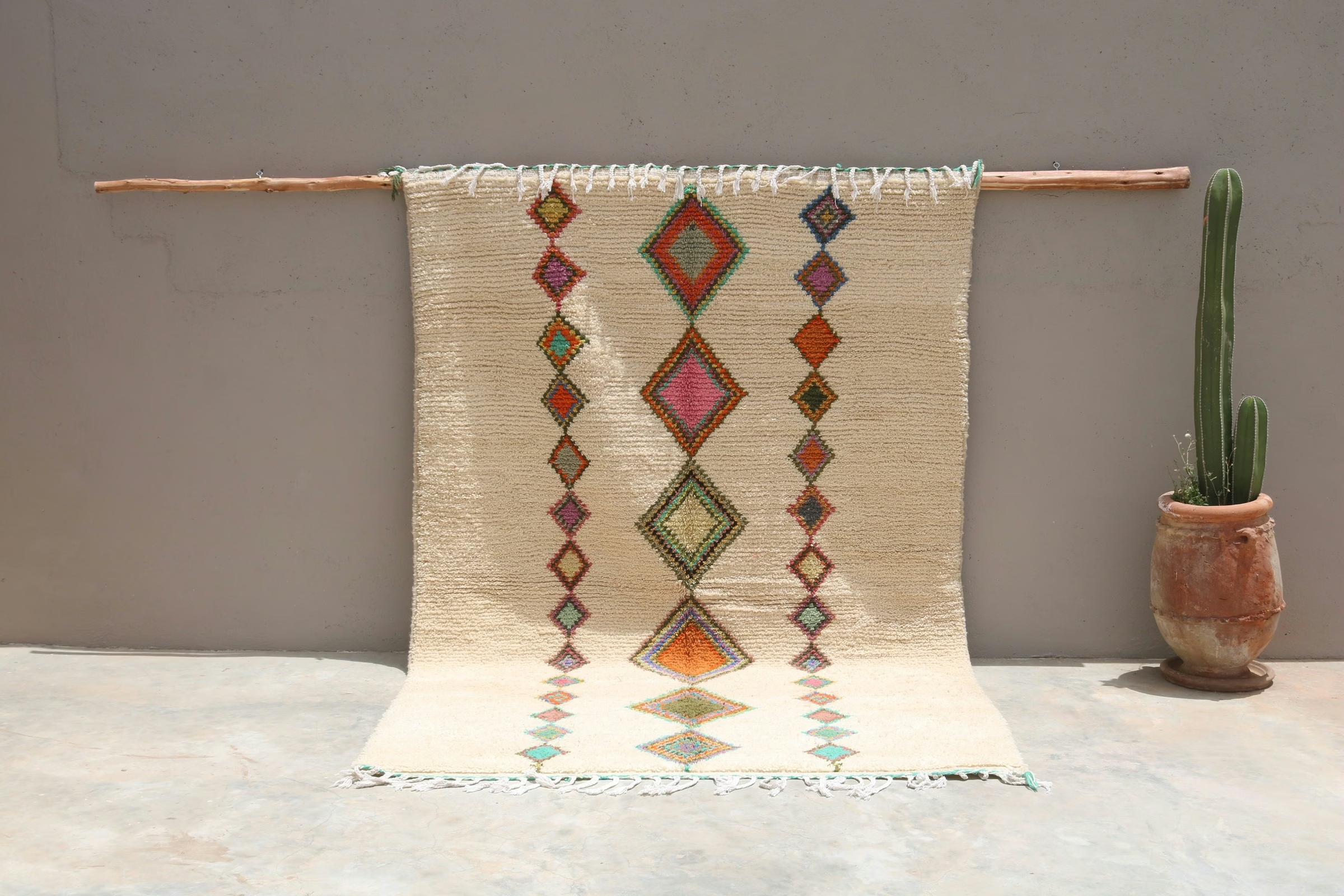
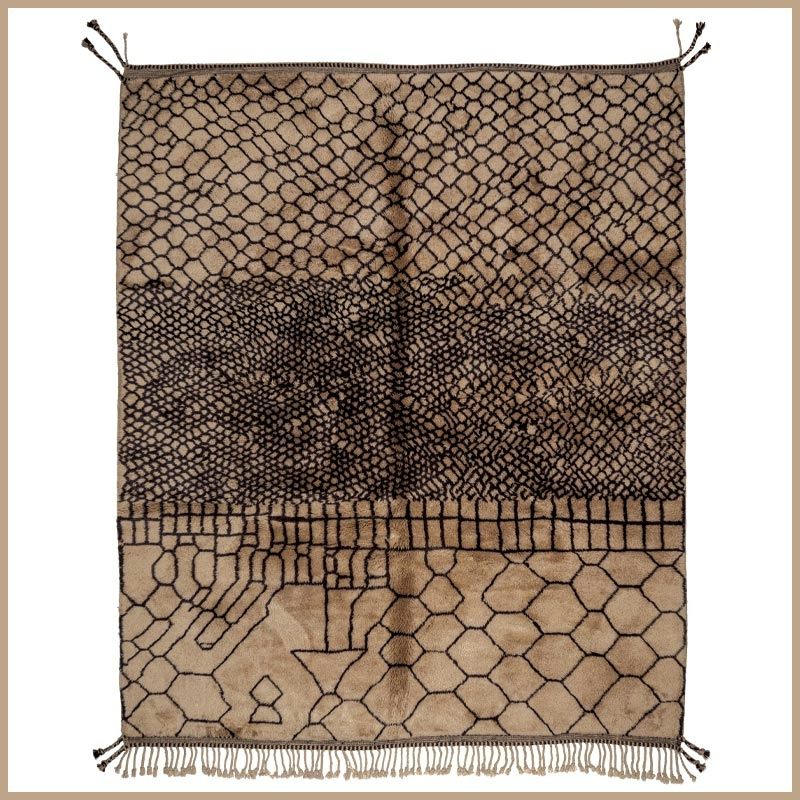
We do not stock Taznakht rugs at present. Our collection is hand-knotted pile from other regions: Beni Mrirt, dense and heavy with quiet surfaces; Azilal, from the High Atlas, with coloured signs on pale wool; Beni Ourain in ivory with dark diamonds; and Beni Mguild in deep red and blue. If it is the colour and the free drawing of the south that draws you, Azilal is the nearest relative we have.
Every rug is a single piece in wool, shown in its own photographs with its measured size. Delivery is free worldwide, duties and taxes included.
What you can verify about us
- Origin
- Made in MoroccoHand-knotted Berber rugs from the Atlas regions. Every rug is a one-off.
- Construction
- Hand-knotted woolVerified at every stage — never machine-tufted.
- Delivery
- Duties includedFree shipping; import duties and taxes are included in the price.
- Returns
- 14 daysIn condition received, full refund of the purchase price.
Frequently Asked
Questions
- What is a Taznakht carpet?
- A rug woven by the Aït Ouaouzguite tribes of the Siroua mountains in southern Morocco and traded through the town of Taznakht. It may be flat-woven, knotted with a short pile, or a mix of both.
- How is a Taznakht rug different from a Beni Ourain?
- A Beni Ourain is thick, cream and sparsely drawn. A Taznakht rug is thin, colourful and finely detailed, often with a border, and made from the finer wool of the Siroua sheep.
- What is a Glaoua rug?
- A Taznakht-region rug that combines flat weave, knotted pile and twining in alternating bands, so that one piece has three textures.
- Are Taznakht rugs dyed with natural dyes?
- Older ones often were, with saffron, madder and henna. Much current production uses synthetic dyes. Ask the seller, and treat very bright, perfectly even colour as a sign of synthetic dye.
- Is a Taznakht rug good for a dining room?
- Yes. Flat-woven and short-pile pieces let chairs slide easily and keep crumbs on the surface, which makes them among the most practical Moroccan rugs under a table.

The person behind the piece
“Before you buy, I’ll send you a video of the actual rug in natural light — not a stock photo. I answer the messages myself.”
I’m Youssef. I started ARINID because this market is full of middlemen and machine-made imitations sold as the real thing — and I grew up close enough to the looms to know the difference.
Every piece we list is a one-off, hand-knotted in Morocco. If you want to talk through sizing for your room, I’m on the other end of the message. A rug at this level is a thirty-year decision. You should be able to look the person selling it to you in the eye.
Youssef
Founder, ARINID
The next step
See every rug we currently offer
Each piece is hand-knotted in Morocco and delivered to your door, with shipping, duties and taxes included.