
Kilim Rug or Knotted Pile: What the Difference Means at Home
Last updated
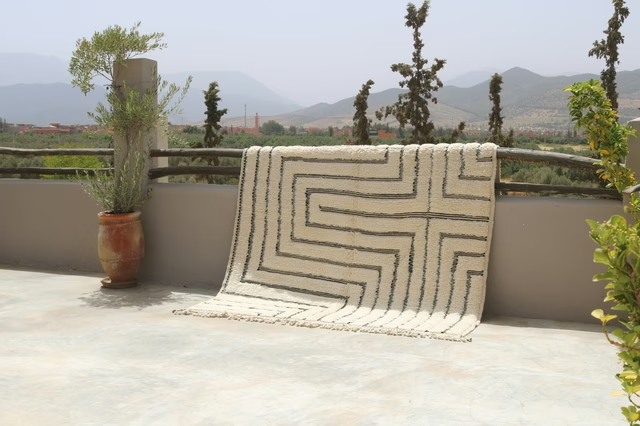
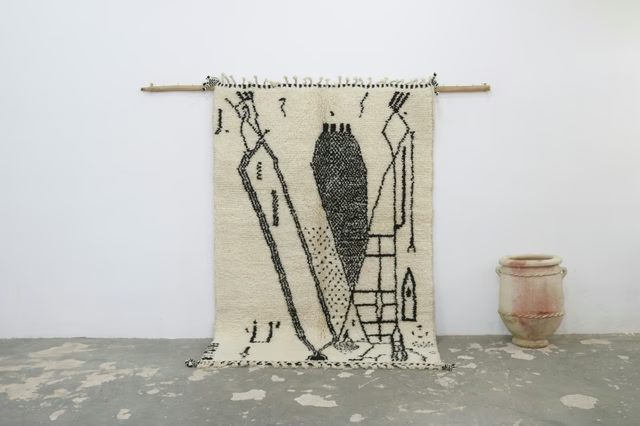
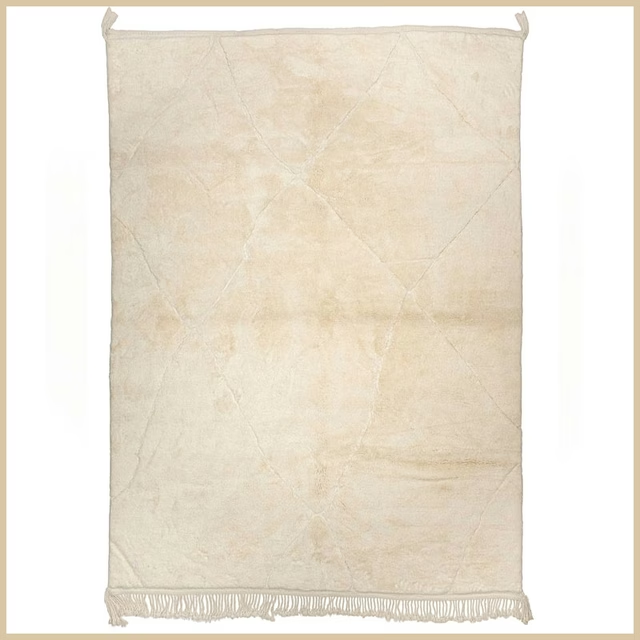
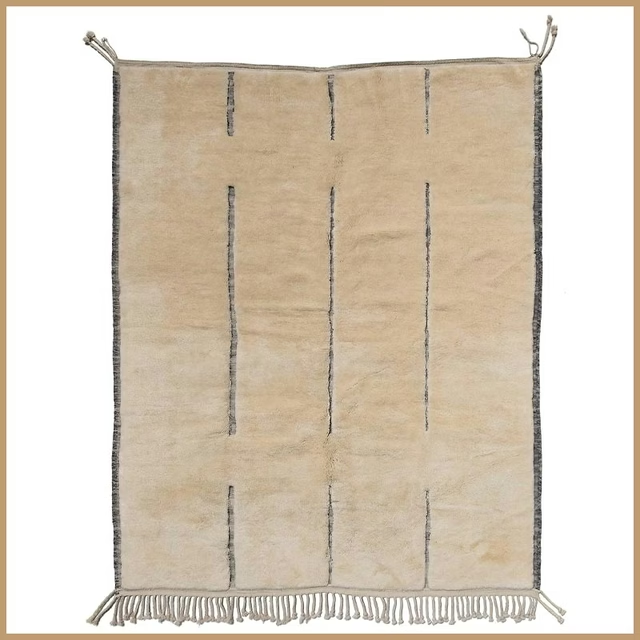
A kilim rug and a knotted pile rug are both made of wool on a loom, and that is where the likeness ends. A kilim is woven flat, like a heavy cloth: no pile, the same on both faces, thin enough to fold. A pile rug has thousands of knots tied onto its foundation, each leaving two tufts that stand up. One is light and graphic. The other is thick and warm. To be clear from the start, the rugs we hold in stock are knotted pile rugs from Morocco. This page explains the difference so you can decide which you need.
From the Atelier
Currently in our collection
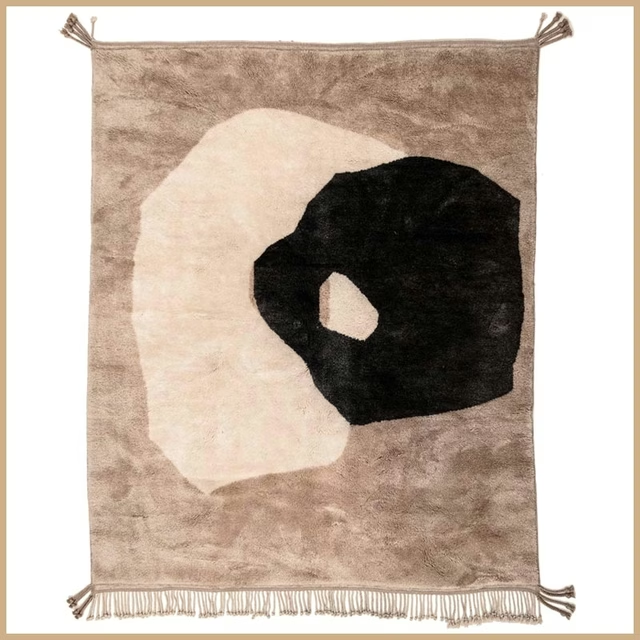
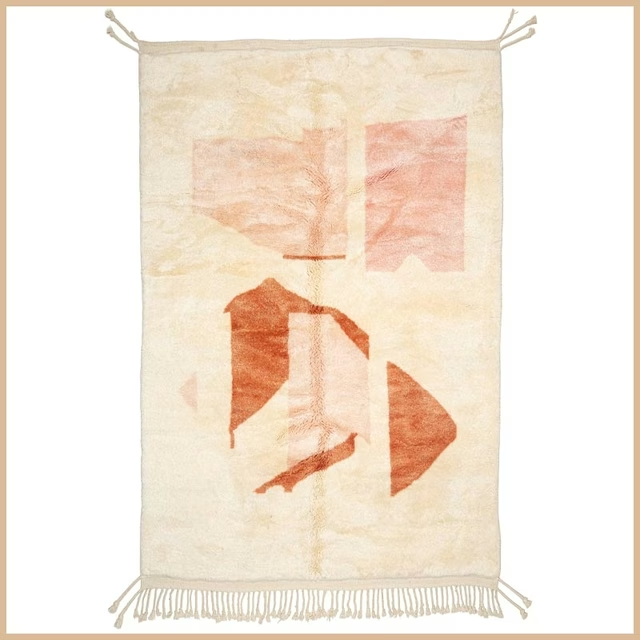
How a kilim is made
In a kilim, coloured weft threads are passed over and under the warps and beaten down until the warps disappear. The pattern is in the weave itself. Where two colours meet, the weaver turns each one back, which is why kilim designs are built from steps, diagonals and blocks and rarely from curves.
The result is a flat textile a few millimetres thick. It has no nap, so it looks the same from every direction, and many kilims can be used on either side. Morocco has its own flat-weaving traditions alongside its pile rugs, known by names such as hanbel and zanafi.
How a knotted pile rug differs
A pile rug begins with the same warps, but between rows of weft the weaver ties short lengths of wool around pairs of warps. Row after row, the cut ends build up into a surface you can sink your fingers into. A room-sized rug holds a very large number of knots, all tied by hand.
That pile is what makes the rug warm underfoot, quiet in the room and heavy enough to stay put. It also takes far longer to make. Pattern in a pile rug can be finer or freer than in a kilim, because each knot is an independent point of colour.
Which suits which room
A kilim is the practical choice under a dining table, where chairs must slide, in a hallway with a door that barely clears the floor, and in warm climates. It is easy to shake out and to move. It needs a non-slip pad, because a thin flat weave travels on a smooth floor.
A knotted rug is the better choice wherever you sit, lie or walk barefoot: living rooms, bedrooms, a child's room, a reading corner. It insulates a cold floor and softens sound in a way a flat weave cannot. In a house with several rooms, most people end up wanting both kinds.
Wear and care
Both are durable when made of good wool. A kilim shows wear as thinning along the lines people walk, and its edges need watching. A pile rug wears by the pile slowly lowering over decades, and it hides soil better because dirt sits down among the tufts.
Vacuum either with suction only. A kilim can be turned over to share the wear between its two faces. A pile rug should be rotated end to end twice a year. Neither should be machine-washed or steam-cleaned, and spills on both are treated the same way: blot, cold water, mild wool detergent.
What we offer
The rugs on this page are our whole collection, and all of them are knotted pile rugs: Beni Mrirt, Azilal, Beni Ourain and Beni Mguild. We do not hold flat weaves in stock, and we would rather say so here than let you search for one. If you came looking for a kilim for its patterns, the Azilal rugs, with their coloured diamonds and signs, are worth a look.
Our bespoke studio includes a Zanafi pattern, a design taken from Moroccan flat-woven rugs, which you can order in the size and colours you choose. Each rug in stock is one of a kind, with its exact measurements on its own page. Delivery is free worldwide, duties and taxes included.
What you can verify about us
- Origin
- Made in MoroccoHand-knotted Berber rugs from the Atlas regions. Every rug is one of a kind.
- Construction
- Hand-knotted woolVerified at every stage — never machine-tufted.
- Delivery
- Duties includedFree shipping; import duties and taxes are included in the price.
- Returns
- 14 daysIn condition received, full refund of the purchase price.
Frequently Asked
Questions
- What is the difference between a kilim and a rug?
- A kilim is flat-woven with no pile, thin and reversible. A knotted rug has a pile of wool tufts, which makes it thicker, warmer and heavier.
- Do you sell kilim rugs?
- No. Our stock is knotted pile rugs only. The bespoke studio includes a Zanafi pattern, a design taken from Moroccan flat-woven rugs.
- Is a kilim or a pile rug better for a dining room?
- A kilim or a low, dense pile. Chairs slide more easily and crumbs are simpler to remove.
- Are kilims durable?
- Yes, in good wool. They wear by thinning along walkways and can be turned over to spread the wear. Use a non-slip pad underneath.
Sources & References
What this page rests on
- 1. Bayram Demiral — Kilimin Ekfrasis ve Göstergelerarasılık Bağlamında Kullanımı (Usage of Rug in the Context of Ekphrasis and Intersemiotics)Academic analysis of kilim weaving in literary and visual semiotic context.
- 2. Musée du Quai Branly — Jacques Chirac (Paris) — Berber and North African textile collectionMajor French museum holding of Berber and Maghreb weaving traditions.
- 3. Metropolitan Museum of Art (New York) — Hanging (Arid), ca. 1800 — linen and silk plain weaveMet collection holding of c.1800 Arid weaving — precursor textile tradition to documented Berber rugs.
- 4. Bruno Barbatti — textile historian — Tapis du Maroc — Le langage des symboles (1996) — Scheidegger & SpiessThe reference work on the symbolic vocabulary of Berber rug motifs.
- 5. Wikipedia — Kilim

The person behind the piece
“Before you buy, I’ll send you a video of the actual rug in natural light — not a stock photo. I answer the messages myself.”
I’m Youssef. I started ARINID because this market is full of middlemen and machine-made imitations sold as the real thing — and I grew up close enough to the looms to know the difference.
Every piece we list is one of a kind, hand-knotted in Morocco. If you want to talk through sizing for your room, I’m on the other end of the message. A rug at this level is a thirty-year decision. You should be able to look the person selling it to you in the eye.
Youssef
Founder, ARINID
The next step
See every rug we currently offer
Each piece is hand-knotted in Morocco and delivered to your door, with shipping, duties and taxes included.