Beni Mrirt Rug: The Dense, Heavy Wool Rug of the Middle Atlas
A Beni Mrirt rug is the one you recognise with your hand before your eye. Press down and the pile pushes back: close, deep and springy, with a weight that keeps the rug flat on the floor without help. It comes from the country around Mrirt, a market town in the Middle Atlas of Morocco, and it is the youngest of the well-known Berber styles. Where a Beni Ourain is loose and shaggy, a Mrirt rug is tight and plush, and its drawing is pared back to almost nothing. This page explains where it comes from, how to judge one, and where it belongs in a house.
From the Atelier
Beni Mrirt Rug currently in our collection
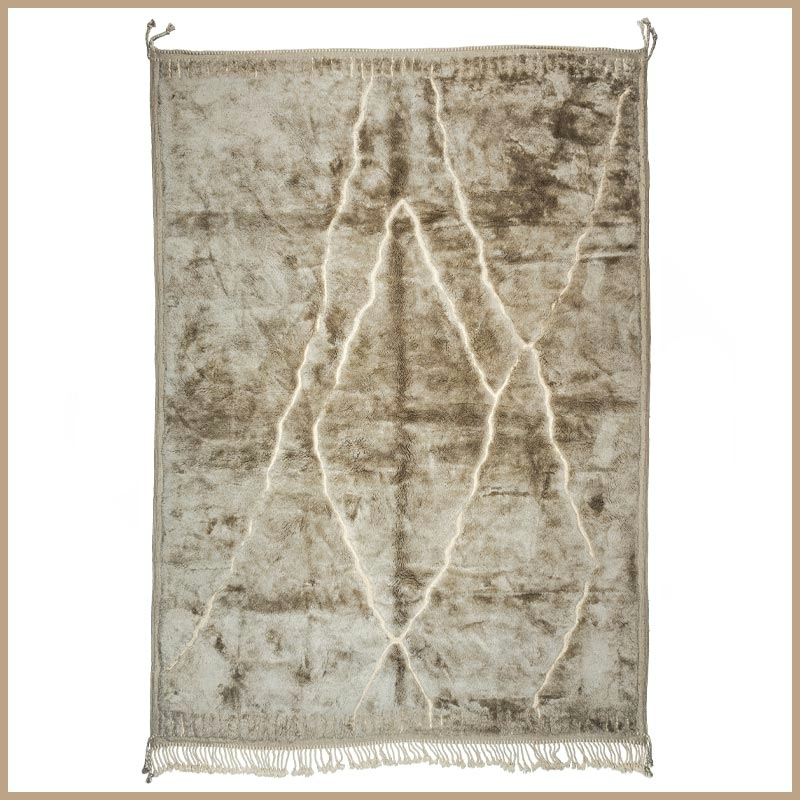
Beni Mrirt "Sage Highland"
423 × 302 cm
€6,075
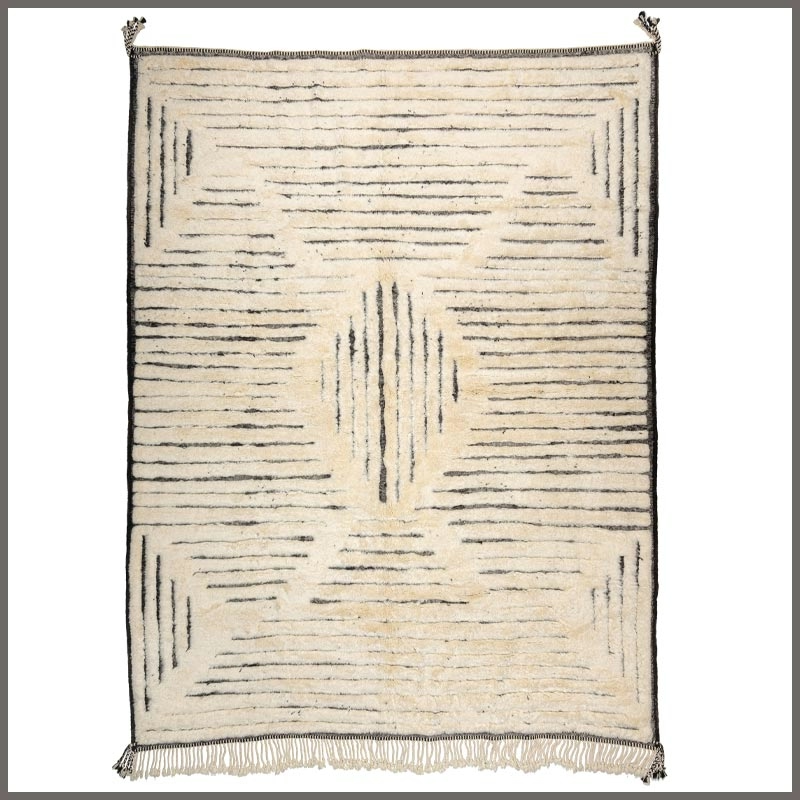
Beni Mrirt "Grand Warmth"
404 × 308 cm
€4,899
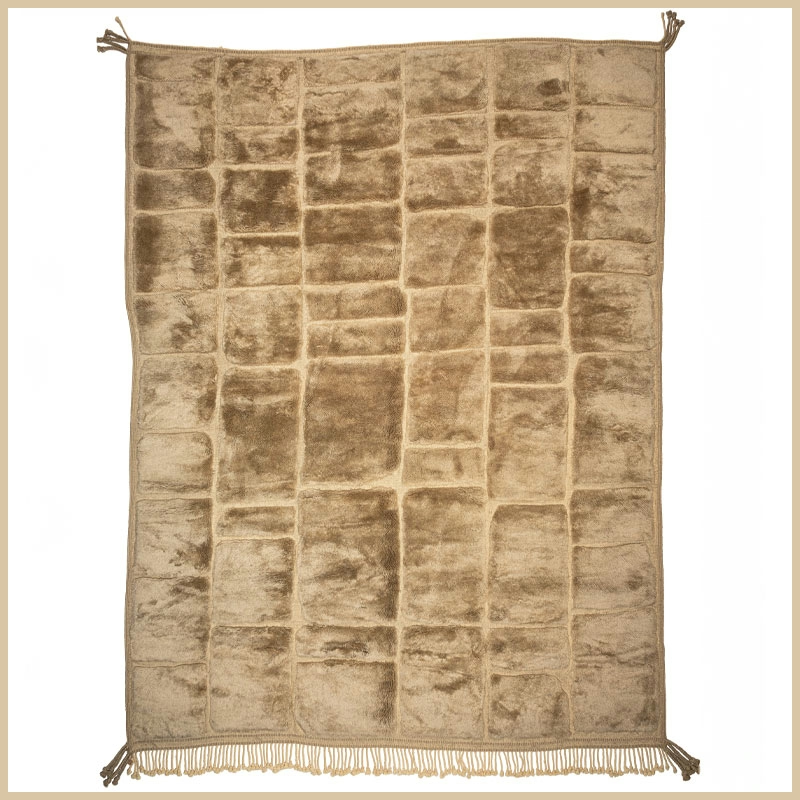
Beni Mrirt "Grand Camel"
406 × 311 cm
€5,978
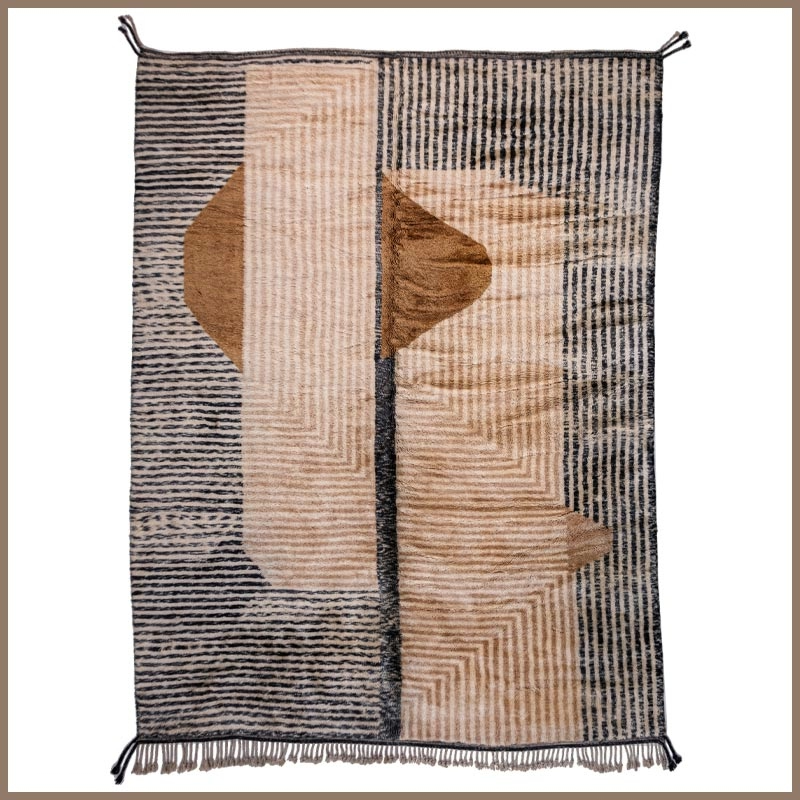
Beni Mrirt "Monumental Graphic"
420 × 320 cm
€5,308
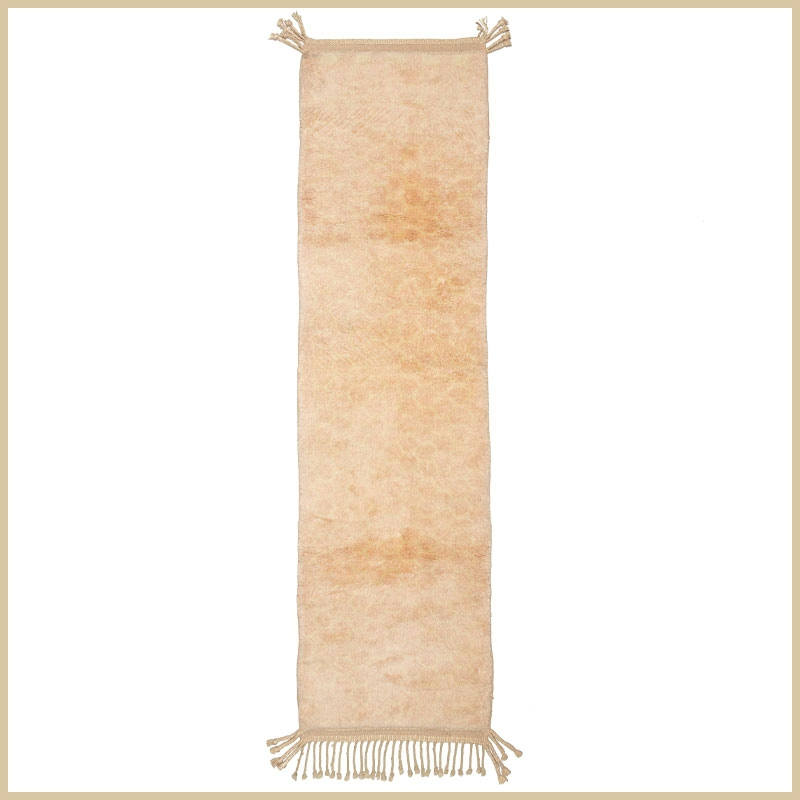
Beni Mrirt "Narrow Neutral"
298 × 80 cm
€1,629
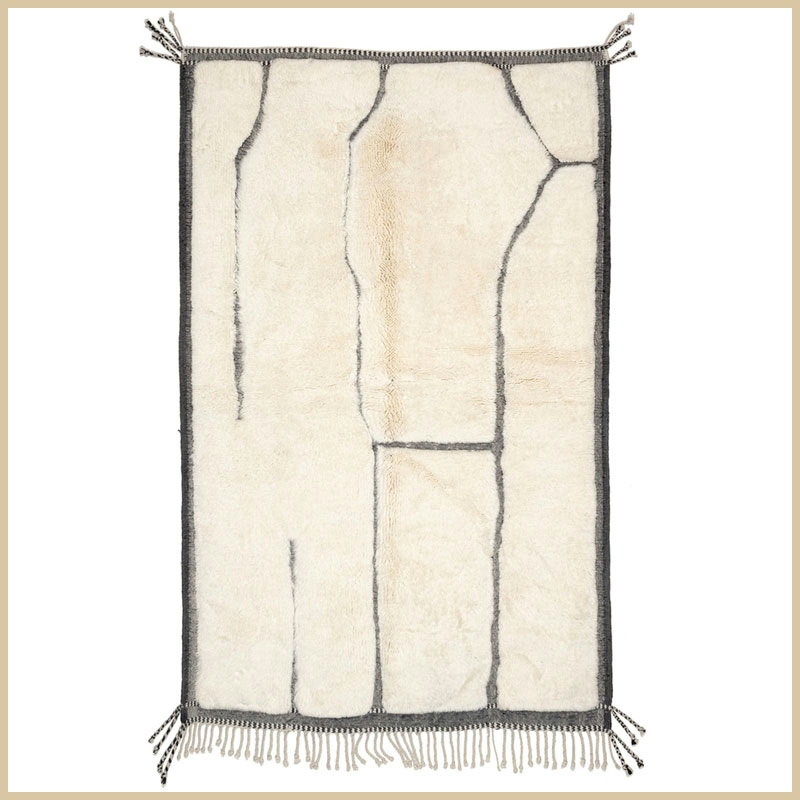
Beni Mrirt "Quiet White"
254 × 186 cm
€1,967

Beni Mrirt "Minimal Runner"
325 × 93 cm
€1,603
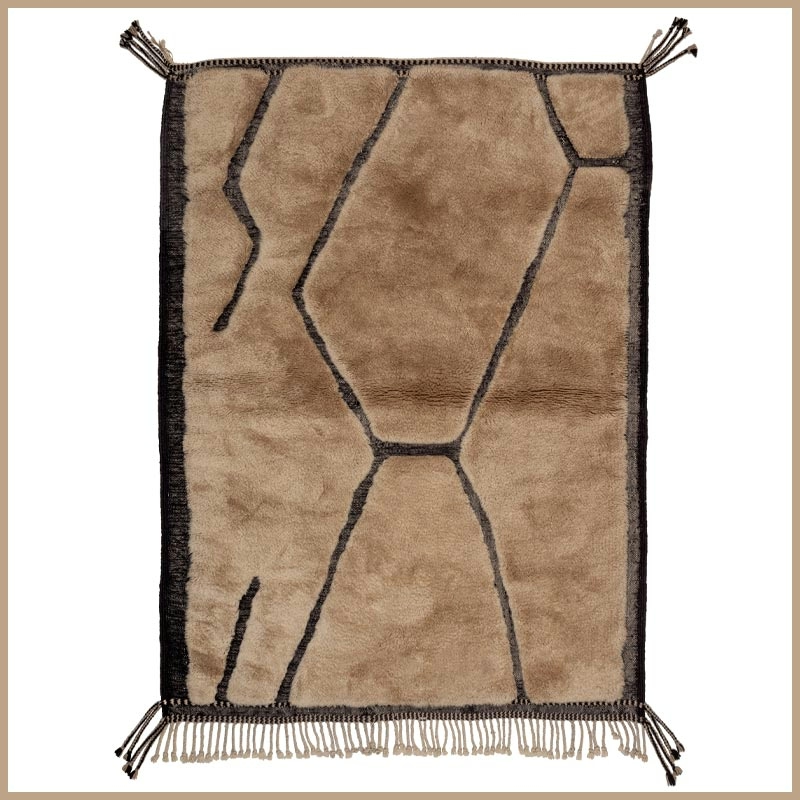
Beni Mrirt "Taupe Lattice"
199 × 147 cm
€1,818
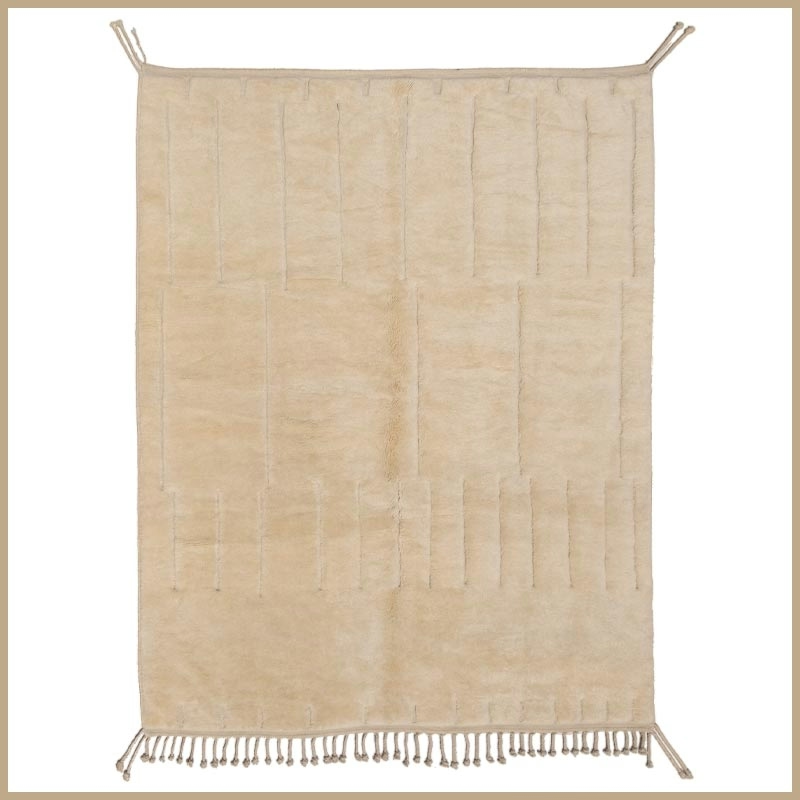
Beni Mrirt "Beige Weave"
350 × 250 cm
€3,683
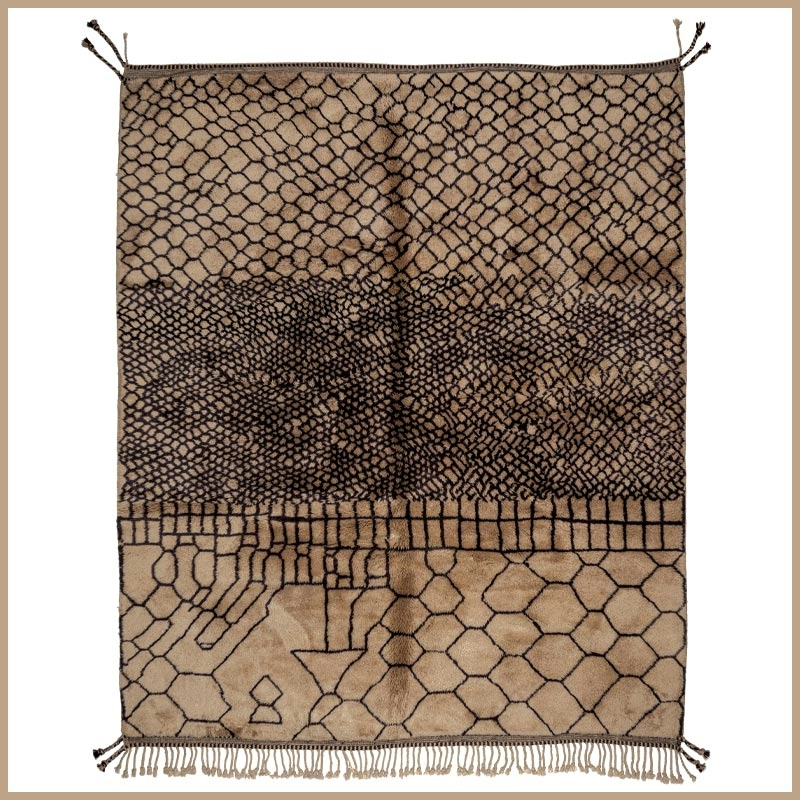
Beni Mrirt "Ornate Taupe"
308 × 253 cm
€3,280
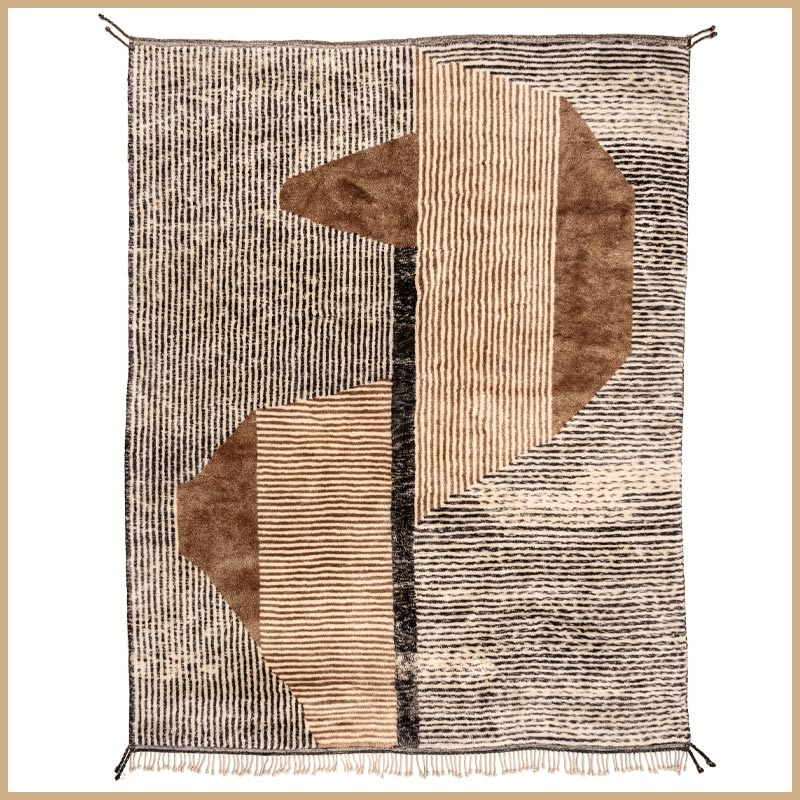
Beni Mrirt "Prestige Graphic"
400 × 300 cm
€5,698
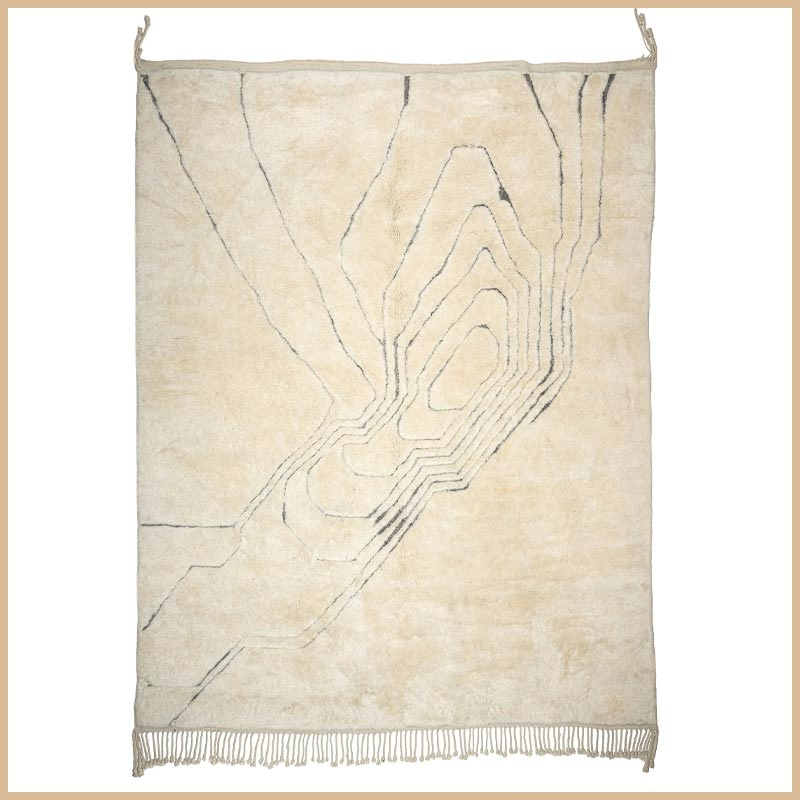
Beni Mrirt "Grand Ivory"
403 × 312 cm
€4,938
Where Mrirt is
Mrirt lies in Khénifra province, on the western slope of the Middle Atlas, in cedar and sheep country. The region has woven for centuries, mostly bold, colourful rugs for local use. The style now called Beni Mrirt is a more recent development of that tradition, shaped over the last few decades as weavers began to work for buyers who wanted large, calm, very soft rugs.
It is still knotted the old way: by hand, on an upright loom, in a house, one row at a time. What changed is the ambition. Mrirt weavers choose a fine, lustrous wool, pack the knots more closely than most mountain rugs, and keep the design quiet enough for the material to carry the rug.
What sets the weave apart
Density, first. Part the pile with your fingers and you see rows of knots lying close together, far closer than in most Berber rugs. The result is a surface that does not collapse under furniture, does not show every footprint, and wears slowly. It is also why the rug is heavy: a room-size piece is a two-person lift.
Then the pile itself. It is deep but upright, more velvet than fleece, and the wool has a soft sheen that shifts as you walk around it. Patterns sit low in this surface. Some are knotted in relief, with the line a little shorter than the field, so the drawing is made of shadow instead of colour.
Plain, lined, latticed
The typical Mrirt design is restraint. A plain field in one colour, where only the pile moves. A handful of thin lines crossing a pale ground. A diamond lattice so open that the rug still reads as plain from the door. A graphic figure in two tones, closer to a modern painting than to a tribal rug.
The palette follows the same logic: ivory, sand, taupe, camel, charcoal, and now and then a single muted colour such as sage, terracotta or teal. These are rugs made to sit under good furniture and say very little. That is exactly why interior designers reach for them when a room already has a strong sofa, a view, or a lot of art.
Where a Beni Mrirt belongs
In the living room, above all. The dense pile takes the weight of a sofa and a coffee table without flattening, and the size range runs large. In a bedroom it gives the softest landing there is. Under a dining table it is the best choice among deep-pile rugs, because chairs slide over a firm surface and crumbs stay on top.
Its weight is a practical advantage: the rug stays put and rarely needs an underlay on wood or tile. The same weight means it should be unrolled by two people and laid before the heavy furniture goes in. A new Mrirt sheds loose fibre for a few months, as any wool rug does. Vacuum weekly without a rotating brush and it settles.
The Beni Mrirt rugs in this collection
One hundred and twenty pieces. Thirty-three are sand or taupe and thirty are ivory or cream; then come camel, terracotta and charcoal, with a few each in gold, sage, teal, grey and olive. Thirty-two carry lines, twenty-one have a graphic drawing and nineteen a lattice: diamonds on eleven of them, and straight grids, chevrons or panels on the rest. Twenty-five are minimal: nine fully plain, eight with a faint tone-on-tone drawing, and eight with a sparse figure or a border in a second colour. Thirteen carry a fine grid, a checkerboard or another quiet all-over pattern, and a handful are ornamental.
This is a large-format style. More than half the rugs exceed 86 sq ft, and thirty-six are around 10 × 13 ft or bigger. Forty-four fall near 8 × 10 ft and fifteen near 6 ft 7 in × 9 ft 10 in. There are eleven runners and a small group of accent sizes. The measured dimensions are given on every listing. Delivery is free worldwide, duties and taxes included.
What you can verify about us
- Origin
- Made in MoroccoHand-knotted Berber rugs from the Atlas regions. Every rug is a one-off.
- Construction
- Hand-knotted woolVerified at every stage — never machine-tufted.
- Delivery
- Duties includedFree shipping; import duties and taxes are included in the price.
- Returns
- 14 daysIn condition received, full refund of the purchase price.
Frequently Asked
Questions
- What is a Beni Mrirt rug?
- A hand-knotted wool rug from the area around Mrirt in Morocco's Middle Atlas. It is known for a very dense, heavy, plush pile and for plain or sparsely drawn designs.
- How is a Beni Mrirt different from a Beni Ourain?
- A Beni Ourain has a longer, looser pile and dark diamonds on ivory. A Beni Mrirt is more closely knotted, heavier and more velvety, usually plain or with a low-contrast pattern.
- Is a Beni Mrirt rug good under a dining table?
- Yes. Its firm, dense pile lets chairs slide and keeps crumbs on the surface, which makes it the most practical deep-pile rug for a dining room.
- Does a Beni Mrirt rug shed?
- For the first few months, like every new wool rug. The loose fibre is left over from making it and decreases on its own with weekly vacuuming.

The person behind the piece
“Before you buy, I’ll send you a video of the actual rug in natural light — not a stock photo. I answer the messages myself.”
I’m Youssef. I started ARINID because this market is full of middlemen and machine-made imitations sold as the real thing — and I grew up close enough to the looms to know the difference.
Every piece we list is a one-off, hand-knotted in Morocco. If you want to talk through sizing for your room, I’m on the other end of the message. A rug at this level is a thirty-year decision. You should be able to look the person selling it to you in the eye.
Youssef
Founder, ARINID
The next step
See every rug we currently offer
Each piece is hand-knotted in Morocco and delivered to your door, with shipping, duties and taxes included.