Authentic Moroccan Rug: How to Judge One Before You Buy Online
Last updated
An authentic Moroccan rug is one that was knotted by hand, in wool, in Morocco. Each of those three points can be faked or blurred in an online listing, and you cannot turn the rug over to check. What you can do is read the listing the way a dealer would: look at what the photographs show and what they avoid, weigh the exact words used, check the measurements, and judge the seller by how they answer a direct question. This page shows how. It applies to any shop, and we invite you to apply it to ours.
From the Atelier
Currently in our collection
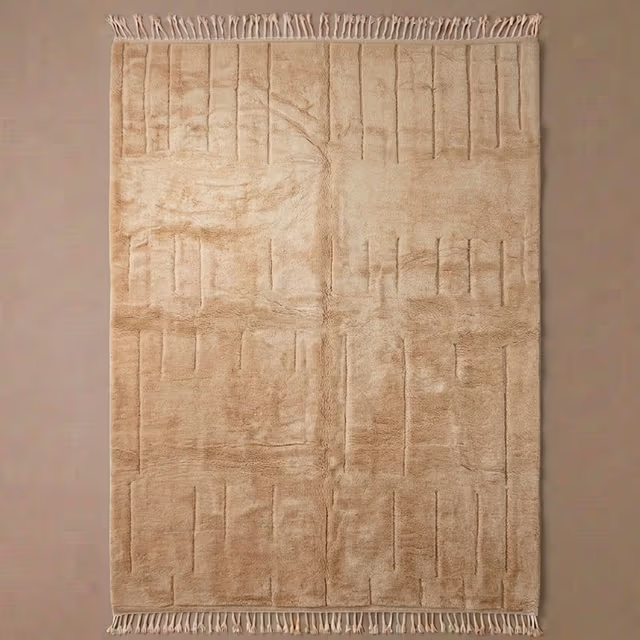
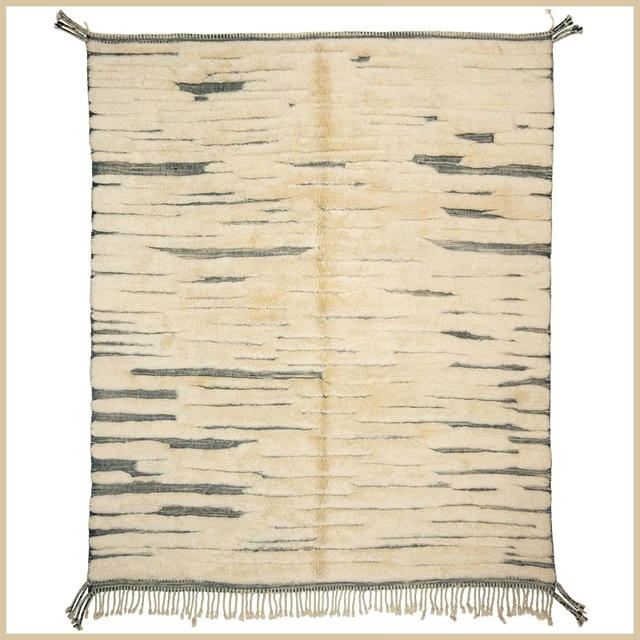
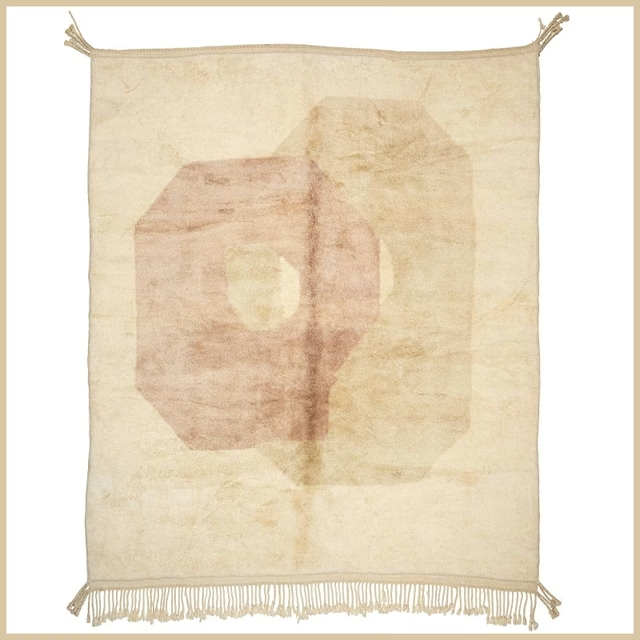
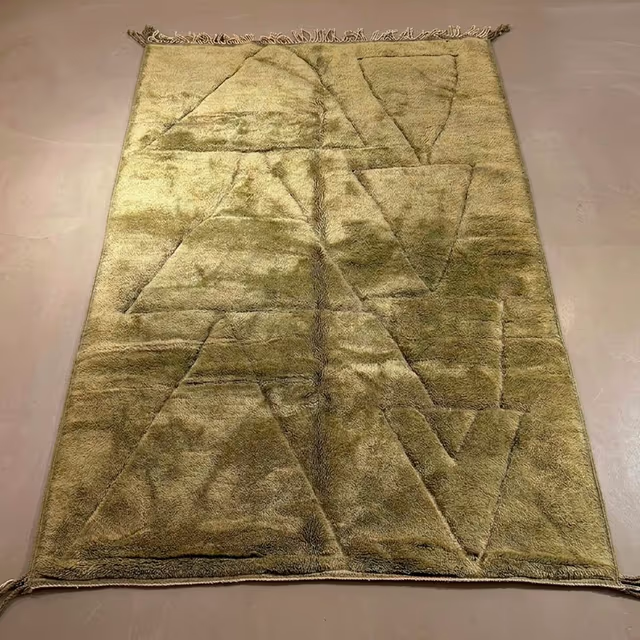
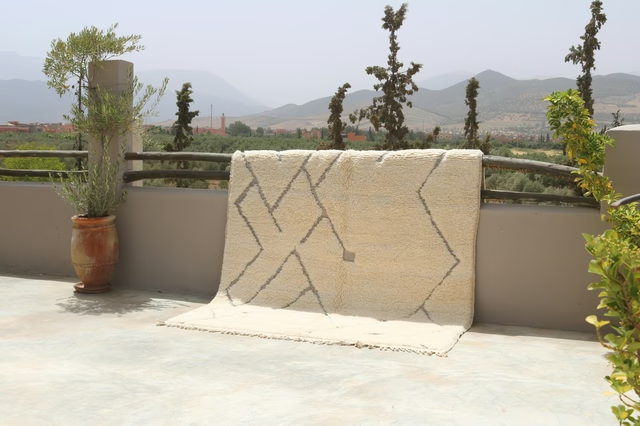
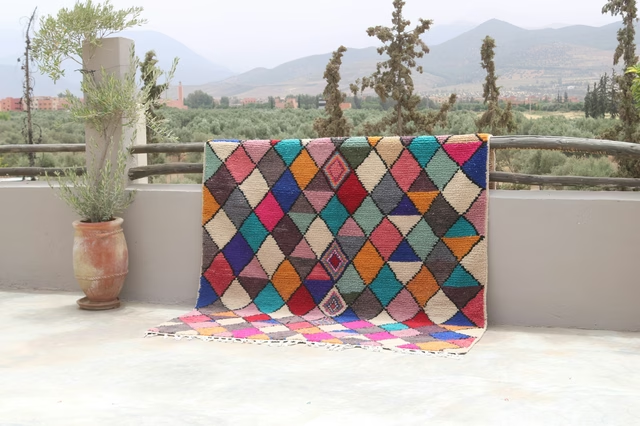
What the photographs should show
A genuine one-of-a-kind rug is photographed as itself: the whole rug from above, flat, in even light, with close-ups of the pile, an edge, the fringe and the back. The irregularities are visible. If you see the rug from the same angle in several sizes, or only in a styled room, you are looking at a product line and not a piece.
Search for the image. If the same photograph appears in other shops under other names, the seller does not hold the rug. Ask for one more photograph: the back of a corner, with a coin or a ruler beside it. Someone with the rug in a warehouse can take it in a minute.
The words that matter
Read for three plain statements: hand-knotted, wool, made in Morocco. Then read for their substitutes. Moroccan style, Moroccan-inspired, Berber design and Beni Ourain pattern describe a look. Handmade, handcrafted and hand-finished can all be true of a tufted rug. Wool blend and soft fibres mean partly or wholly synthetic.
Look for the composition line, which the law requires in many countries. A pile of 100 per cent wool is what you want to see. Polypropylene, polyester and viscose are named there when present. If the origin is not stated anywhere, assume it is not Morocco.
Sizes, quantities and options
Hand-knotted Moroccan rugs come in the sizes at which they left the loom: 203 by 298 cm, or 6 ft 5 in by 9 ft 8 in. A listing that offers the same design in a menu of round sizes, 5x8, 8x10 and 9x12, is offering rugs made to a specification, whether by hand or by machine.
A stock count above one is worth a question, not a verdict. A workshop can knot the same design more than once, and each rug then comes out a little different in size and line. That is legitimate, as are rugs made to order, and both can be excellent. What matters is that the listing says so, with the country and method stated, and does not present the rug as a one-off find.
Testing the seller of an authentic Moroccan rug
Write and ask: where was this rug made, is it hand-knotted or tufted, what is the pile fibre, and can I see the back? The speed and precision of the reply tell you most of what you need to know. Vague warmth is a no. A clear answer with a photograph is a yes.
Check that the business has a real name and address, clear delivery terms, and descriptions that differ from rug to rug. Be cautious about stories: the named weaver, the village, the meaning of each symbol. They may be true, but they are the easiest part of a listing to invent and the hardest to check.
How our listings measure up
Apply the same tests to us. Each of our 275 rugs has its own page, its own measured size in centimetres and its own description of colour and pattern. Each is knotted by hand in wool in Morocco. We name the type, such as Azilal, Beni Mrirt or Beni Ourain, and we do not attach dates, weavers' names or meanings.
Rugs made to your measurements are offered separately through our bespoke studio and are described as made to order. Each rug is one of a kind, with its exact measurements on its own page. Delivery is free worldwide, duties and taxes included.
What you can verify about us
- Origin
- Made in MoroccoHand-knotted Berber rugs from the Atlas regions. Every rug is one of a kind.
- Construction
- Hand-knotted woolVerified at every stage — never machine-tufted.
- Delivery
- Duties includedFree shipping; import duties and taxes are included in the price.
- Returns
- 14 daysIn condition received, full refund of the purchase price.
Frequently Asked
Questions
- What is an authentic Moroccan rug?
- A rug knotted by hand in wool in Morocco, as opposed to a rug in the Moroccan style made elsewhere or by machine.
- How can I tell from photos if a rug is hand-knotted?
- Ask for a close-up of the back. Knots show as slightly irregular rows that repeat the pattern of the front.
- Why do authentic rugs have odd sizes?
- They are measured after weaving and are not made to standard dimensions.
- Is a made-to-order Moroccan rug authentic?
- It can be, if it is hand-knotted in wool in Morocco and described as made to order.
Sources & References
What this page rests on
- 1. internal_researchSix-check authentication methodology
- 2. museum_collectionReference images from MET, MoMA, V&A textile collections
- 3. auction_dataProvenance documentation conventions at Sotheby's, Christie's, Bonhams

The person behind the piece
“Before you buy, I’ll send you a video of the actual rug in natural light — not a stock photo. I answer the messages myself.”
I’m Youssef. I started ARINID because this market is full of middlemen and machine-made imitations sold as the real thing — and I grew up close enough to the looms to know the difference.
Every piece we list is one of a kind, hand-knotted in Morocco. If you want to talk through sizing for your room, I’m on the other end of the message. A rug at this level is a thirty-year decision. You should be able to look the person selling it to you in the eye.
Youssef
Founder, ARINID
The next step
See every rug we currently offer
Each piece is hand-knotted in Morocco and delivered to your door, with shipping, duties and taxes included.