Berber Tribes and Their Rugs: A Short Guide to the Names
Last updated
Berber tribes are the reason Moroccan rugs have the names they do. Beni Ourain, Beni Mguild, Zemmour, Zaiane, Aït Ouaouzguite: each is the name of a tribe or a confederation of tribes, and in time each became the name of a kind of rug. The people call themselves Amazigh, in the plural Imazighen, and Berber is the older outside name that the rug trade still uses. This page sets out the main groups whose names you will meet when buying a rug, says roughly where each lives and what its weaving is known for, and explains why such names should be read as styles and not as guarantees.
From the Atelier
Currently in our collection
Tribes, confederations and names
Rural Morocco was organised for centuries in tribes, grouped into larger confederations, each with its own territory. Names often begin with Beni, an Arabic word meaning sons of, or with Aït, its equivalent in the Amazigh languages. Beni Mguild is therefore the sons of Mguild.
Weaving was women's work within the household, and designs were passed on within families and villages. That is why a region came to have a recognisable manner. It is also why the edges are blurred: women married into other villages and took their patterns with them.
Berber tribes of the Middle Atlas
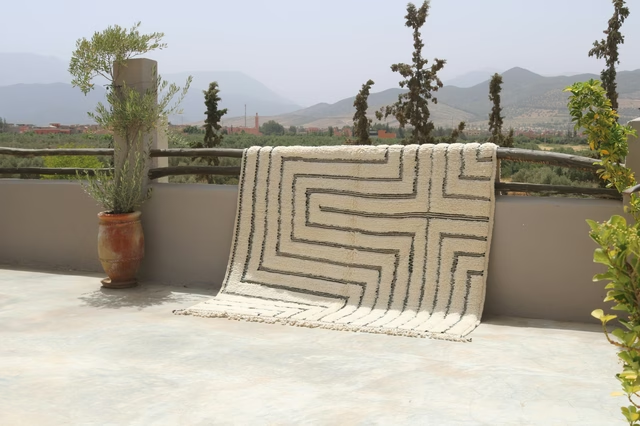
The Beni Ourain live in the north-eastern Middle Atlas and are associated with ivory rugs drawn in dark lines. The Beni Mguild, around Azrou, are associated with thick rugs in deep reds and blues. The Zaiane, around Khenifra, wove red rugs and banded flat weaves.
The Marmoucha, on the eastern side, are linked with ivory rugs close to those of the Beni Ourain, often with finer drawing. Beni Mrirt, by contrast, is a name taken from a town, Mrirt, and describes a dense modern style of rug made in that area.
The High Atlas, the south and the plains
In the central High Atlas the rugs are named after the province of Azilal and not after one tribe. Around Telouet the name is Glaoua. Around Siroua and Taznakht, the Aït Ouaouzguite confederation is known for fine pile and flat weaving.
On the plains, the Zemmour between Rabat and Meknes made red banded weavings, and the country around Boujad gave its name to rugs in pink and red. The plains around Marrakech, home to Arabic-speaking tribes, produced long red rugs of their own.
How far to trust a tribal name
A tribal name on a rug today is a description of style. It tells you what the rug looks like and roughly which tradition it follows. It does not prove who made it or where. Popular types are woven well beyond their home territory, because that is what buyers ask for.
This is not deceit, as long as nobody claims more. A Beni Ourain rug is a rug in the Beni Ourain manner, hand-knotted in wool in Morocco. Be cautious when a seller adds a named village, a named weaver or a precise age without being able to show how they know.
The names in our collection
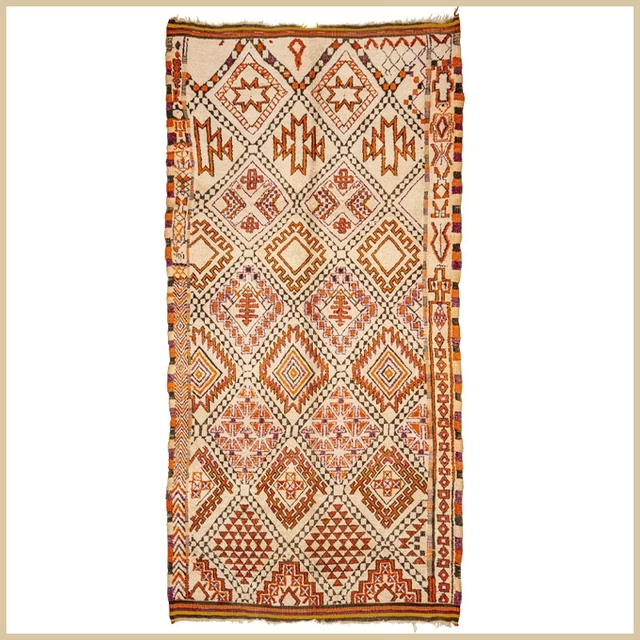
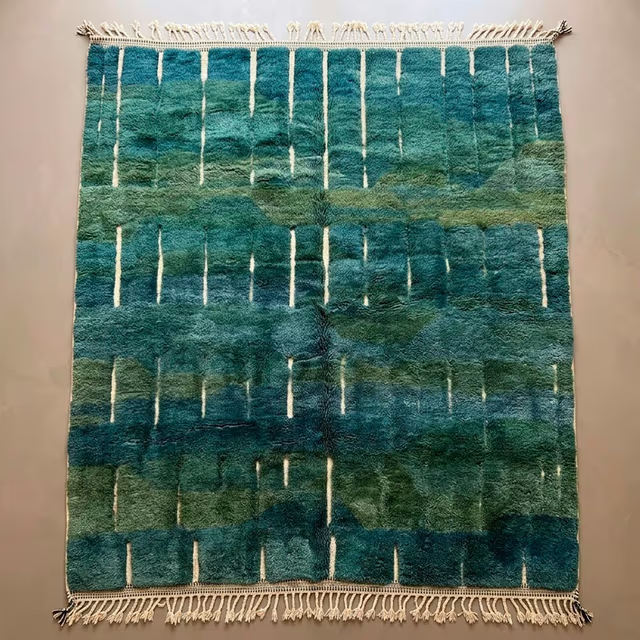
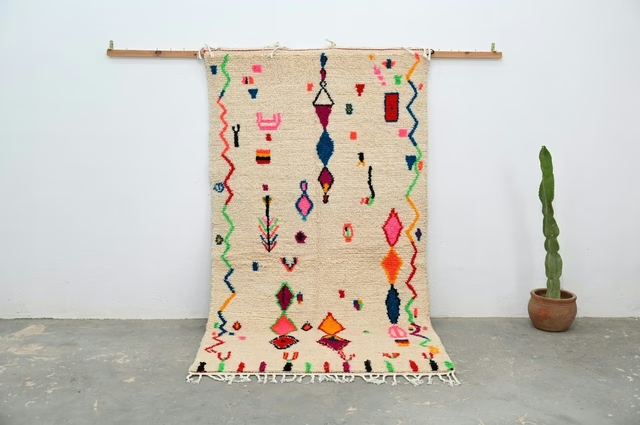
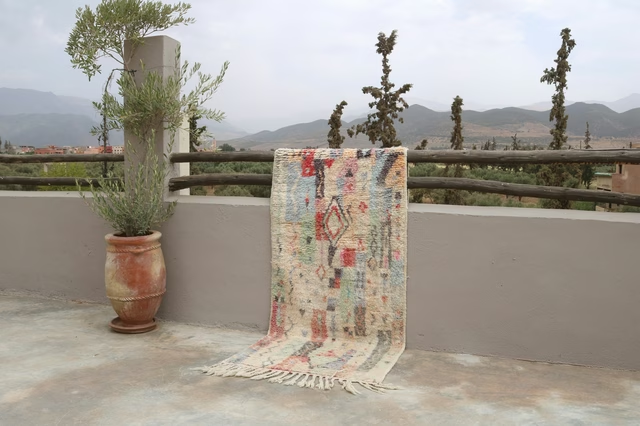
We use type names in exactly that sense. Our collection is 275 hand-knotted wool rugs: 120 Azilal, 119 Beni Mrirt, twenty-two Beni Ourain, eleven Beni Mguild, two Boujaad and one vintage piece. Each is described by what can be seen, its colour, pattern and measured size.
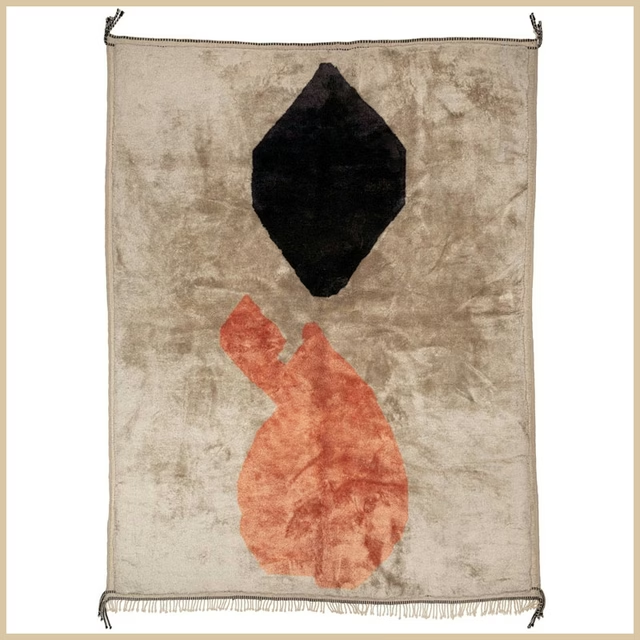
We do not attribute rugs to a village or a weaver. The rugs shown on this page come from the whole collection. Each rug is one of a kind, with its exact measurements on its own page. Delivery is free worldwide, duties and taxes included.
What you can verify about us
- Origin
- Made in MoroccoHand-knotted Berber rugs from the Atlas regions. Every rug is one of a kind.
- Construction
- Hand-knotted woolVerified at every stage — never machine-tufted.
- Delivery
- Duties includedFree shipping; import duties and taxes are included in the price.
- Returns
- 14 daysIn condition received, full refund of the purchase price.
Frequently Asked
Questions
- Who are the Berber tribes of Morocco?
- The Amazigh peoples of Morocco, historically organised in tribes and confederations such as the Beni Ourain, Beni Mguild, Zaiane and Zemmour.
- What does Beni mean in rug names?
- It is Arabic for sons of. Aït is the equivalent in the Amazigh languages.
- Is Berber the same as Amazigh?
- Amazigh is the people's own name. Berber is the older outside term, still common in the rug trade.
- Does a tribal name prove where a rug was made?
- No. It describes the style. Origin depends on what the seller can document.
Sources & References
What this page rests on
- 1. Berber Cultural Atlas Project
- 2. Atlas Co-operative Census

The person behind the piece
“Before you buy, I’ll send you a video of the actual rug in natural light — not a stock photo. I answer the messages myself.”
I’m Youssef. I started ARINID because this market is full of middlemen and machine-made imitations sold as the real thing — and I grew up close enough to the looms to know the difference.
Every piece we list is one of a kind, hand-knotted in Morocco. If you want to talk through sizing for your room, I’m on the other end of the message. A rug at this level is a thirty-year decision. You should be able to look the person selling it to you in the eye.
Youssef
Founder, ARINID
The next step
See every rug we currently offer
Each piece is hand-knotted in Morocco and delivered to your door, with shipping, duties and taxes included.