How to Layer Rugs: Sizes, Textures and Where It Works
Last updated
Knowing how to layer rugs solves a problem that has nothing to do with fashion. The room needs a large rug so the furniture has something to stand on, but the rug you love is small, or a large one in hand-knotted wool is more than you want to spend. Put the small rug on top of a big, plain one and you get both: the size the room needs and the colour and texture you wanted. Done well, it looks deliberate. Done badly, it looks like two rugs waiting to be put away.
From the Atelier
Currently in our collection
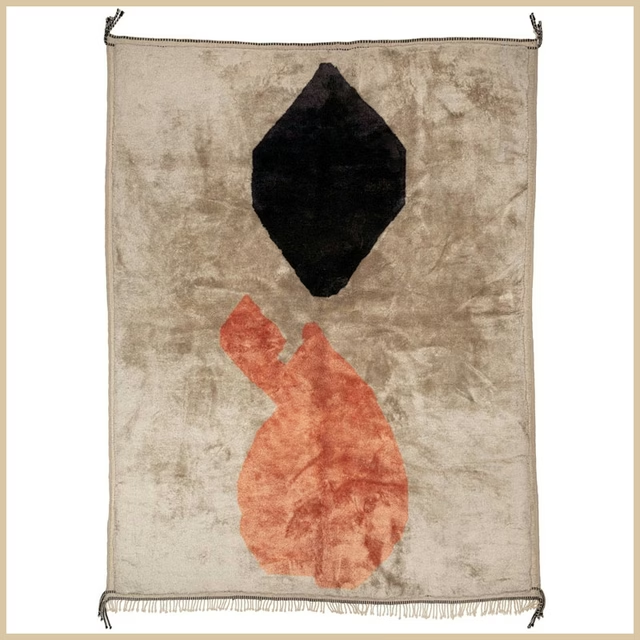
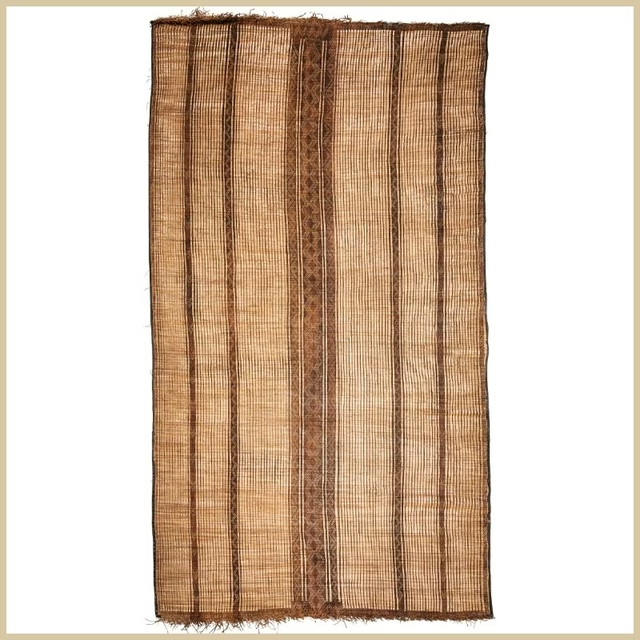
The base rug: large, flat and quiet
The bottom layer does the work of sizing. Choose it as you would a single rug: big enough for the front legs of all the seating, or to reach well past both sides of a bed. It should be flat and plain. Jute, sisal, a flat-woven wool rug or a low, dense plain carpet all do the job.
Keep the base neutral in colour and free of strong pattern. Its role is to be a frame. A natural fibre in a sand or oatmeal tone works with almost anything placed on it. If you have wall-to-wall carpet, the carpet itself is the base, and the same rules apply to the rug you lay on top.
The top rug: smaller, thicker, with character
The top layer is where the interest goes: pattern, colour, deep pile, an irregular shape. A hand-knotted wool rug is ideal, because its texture contrasts clearly with a flat base. Thick over thin always reads better than thin over thick. Two deep piles on top of each other just look lumpy and are unsteady to walk on.
Contrast is what makes layering look intended. Pattern over plain, soft over coarse, colour over neutral. If both rugs are patterned, vary the scale sharply, a large quiet stripe below and a small busy motif above, and keep them in related colours.
How to size layered rugs
A workable rule is that the top rug covers about two thirds of the base, leaving a border of twelve to eighteen inches showing all round. An 8x10 base takes a 5x8 on top. A 9x12 takes a 6x9. With less border the base disappears and you might as well not have it; with much more, the top rug looks stranded.
The top rug does not have to be centred or square to the room. Under a coffee table it usually is. But a small rug laid at an angle, or shifted towards one armchair to mark a reading corner, can look more relaxed. Decide by the furniture: the top rug should relate to something, a table, a chair, the side of a bed.
Where layering works best
In the living room, a small patterned rug under the coffee table on a large natural-fibre base is the classic arrangement. In the bedroom, a big flat rug under the bed with a soft, deep rug at the side you get out on gives warmth exactly where bare feet land. In an entry, a small rug over a hard-wearing flat mat adds colour without taking the dirt.
It works less well under a dining table, where chair legs catch the edge of the top rug every time they are pulled out, and in narrow walkways, where a raised edge is something to trip over. In those places one rug of the right size is the better answer.
Keeping the top rug in place, and our small rugs
A small rug on a flat-woven base can creep. A thin non-slip pad between the layers, cut slightly smaller than the top rug, holds it. Anchoring one edge under a table leg or the front of a chair helps as well. Vacuum both layers, and lift the top rug now and then to clean the base beneath it.
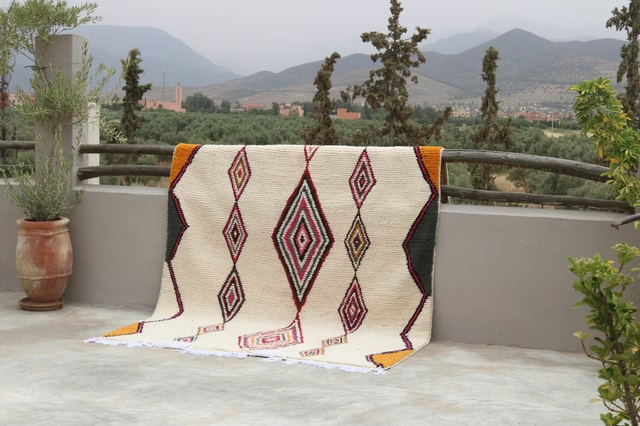
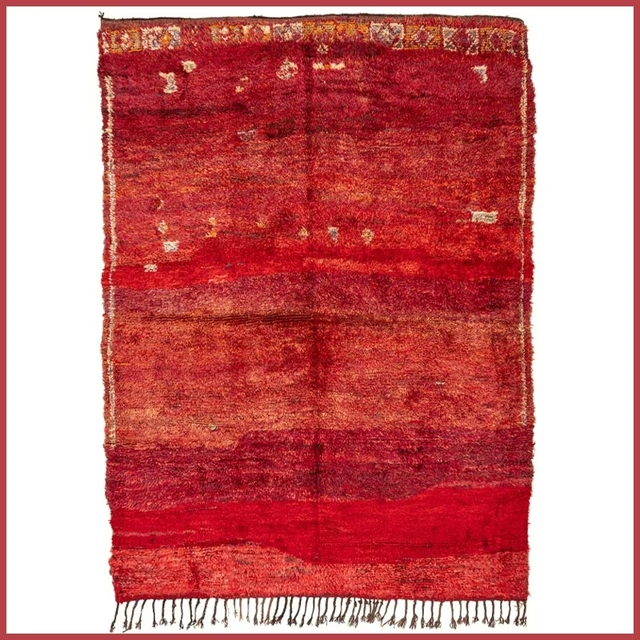
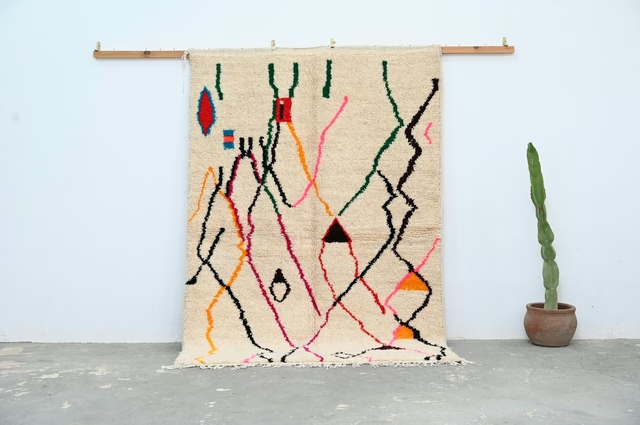
Among our hand-knotted Moroccan rugs there are seventeen multicoloured Azilal pieces of around 3 ft 3 in by 5 ft, and twenty-three rugs around 5 ft by 8 ft, both good sizes for a top layer. This page shows the whole collection. Each rug is one of a kind, with its exact measurements on its own page. Delivery is free worldwide, duties and taxes included.
What you can verify about us
- Origin
- Made in MoroccoHand-knotted Berber rugs from the Atlas regions. Every rug is one of a kind.
- Construction
- Hand-knotted woolVerified at every stage — never machine-tufted.
- Delivery
- Duties includedFree shipping; import duties and taxes are included in the price.
- Returns
- 14 daysIn condition received, full refund of the purchase price.
Frequently Asked
Questions
- What size rugs should I layer?
- The top rug should cover about two thirds of the base, with twelve to eighteen inches of base showing all round. A 5x8 on an 8x10, or a 6x9 on a 9x12.
- Which rug goes on the bottom?
- The larger, flatter, plainer one: jute, sisal, a flat weave or low plain carpet. The thicker, patterned rug goes on top.
- Can you layer a rug over carpet?
- Yes. Treat the carpet as the base, choose a top rug that contrasts with it, and use a firm felt pad made for carpet so the rug does not creep.
- How do I stop the top rug sliding?
- Put a thin non-slip pad between the two rugs and anchor one edge under furniture.
Sources & References
What this page rests on
- 1. Bohemian Design Technique Archive
- 2. Contemporary Eclectic Design Survey

The person behind the piece
“Before you buy, I’ll send you a video of the actual rug in natural light — not a stock photo. I answer the messages myself.”
I’m Youssef. I started ARINID because this market is full of middlemen and machine-made imitations sold as the real thing — and I grew up close enough to the looms to know the difference.
Every piece we list is one of a kind, hand-knotted in Morocco. If you want to talk through sizing for your room, I’m on the other end of the message. A rug at this level is a thirty-year decision. You should be able to look the person selling it to you in the eye.
Youssef
Founder, ARINID
The next step
See every rug we currently offer
Each piece is hand-knotted in Morocco and delivered to your door, with shipping, duties and taxes included.