Moroccan Wool: The Sheep Behind the Rugs
Last updated
Moroccan wool is the material of every rug we sell, and it is worth understanding before judging a rug. Morocco is a country of sheep: several native breeds are raised across its mountains, plateaus and plains, each adapted to its own ground. Their fleeces differ in length, fineness and lustre, and those differences reach the finished rug as softness, spring and sheen. This page introduces the main breeds, explains which qualities matter in rug wool and how to feel for them, and is careful about what we can and cannot say about the wool in any particular rug.
From the Atelier
Currently in our collection
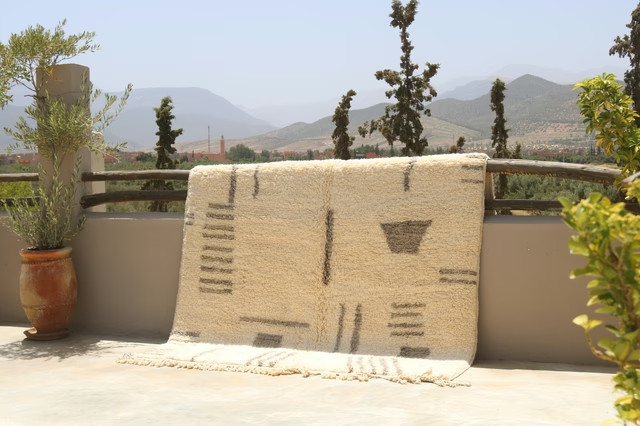
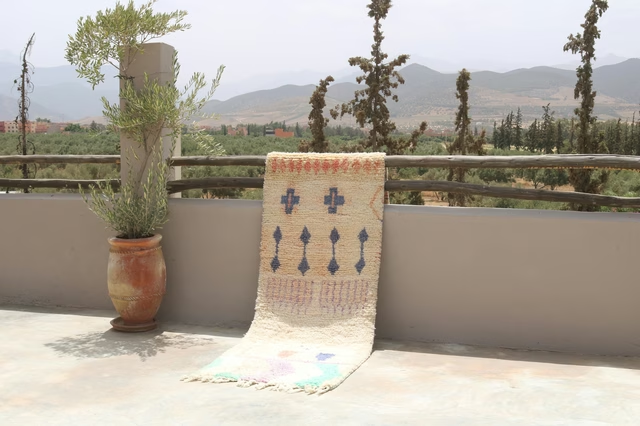
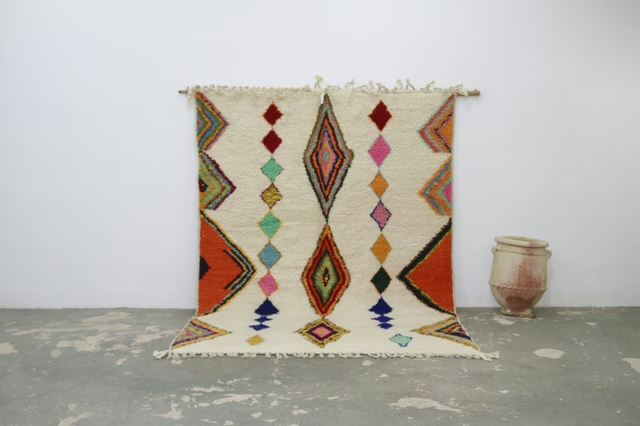
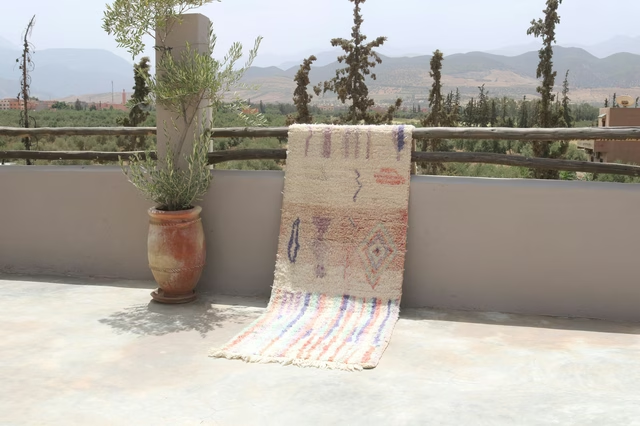
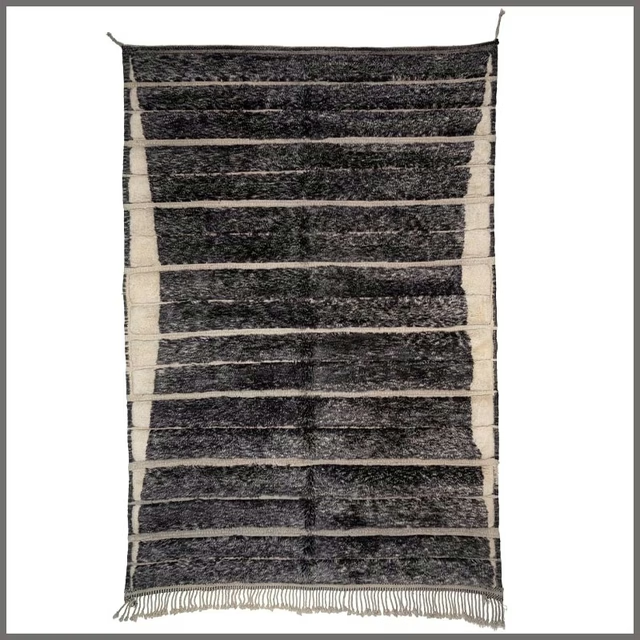
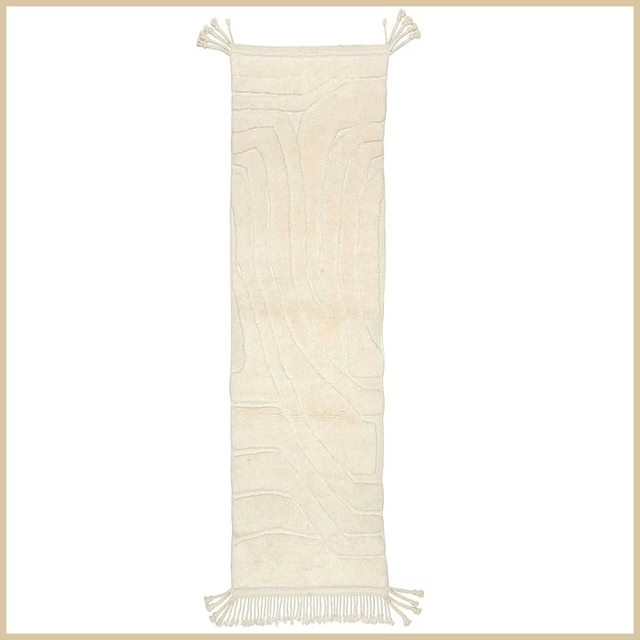
The main Moroccan sheep breeds
Several native breeds are officially recognised. The Timahdite is the sheep of the Middle Atlas, a hardy mountain animal named after a town near Azrou. The Sardi belongs to the central plains, and the Boujaâd to the country around the town of that name. The Beni Guil is the breed of the eastern high plateaus.
In the south, the D'man is a small sheep of the oases, and the Siroua, from the massif between the High Atlas and the Anti-Atlas, is the one most often mentioned for carpet wool. Flocks in practice are often mixed, and wool is sold by quality as much as by breed.
What makes wool good for rugs
Rug wool is not the same as sweater wool. Very fine fleece is soft and weak. A rug needs fibre that is long, so that it holds in the yarn, strong, so that it resists abrasion, and springy, so that the pile stands up again after it is walked on.
Lustre matters too. Wool with a natural sheen takes dye deeply and gives a rug a quiet glow. Wool taken from a living sheep at shearing is better than wool recovered from hides, which is drier and more brittle. Good rug wool feels slightly waxy and alive in the hand.
From fleece to yarn
After shearing, wool is sorted, washed and carded. How it is washed matters: harsh scouring strips the natural grease completely and leaves the fibre dull and dry, while gentler washing keeps some of its suppleness.
Spinning matters as well. Hand-spun yarn is uneven, thicker here and thinner there, and it gives a rug a lively surface and slight variations of colour when dyed. Machine-spun yarn is regular and gives a more even pile. Both are used in Moroccan rugs today.
How to judge the wool in a rug
Press your palm into the pile and lift it. Good wool springs back at once. Rub a tuft between finger and thumb: it should feel smooth and slightly oily, not dry or scratchy. Look at the surface in daylight for a soft sheen.
Then look at how the rug sheds. Some loose fibre in the first months is normal. Wool that keeps breaking off in short dry pieces, or a pile that stays flat where it was pressed, points to poorer fibre. Smell the rug: clean wool smells faintly sweet, never sharp.
What we can say about our Moroccan wool
Every rug in our collection of 275 has a pile of wool and was knotted by hand in Morocco. That much we state. We do not name the breed of sheep, the flock or the valley behind any rug, because we cannot verify it piece by piece, and we would rather not decorate a description with a detail we cannot support.
Judge the wool by the tests above when the rug is in front of you. The rugs shown on this page come from the whole collection. Each rug is one of a kind, with its exact measurements on its own page. Delivery is free worldwide, duties and taxes included.
What you can verify about us
- Origin
- Made in MoroccoHand-knotted Berber rugs from the Atlas regions. Every rug is one of a kind.
- Construction
- Hand-knotted woolVerified at every stage — never machine-tufted.
- Delivery
- Duties includedFree shipping; import duties and taxes are included in the price.
- Returns
- 14 daysIn condition received, full refund of the purchase price.
Frequently Asked
Questions
- What sheep does Moroccan wool come from?
- From native breeds such as the Timahdite, Sardi, Boujaâd, Beni Guil, D'man and Siroua, and from mixed flocks.
- Is Moroccan wool good for rugs?
- Wool from hardy mountain sheep tends to be strong and springy, which is what a rug pile needs. Quality varies from fleece to fleece.
- How can I tell good wool in a rug?
- It springs back when pressed, feels smooth and slightly waxy, and has a soft sheen.
- Do you know which breed the wool in each rug comes from?
- No. We state that the pile is wool and make no claim about the breed.
Sources & References
What this page rests on
- 1. Moroccan Sheep Breed Conservation Programme
- 2. Atlas Wool Quality Research

The person behind the piece
“Before you buy, I’ll send you a video of the actual rug in natural light — not a stock photo. I answer the messages myself.”
I’m Youssef. I started ARINID because this market is full of middlemen and machine-made imitations sold as the real thing — and I grew up close enough to the looms to know the difference.
Every piece we list is one of a kind, hand-knotted in Morocco. If you want to talk through sizing for your room, I’m on the other end of the message. A rug at this level is a thirty-year decision. You should be able to look the person selling it to you in the eye.
Youssef
Founder, ARINID
The next step
See every rug we currently offer
Each piece is hand-knotted in Morocco and delivered to your door, with shipping, duties and taxes included.