Wool Rug Shedding: Why It Happens and When It Stops
Last updated
Wool rug shedding alarms almost everyone the first time. You unroll a new rug, vacuum it, and the canister fills with fluff, as it does again the week after. It looks as if the rug is falling apart. In nearly every case it is not. What comes out is loose fibre left in the pile from spinning and shearing, and in a well-made rug the supply runs out. This page explains where the fluff comes from, how long to expect it, how the way a rug is made changes the answer, and when shedding is a warning.
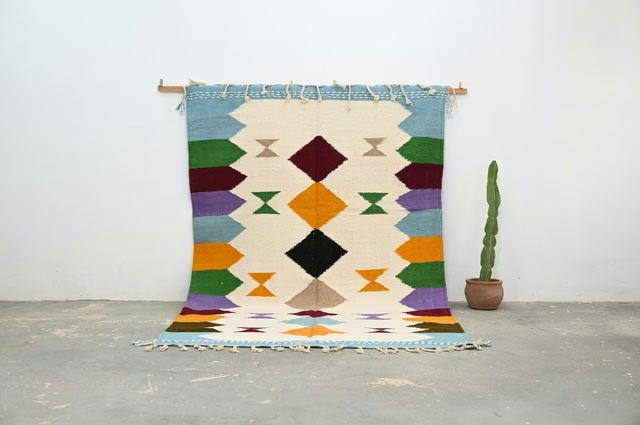
Where the fluff comes from
Wool yarn is spun from short lengths of fibre, called staple, twisted together. Most fibres are held along their whole length by the twist. Some are too short to be caught properly, and at every point where the pile is cut, fibre ends are left free. When a rug is finished, its pile is sheared to an even height, and a good deal of that clipped material stays behind between the tufts.
Walking and vacuuming work those loose fibres to the surface, where they gather as fluff or small balls. The quantity looks dramatic and is small. Against the wool in a deep-pile rug, a few canisters are a tiny fraction of the pile, which is why a rug that has shed for months looks no thinner than on the day it arrived.
How long it lasts
Shedding is heaviest in the first weeks and tapers off. For a hand-knotted wool rug in a room that is used and vacuumed regularly, the bulk is usually gone within three to six months. Deep, shaggy piles hold more loose fibre than low ones and take longer to clear. A rug in a spare room, hardly walked on, can still give off fluff a year later, simply because nothing has brought it out.
Use shortens the process. A rug in a hallway is done sooner than the same rug under a bed. There is no need to hurry it with harsh brushing. Steady, gentle vacuuming gets you there, and after the first season a wool rug releases very little, mainly a trace of fibre where feet turn.
Knotted, tufted, looped: why construction matters
How a rug is built decides whether shedding ends. In a hand-knotted rug every tuft is tied round the warp threads and locked by the weft, so only the loose surplus can leave. Once it has gone, the knots hold. Such rugs are also usually made from longer-staple yarn, which gives off less to begin with.
A hand-tufted rug is different. Yarn is shot through a cloth with a tufting gun and held from behind by latex glue and a backing fabric. Short-staple wool is common, and the glue grows brittle with age, so tufted rugs can shed for years, sometimes for as long as they are used. Turn the rug over to tell which you have: a knotted rug shows its pattern on the back, a tufted one shows plain cloth. Loop-pile and flat-woven rugs, with few or no cut ends, shed least of all.
What helps, and what makes it worse
Vacuum once or twice a week with suction only. Switch off the rotating brush or raise the head, and move in the direction of the pile. A beater bar pulls at sound fibre and prolongs the problem. Small rugs can be shaken outdoors. A rug pad helps too, because it stops the rug shifting and rubbing on the floor with every step.
Do not pull at a tuft that stands above the rest. Such sprouts are normal in hand-made rugs; trim them level with scissors. Skip rubber brooms and stiff brushes in the first months, and keep robot vacuums off deep pile, where they tangle and tug. Empty the canister often, since a full one loses suction and leaves the fluff lying on the surface.
When shedding is a warning
Normal shedding is even across the rug and declines. Three things are different. First, bare or thinning patches in one place, especially in a dark, undisturbed spot under furniture: that is the pattern of moth larvae, and the back of the rug will show sandy grit, casings or webbing. Second, whole tufts coming away with the foundation visible beneath, which points to broken knots or failed glue.
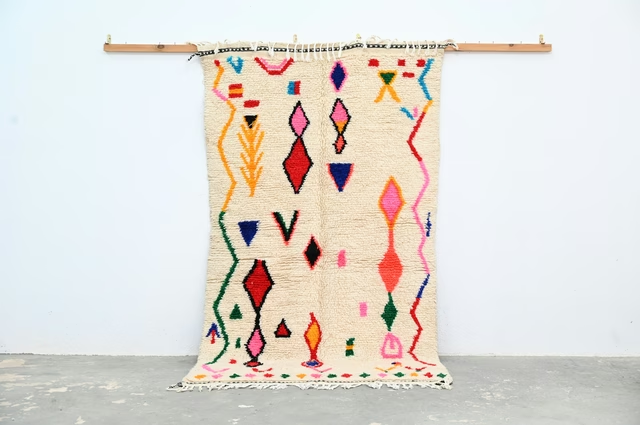
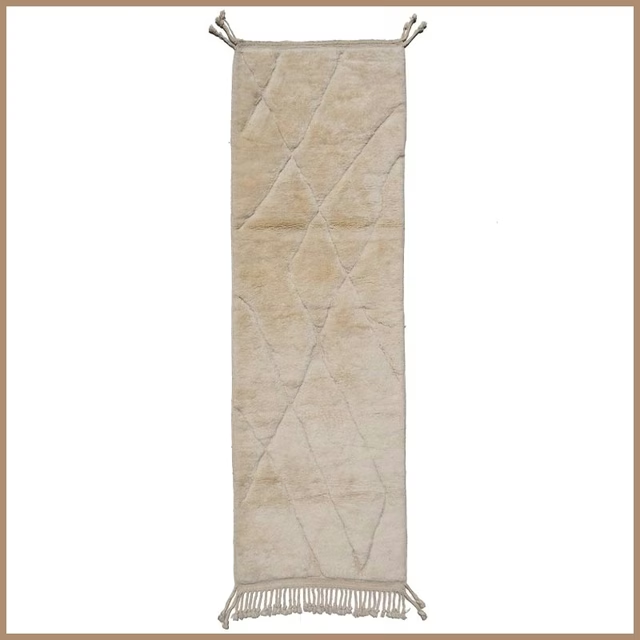
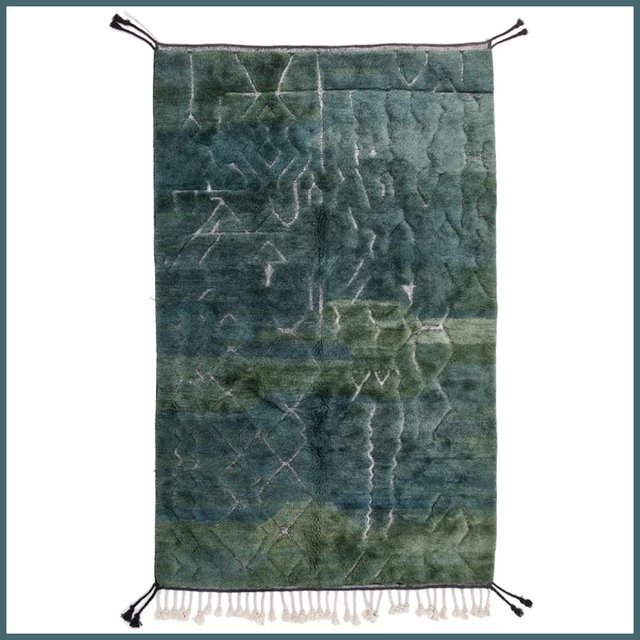
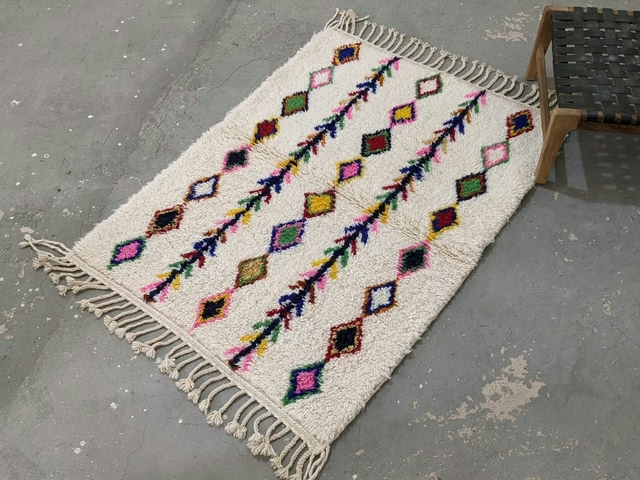
Third, wool that feels dry and snaps instead of bending, after harsh chemical washing or years in direct sun. None of these is cured by vacuuming, and each is a case for a rug specialist. For everything else, the honest answer is patience. Our own rugs are hand-knotted wool. Expect the deep-pile Beni Ourain and Beni Mrirt pieces to give off more in the first months than the lower Azilal rugs, and expect it to stop.
What you can verify about us
- Origin
- Made in MoroccoHand-knotted Berber rugs from the Atlas regions. Every rug is one of a kind.
- Construction
- Hand-knotted woolVerified at every stage — never machine-tufted.
- Delivery
- Duties includedFree shipping; import duties and taxes are included in the price.
- Returns
- 14 daysIn condition received, full refund of the purchase price.
Frequently Asked
Questions
- How long does a new wool rug shed?
- Most hand-knotted wool rugs shed noticeably for three to six months of regular use, heaviest at the start. Deep pile takes longer than low pile.
- Does vacuuming make a wool rug shed more?
- Suction alone does not. It only removes fibre that was already loose. A rotating brush or beater bar does pull at the pile, so switch it off.
- Are there wool rugs that do not shed?
- Flat-woven and loop-pile wool rugs shed very little. Every cut-pile wool rug sheds at first. A hand-knotted one stops; a poorly made tufted one may not.
- Why does my tufted wool rug keep shedding?
- Because its tufts are held by glue, not knots, and it is often made from short-staple wool. As the latex ages, more fibre works loose. Gentle vacuuming limits it but rarely ends it.
- Is wool rug shedding a sign of poor quality?
- Not in the first months. Even the best hand-knotted rugs shed when new. Shedding that never declines, or tufts that come out whole, does indicate a problem.
Sources & References
What this page rests on
- 1. Wool Research Organization
- 2. Atlas Co-operative Weaving Standards

The person behind the piece
“Before you buy, I’ll send you a video of the actual rug in natural light — not a stock photo. I answer the messages myself.”
I’m Youssef. I started ARINID because this market is full of middlemen and machine-made imitations sold as the real thing — and I grew up close enough to the looms to know the difference.
Every piece we list is one of a kind, hand-knotted in Morocco. If you want to talk through sizing for your room, I’m on the other end of the message. A rug at this level is a thirty-year decision. You should be able to look the person selling it to you in the eye.
Youssef
Founder, ARINID
The next step
See every rug we currently offer
Each piece is hand-knotted in Morocco and delivered to your door, with shipping, duties and taxes included.