Minimalist Rug: Choosing the One Rug a Pared-Back Room Needs
Last updated
A minimalist rug carries more weight than a rug in a furnished, decorated room, because there is so little else. In a space with bare walls, a few pieces of furniture and no curtains, the rug may be the only textile, the only pattern and the only thing that absorbs sound. It cannot hide behind anything. Minimalism also has a way of exposing poor materials: a thin synthetic rug that would pass unnoticed in a busy room looks mean in an empty one. This page explains what to look for in a minimalist rug, from texture and proportion to tone, and where a little irregularity helps.
From the Atelier
Currently in our collection
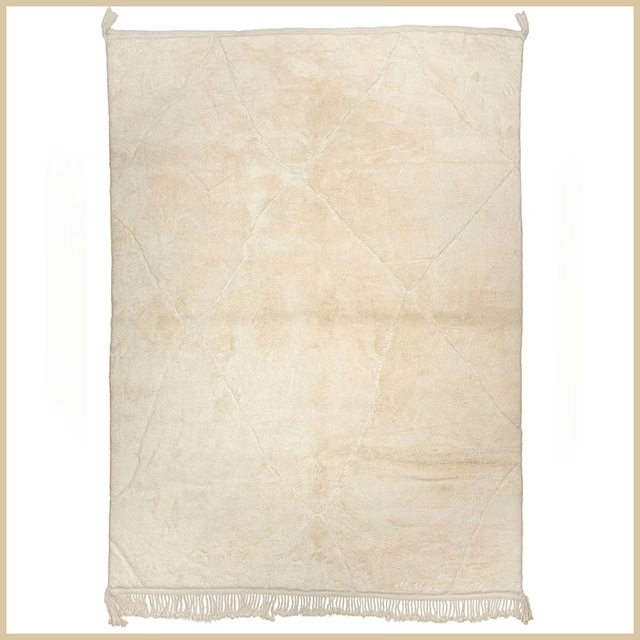
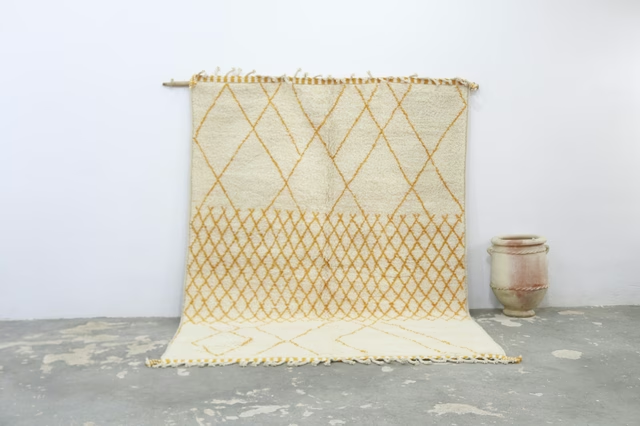
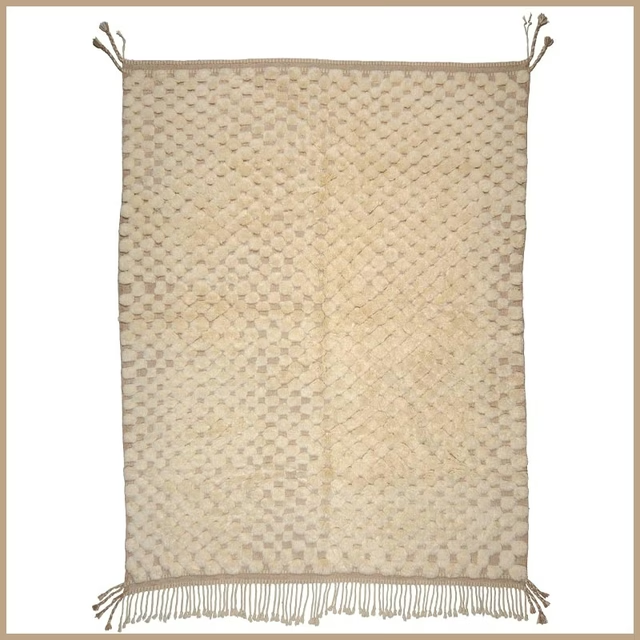
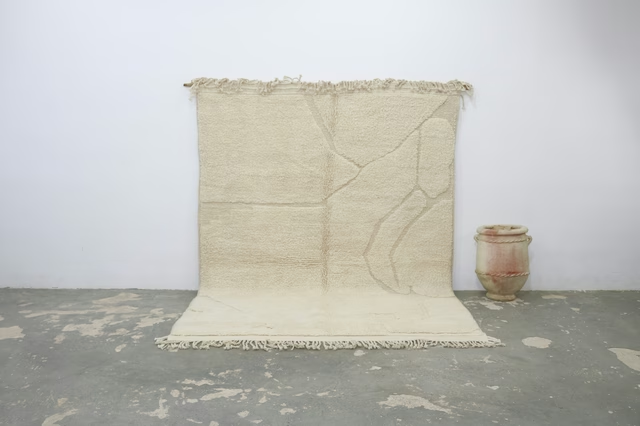
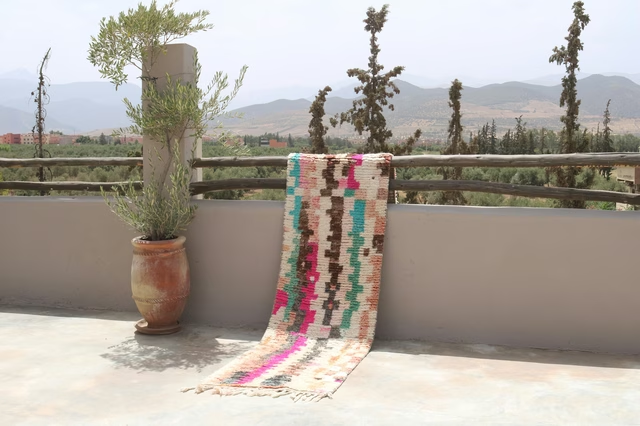
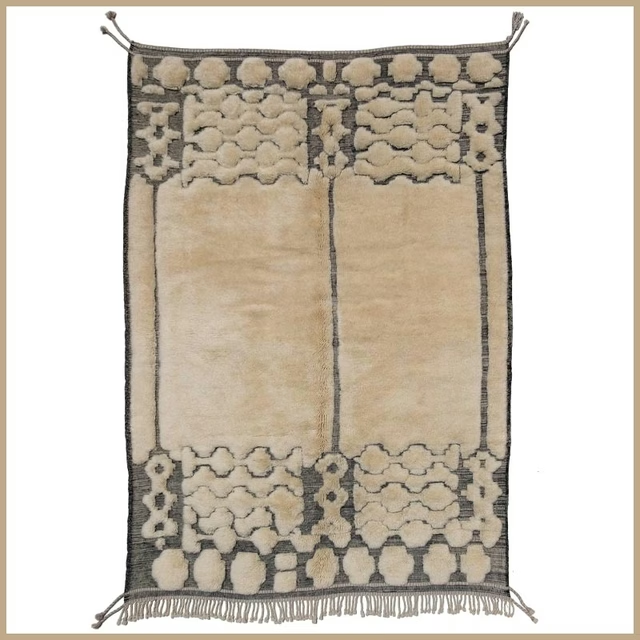
Texture does the work of pattern
When colour and ornament are taken away, texture is what the eye reads. A plain wool rug is never truly plain. The pile catches light differently as you move, the yarn varies slightly in thickness and shade, and footsteps leave soft marks that come and go. This is what gives a spare room its warmth.
It is also why material matters so much. Wool has a matt, uneven depth. Polyester has a uniform sheen that looks flat in a room with nothing to distract from it. If the rug is the one soft object in the space, it should be worth looking at closely.
Proportion: the rug as a plane
In a minimalist room the rug reads as a shape on the floor, like a panel in a composition. Its edges should relate to something: parallel to the sofa, centred on the bed, aligned with a window wall. A rug at a slight angle, or a few inches off centre, will nag in a room where nothing else is out of place.
Leave a consistent border of bare floor, anywhere from 8 to 18 inches, and keep it equal on opposite sides. Go large. One generous rug with all the seating on it is calmer than a small one with furniture half on and half off. Avoid several small rugs, which break the floor into pieces.
Tone: warm minimalism and cool
Ivory, cream, sand and oatmeal make the warm version. They soften concrete, white plaster and pale wood, and stop a room from feeling clinical. Grey and charcoal make the cool, graphic version, at their best with black metal and stone. Decide which room you are making before you choose.
Match the undertone of the rug to the largest surface near it. A yellowish cream beside a blue-white wall looks dirty, and a cool grey on a honey-coloured oak floor looks dead. In practice this means studying the colour of the rug in photographs taken in daylight, next to wood or stone if possible.
How much pattern a minimalist rug can carry
More than you might think, if it is quiet. A few thin lines crossing an ivory field. A lattice drawn tone on tone. A pattern carved into the pile as relief, visible only when light falls across it. A border on one side. Each of these gives the eye something to find without adding a second colour to the room.
The slight irregularity of handwork is an asset here. A machine-perfect grid in an already rigid room is one hard thing too many. A line that wavers by an inch relieves the geometry of walls and furniture. It is close to the idea the Japanese call wabi-sabi, and it is why hand-knotted rugs suit strict rooms so well.
The minimalist rugs in our collection
The rugs shown on this page come from our whole collection of 275 hand-knotted wool rugs. Ten are plain, with the wool as the only design, and seven of those are Beni Mrirt, the dense, heavy type from the Middle Atlas. Seventy-one rugs have an ivory or cream ground and thirty-seven are sand or taupe. Seven are charcoal and three are grey. Among the twenty-two Beni Ourain rugs, two have a lattice drawn tone on tone and two carry their pattern as relief in the pile.
If the room needs an exact size, our bespoke studio offers a Monochrome design and a Quiet Border in the measurements and colour you choose. Each rug is one of a kind, with its exact measurements on its own page. Delivery is free worldwide, duties and taxes included.
What you can verify about us
- Origin
- Made in MoroccoHand-knotted Berber rugs from the Atlas regions. Every rug is one of a kind.
- Construction
- Hand-knotted woolVerified at every stage — never machine-tufted.
- Delivery
- Duties includedFree shipping; import duties and taxes are included in the price.
- Returns
- 14 daysIn condition received, full refund of the purchase price.
Frequently Asked
Questions
- What is a minimalist rug?
- A rug with little or no pattern, in a restrained colour, where texture and proportion do the work.
- What colour rug for a minimalist room?
- Ivory, cream and sand for a warm room, grey and charcoal for a cooler one. Match the undertone to the floor and walls.
- Can a minimalist rug have a pattern?
- Yes, if it is quiet: thin lines, a tone-on-tone lattice or a relief carved into the pile.
- How big should a minimalist rug be?
- Large, with all the seating on it and an even border of floor around it.
Sources & References
What this page rests on
- 1. John Pawson Studio Documentation
- 2. Minimalist Design Quarterly

The person behind the piece
“Before you buy, I’ll send you a video of the actual rug in natural light — not a stock photo. I answer the messages myself.”
I’m Youssef. I started ARINID because this market is full of middlemen and machine-made imitations sold as the real thing — and I grew up close enough to the looms to know the difference.
Every piece we list is one of a kind, hand-knotted in Morocco. If you want to talk through sizing for your room, I’m on the other end of the message. A rug at this level is a thirty-year decision. You should be able to look the person selling it to you in the eye.
Youssef
Founder, ARINID
The next step
See every rug we currently offer
Each piece is hand-knotted in Morocco and delivered to your door, with shipping, duties and taxes included.