How Much Do Moroccan Rugs Cost? What Actually Drives the Price
Last updated
How much do Moroccan rugs cost? There is no single figure, and anyone who gives you one is simplifying. A small flat-woven piece and a room-sized, densely knotted wool rug can differ in price by a factor of ten or more, even though both are honestly described as Moroccan rugs. What you can do is understand what the price is made of. Once you know what you are paying for, two offers become comparable, and a price that looks too good becomes easy to recognise. Every rug in our collection shows its own price on its page, in your currency.
From the Atelier
Currently in our collection
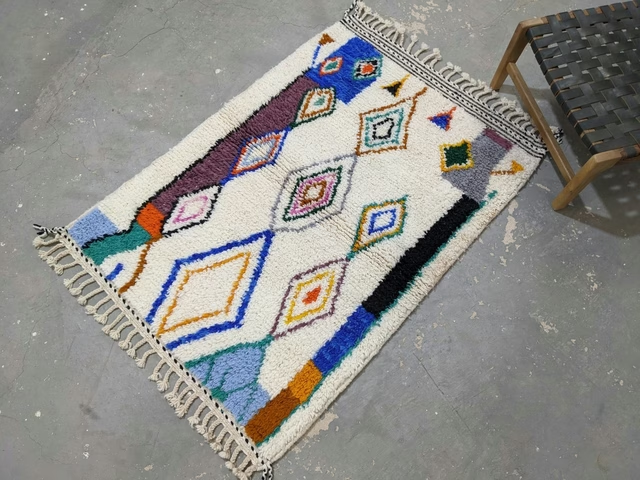
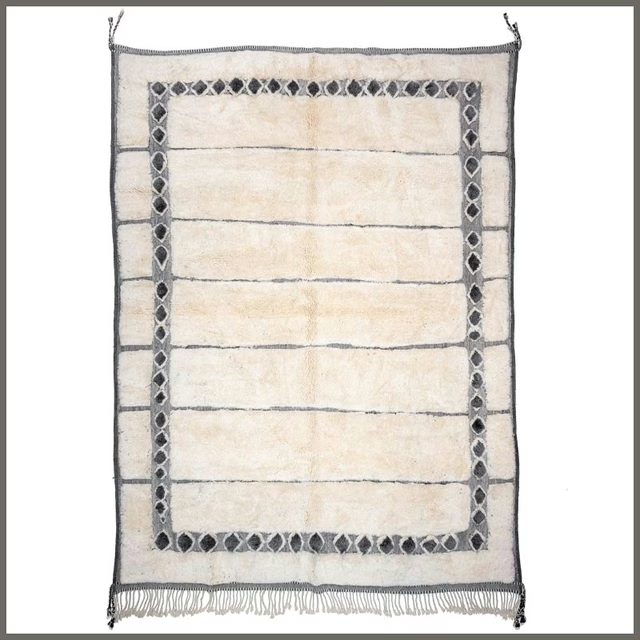
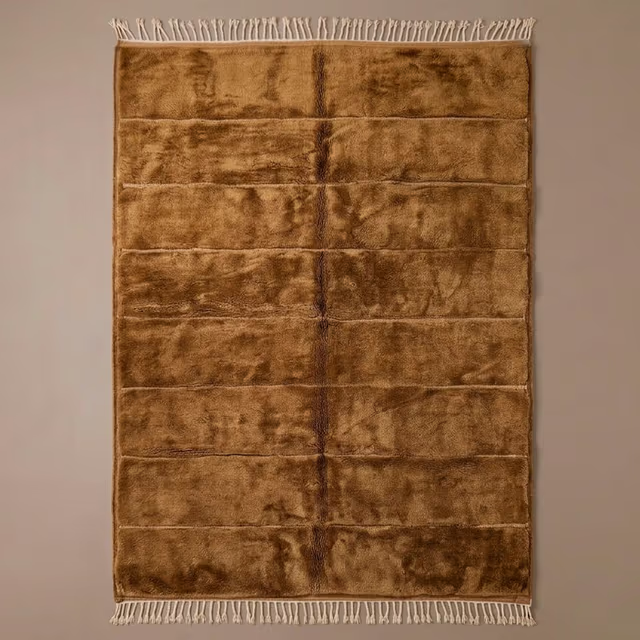
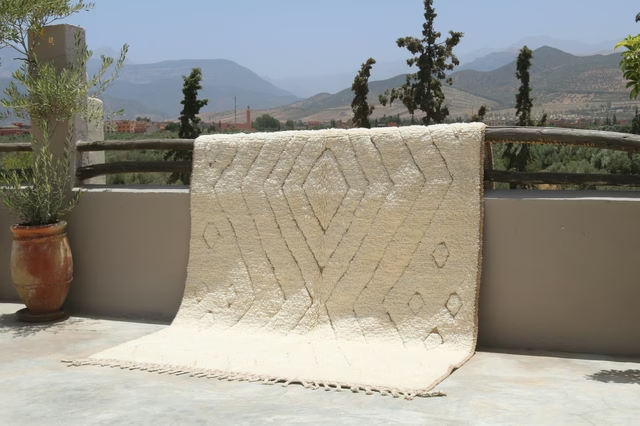
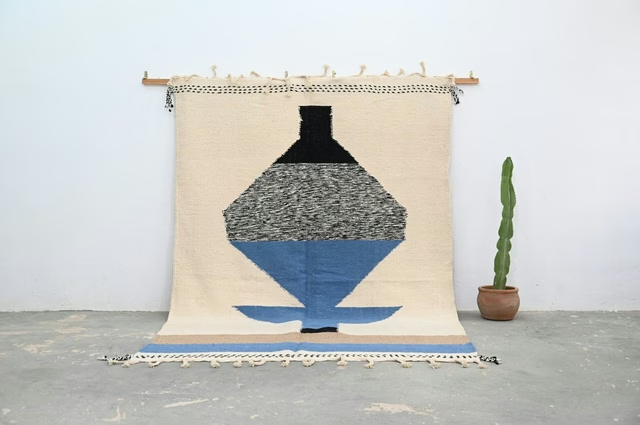
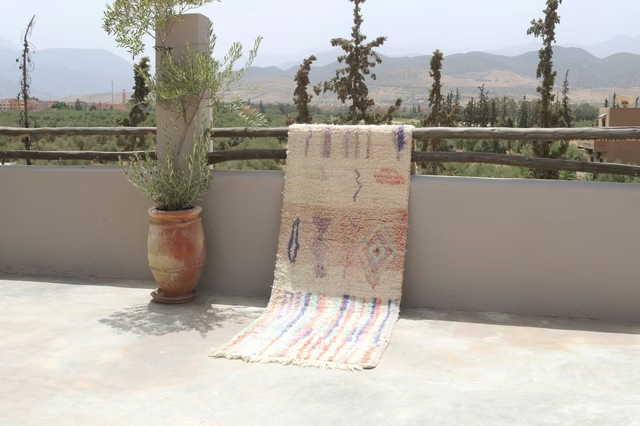
Four things you are paying for
The first is wool. A thick, dense rug holds several times more wool per square foot than a thin one, and wool is the main material cost. Lift a corner: weight is the quickest honest indicator of how much went in. The second is time. A hand-knotted rug is built one knot at a time, and a tighter, finer weave means more knots for the same area and more weeks at the loom.
The third is size, which works against you twice. A bigger rug needs more wool and more time, and it also needs a wider loom, which fewer weavers have. That is why prices climb faster than area once a rug passes about 8 × 10 ft. The fourth is rarity: an unusual colour, an especially fine design, or genuine age in good condition all raise the price beyond what materials and labour explain.
Why two rugs that look alike are priced differently
In a photograph, a hand-knotted rug, a hand-tufted one and a machine-made copy can look much the same. They are different objects. A knotted rug is made of individual knots tied around the warp, and it holds together by its own structure. A tufted rug is wool punched into a cloth and fixed with latex under a backing. It takes days instead of months, and it costs a fraction.
Turn the rug over to tell them apart. If you see the design repeated knot by knot and no backing cloth, it is hand-knotted. If the back is covered by fabric, it is tufted. If the pattern is perfectly regular and the fringe is sewn on, it is machine-made. Price differences between these three are justified. Price differences within one category are the ones worth questioning.
What should be included in the price
The figure on the label is only useful if you know what it covers. Many rugs sold from abroad are priced without delivery, and import duties and taxes are then collected at your door. On a large rug these can add a substantial amount, and they arrive as a surprise.
Before comparing two offers, bring both to the same basis: the rug, delivered to your home, with all duties and taxes paid. At Arinid the price shown on each rug already includes delivery, duties and taxes, and it is displayed in your own currency, so the number you see is the number you pay.
Signs that a price is too low
A hand-knotted wool rug cannot be sold at the price of a machine-made one, because the wool and the weeks of work cost more than that. When the two prices meet, one of the claims is wrong. Usually the rug is tufted or power-loomed, or the fibre is a wool blend or synthetic with a telltale sheen.
Other warnings are easier to spot. Round, standard sizes for every piece suggest factory production, since hand-knotted rugs come off the loom at irregular dimensions. A single studio photograph used for many sizes means you are not looking at the rug you would receive. The word vintage attached to a rug with no wear, in a fashionable colour, is rarely accurate.
How to compare offers fairly
Work out the price per square foot or square metre, on the all-in basis described above. Compare only like with like: knotted with knotted, thick with thick, and similar sizes with each other, because large rugs cost more per unit of area than small ones.
Then look at what you are told about the individual piece. Exact measurements, photographs of the actual rug including its back, and a plain description of the materials are signs of a seller who knows what is being sold. If those are present and the price per square foot sits in the same range as comparable pieces, the price is fair. If they are missing, a low price is not a bargain.
Cost over the life of the rug
A rug is used every day for many years, so the purchase price is only half of the calculation. A synthetic rug flattens along the walkways and is usually replaced within a few years. A hand-knotted wool rug recovers from wear, can be washed in water and can be repaired knot by knot if it is ever damaged.
Seen that way, the expensive rug is often the cheaper one per year of use. This is not an argument for spending more than you intend. It is a reason to buy the size and quality you actually need once, and not a compromise that will have to be bought again.
What you can verify about us
- Origin
- Made in MoroccoHand-knotted Berber rugs from the Atlas regions. Every rug is one of a kind.
- Construction
- Hand-knotted woolVerified at every stage — never machine-tufted.
- Delivery
- Duties includedFree shipping; import duties and taxes are included in the price.
- Returns
- 14 daysIn condition received, full refund of the purchase price.
Frequently Asked
Questions
- Why are hand-knotted Moroccan rugs expensive?
- Because they contain a large amount of wool and many weeks of skilled work. A dense, room-sized rug holds a great deal of wool and is tied knot by knot. Machine-made and tufted rugs avoid both costs, which is why they are cheaper.
- Does a rug twice the size cost twice as much?
- Usually more than twice. Large rugs need wider looms and take disproportionately longer, so the price per square foot rises with size, especially above about 8 × 10 ft.
- Are vintage Moroccan rugs more expensive than new ones?
- Genuinely old pieces in good condition often are, because they are scarce. Much of what is labelled vintage, however, is recent or artificially aged. Age alone does not add value; condition and authenticity do.
- Where can I see the price of a specific rug?
- On the page of each rug, in your own currency. The price shown includes delivery, import duties and taxes, so nothing is added when the rug arrives.
Sources & References
What this page rests on
- 1. auction_dataSotheby's, Christie's, Bonhams, 1stDibs price ranges
- 2. competitor_pricingSpecialist dealer pricing across 4 documented sources
- 3. internal_researchLabour cost calculation methodology

The person behind the piece
“Before you buy, I’ll send you a video of the actual rug in natural light — not a stock photo. I answer the messages myself.”
I’m Youssef. I started ARINID because this market is full of middlemen and machine-made imitations sold as the real thing — and I grew up close enough to the looms to know the difference.
Every piece we list is one of a kind, hand-knotted in Morocco. If you want to talk through sizing for your room, I’m on the other end of the message. A rug at this level is a thirty-year decision. You should be able to look the person selling it to you in the eye.
Youssef
Founder, ARINID
The next step
See every rug we currently offer
Each piece is hand-knotted in Morocco and delivered to your door, with shipping, duties and taxes included.