Eco Friendly Rugs: What the Phrase Should Mean, and How to Check
Last updated
Eco friendly rugs are easy to advertise and hard to verify. The phrase has no legal definition, and it is attached to everything from recycled plastic bottles to hand-spun wool. A more useful question is a plain one: what is the rug made of, how is it held together, how long will it last, and what happens to it afterwards. This page goes through those four points so that you can judge any rug, ours included. We also say clearly what we do and do not claim, because vague green language helps no one.
From the Atelier
Currently in our collection
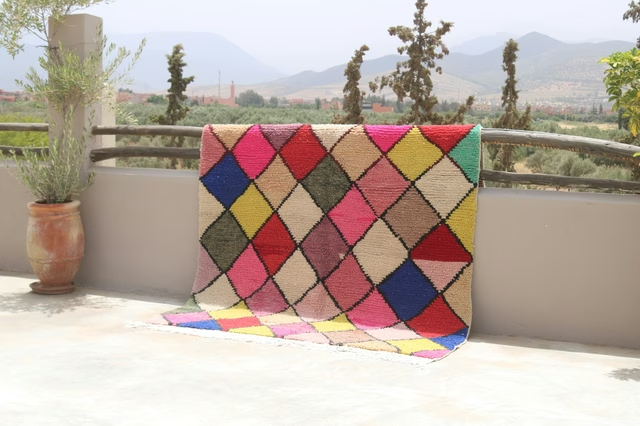
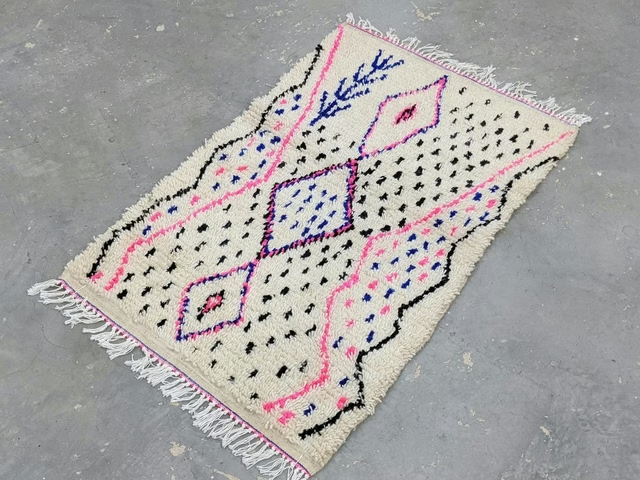
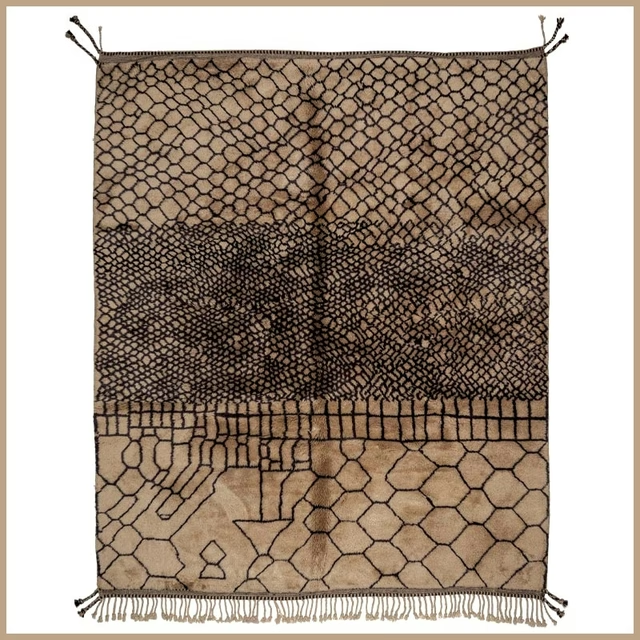
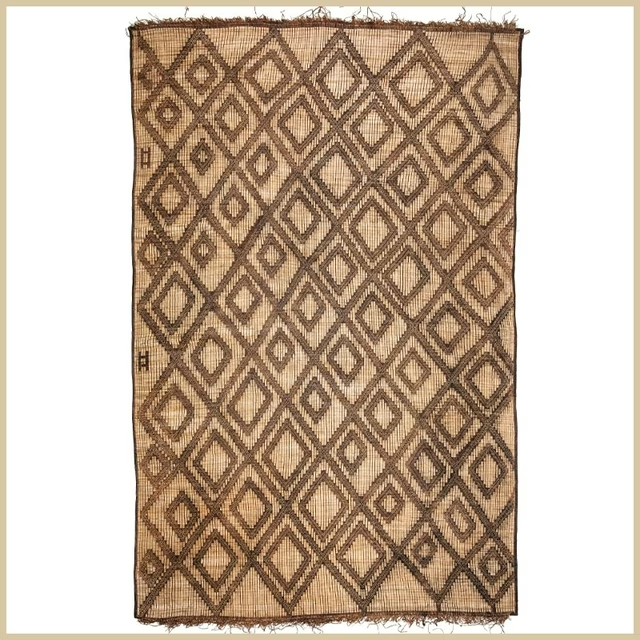
Fibre: what the rug is made of
Most rugs sold today are polypropylene, polyester or nylon. These are plastics made from oil or gas. They resist stains and are inexpensive to produce, they shed tiny plastic fibres as they wear, and at the end of their life they do not break down.
Wool grows back on the sheep every year and is biodegradable. Cotton and jute are plant fibres with the same advantage at the end of life. Rugs made from recycled plastic bottles keep waste in use for one more cycle, which has value, but the result is still a plastic rug. Viscose, sometimes sold as bamboo silk, starts as plant pulp and goes through a heavy chemical process.
Construction: knots or glue
How a rug is held together matters as much as the fibre. A hand-knotted or hand-woven rug is yarn tied or interlaced on a foundation, and nothing else. A tufted rug, even a handmade one in pure wool, has its tufts held in place by a layer of latex adhesive and a cloth backing.
That adhesive is what gives some new rugs their smell, and it is what fails first. After some years the latex dries, crumbles and releases powder, and the rug cannot be put right. A knotted rug has no adhesive to fail. It can be washed, rewoven where it is damaged and rebound at the edges, which leads to the point that matters most.
Lifespan: the measure that outweighs the rest
The most eco friendly rugs are the ones you do not have to replace. A synthetic rug that looks tired after five years and goes to landfill has a larger footprint over time than a wool rug that serves for decades, whatever the label said on the day it was bought.
Ask, then, how the rug will age. Will the pile recover or mat? Can it be cleaned properly? Can it be repaired? Will you still like it? A plain or traditional design in a natural fibre tends to outlast fashions. Buying one good rug and keeping it is the least glamorous and most effective environmental choice in this whole subject.
Dyes, washing and transport: what to ask
Here it pays to be sceptical, including of us. Claims about natural dyes, chemical-free washing or low-impact production are hard for a buyer to check. Ask a seller what they can document, and treat a precise, limited answer as more trustworthy than a sweeping one.
Independent certification exists for some of these points, and a seller who holds a certificate will be able to name it. We do not claim any certification for our rugs, and we do not describe their dyes as natural, because we cannot prove it piece by piece. Transport counts as well: a rug shipped once and kept for decades compares well with several short-lived ones.
Where our rugs stand
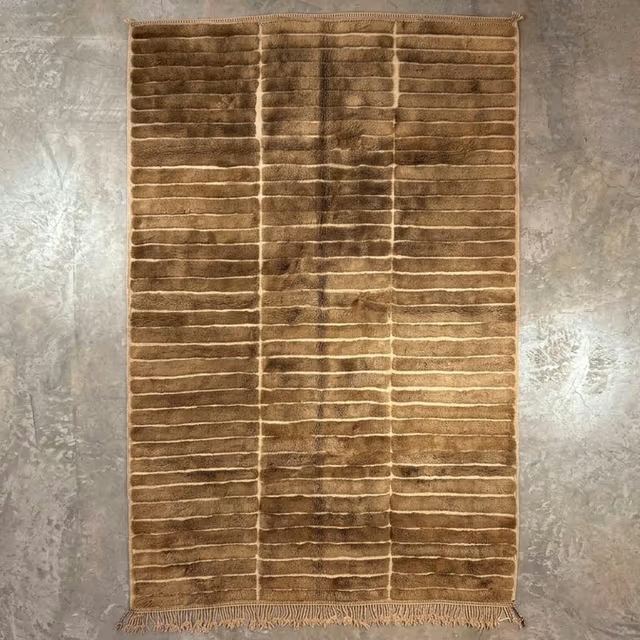
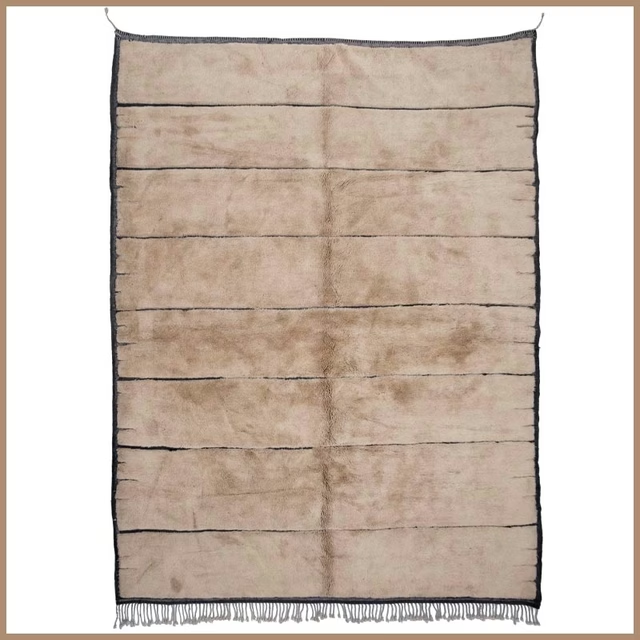
What we can state is simple. Every rug we sell is knotted by hand, in wool, in Morocco. There is no latex backing and no synthetic pile. Each is made by hand, slowly, and built in a way that allows washing and repair.
What we do not state: that our rugs are certified, organic, carbon-neutral or naturally dyed. The rugs shown on this page come from our whole collection of 275 pieces. Each rug is one of a kind, with its exact measurements on its own page. Delivery is free worldwide, duties and taxes included.
What you can verify about us
- Origin
- Made in MoroccoHand-knotted Berber rugs from the Atlas regions. Every rug is one of a kind.
- Construction
- Hand-knotted woolVerified at every stage — never machine-tufted.
- Delivery
- Duties includedFree shipping; import duties and taxes are included in the price.
- Returns
- 14 daysIn condition received, full refund of the purchase price.
Frequently Asked
Questions
- What is the most eco friendly rug material?
- Natural fibres that last: wool first, then cotton and jute. They are renewable and biodegradable.
- Are wool rugs eco friendly?
- Wool is renewable, biodegradable and long-lived. How a particular rug was dyed and washed is a separate question to put to the seller.
- Are rugs made from recycled plastic eco friendly?
- They reuse waste once, which helps, but they remain plastic rugs that shed fibres and do not break down.
- Are your rugs certified?
- No. We do not claim any certification. Our rugs are hand-knotted in wool, without latex backing.
Sources & References
What this page rests on
- 1. Wool Carpet Sustainability Study
- 2. International Wool Textile Organisation

The person behind the piece
“Before you buy, I’ll send you a video of the actual rug in natural light — not a stock photo. I answer the messages myself.”
I’m Youssef. I started ARINID because this market is full of middlemen and machine-made imitations sold as the real thing — and I grew up close enough to the looms to know the difference.
Every piece we list is one of a kind, hand-knotted in Morocco. If you want to talk through sizing for your room, I’m on the other end of the message. A rug at this level is a thirty-year decision. You should be able to look the person selling it to you in the eye.
Youssef
Founder, ARINID
The next step
See every rug we currently offer
Each piece is hand-knotted in Morocco and delivered to your door, with shipping, duties and taxes included.