Hallway Runner: Length, Width and Wool for the Busiest Floor
Last updated
A hallway runner has the hardest job of any rug in the house. Everyone walks on it, always along the same line, often in outdoor shoes, and it lies in a space that is long, narrow and full of doors. Chosen well, it quietens the corridor, protects the floor and turns a passage into part of the home. Chosen badly, it slides, blocks doors and wears a path within a year. This page explains how to measure for a hallway runner, what to look for in the rug itself, and what the hand-knotted wool runners in our collection are like.
From the Atelier
Hallway Runner currently in our collection 33
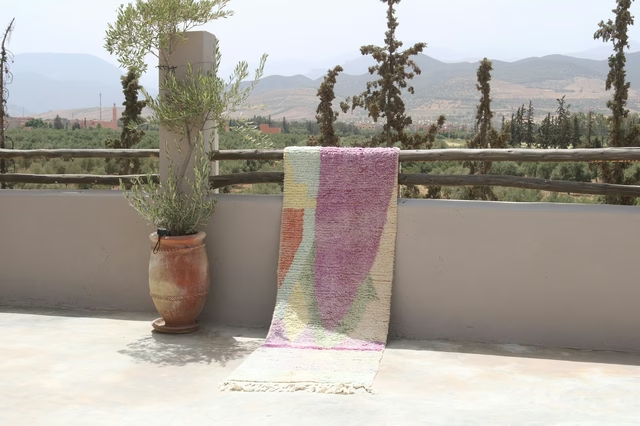
Azilal "Lilac Haze"
280 × 74 cm
€1,547
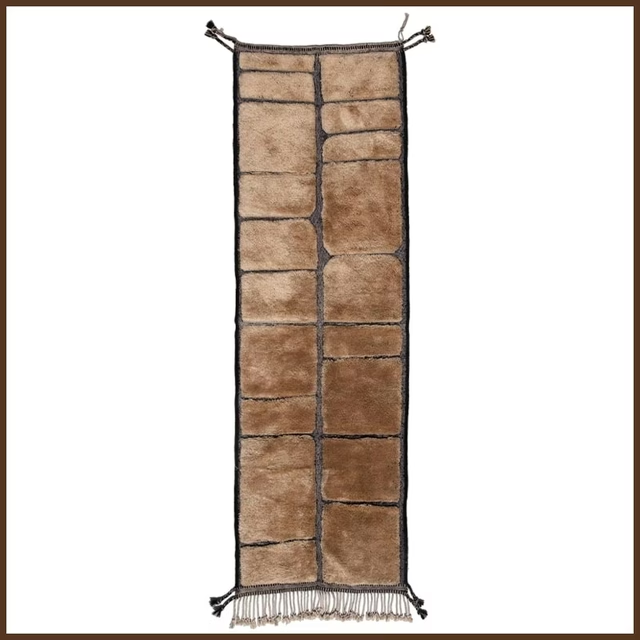
Beni Mrirt "Taupe Path"
300 × 95 cm
€1,564
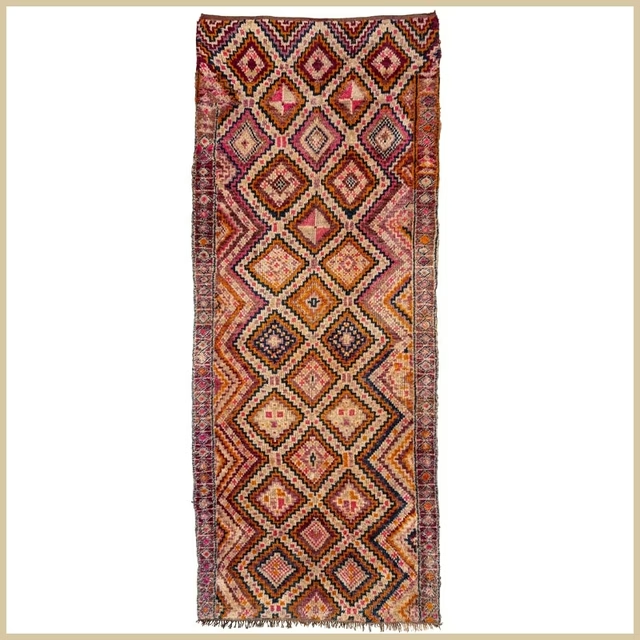
Boujaad "Chromatic Joy"
415 × 170 cm
€5,100
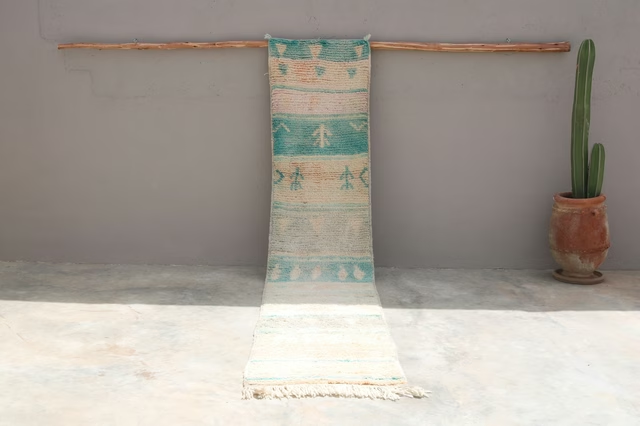
Azilal "Mint Passage"
380 × 80 cm
€1,547
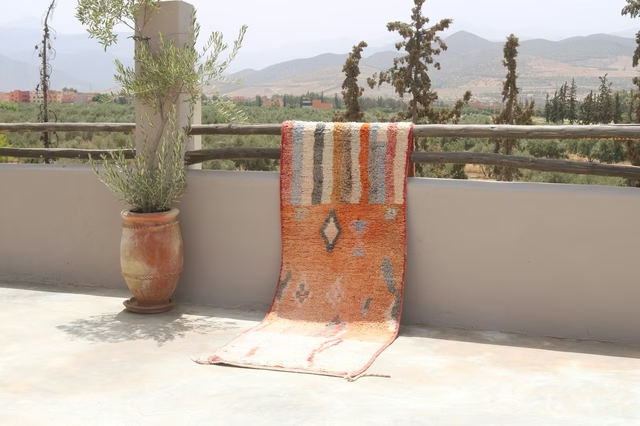
Azilal "Rust Stripes"
300 × 82 cm
€1,547
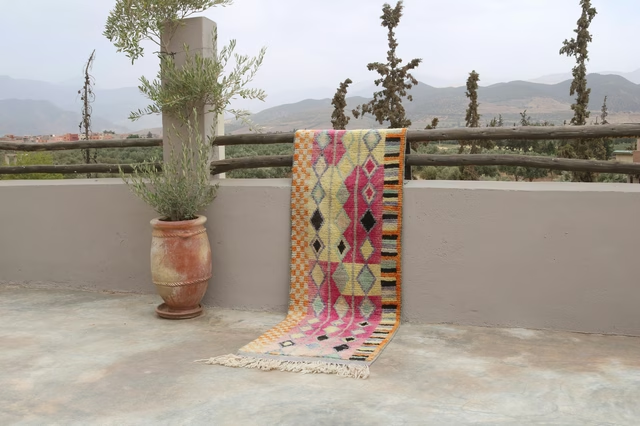
Azilal "Saffron Diamonds"
300 × 76 cm
€1,547
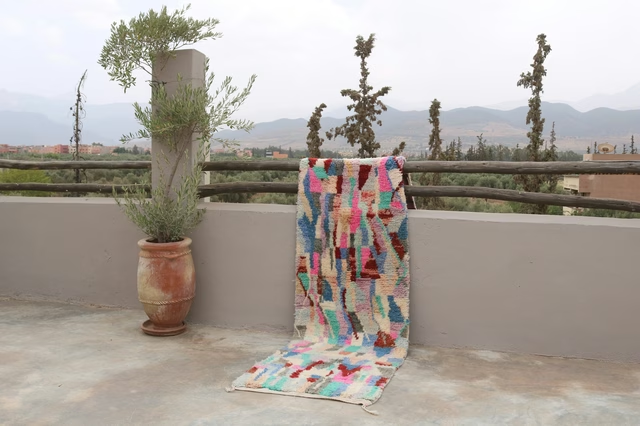
Azilal "Pastel Patchwork"
300 × 80 cm
€1,547
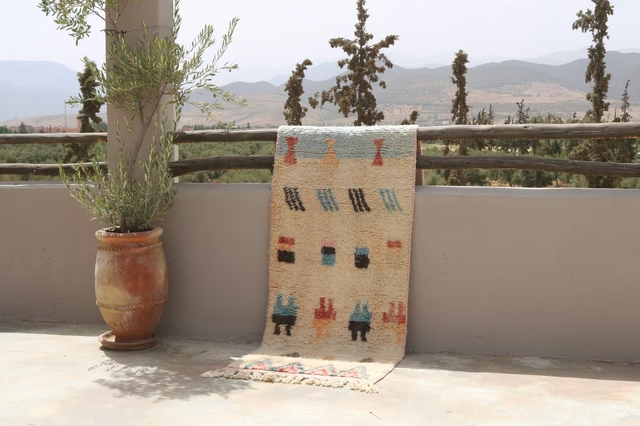
Azilal "Village Figures"
300 × 80 cm
€1,547
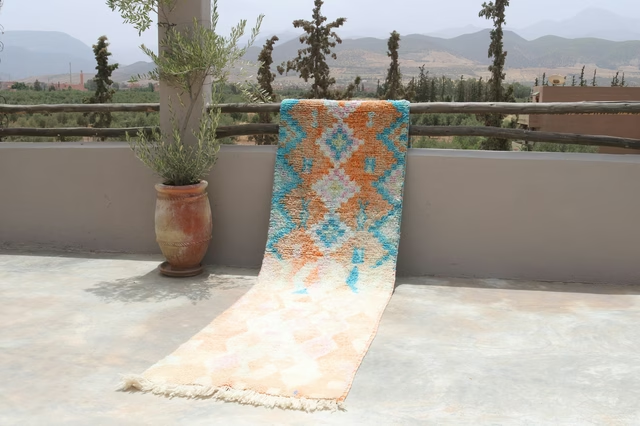
Azilal "Coastal Fade"
390 × 90 cm
€1,547
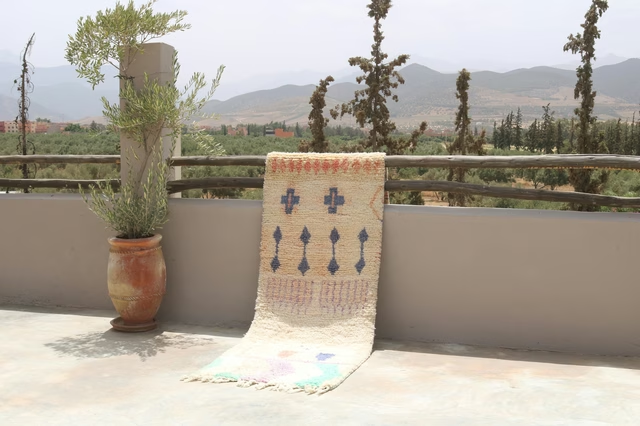
Azilal "Navy Crosses"
300 × 84 cm
€1,547
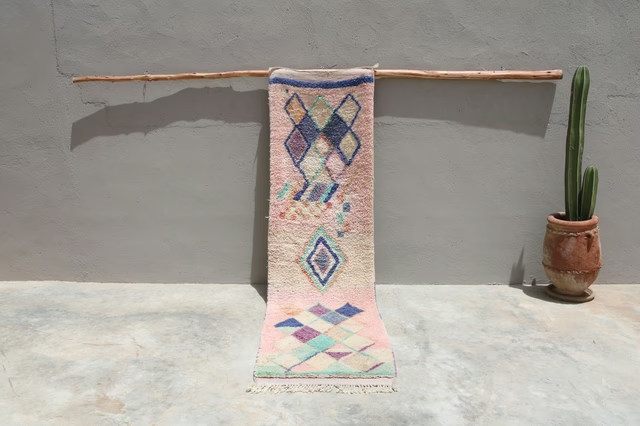
Azilal "Rose Lozenges"
310 × 83 cm
€1,547
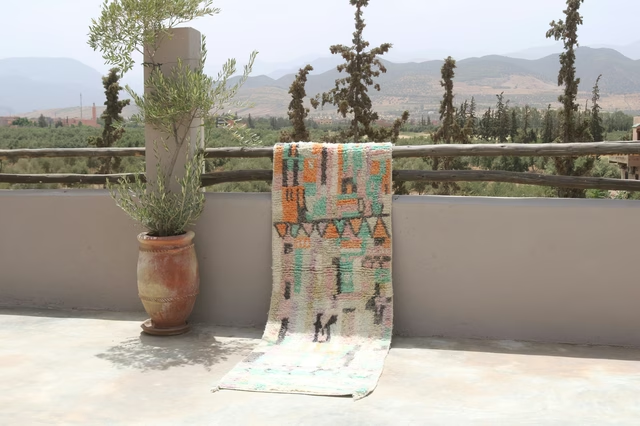
Azilal "Motif Sampler"
300 × 80 cm
€1,547
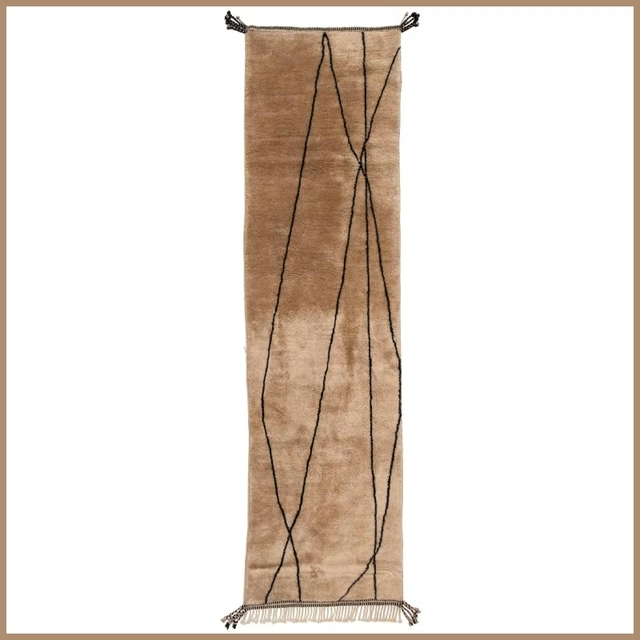
Beni Mrirt "Narrow Taupe"
400 × 100 cm
€1,974
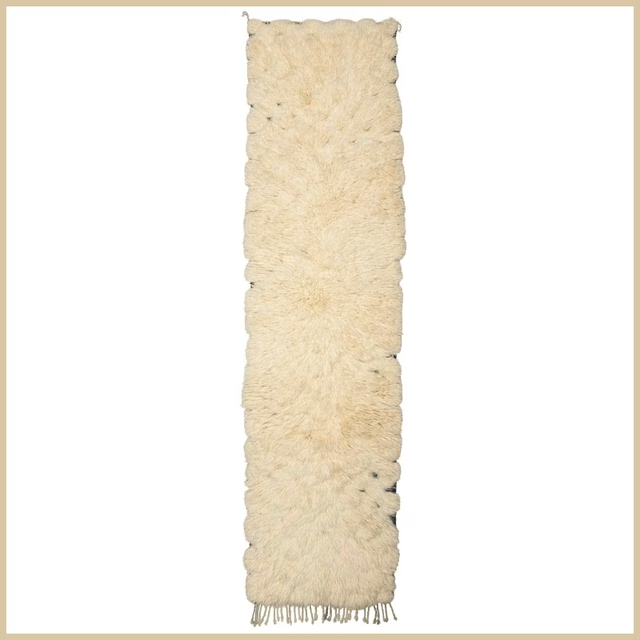
Beni Mrirt "Narrow Cream"
314 × 80 cm
€1,629
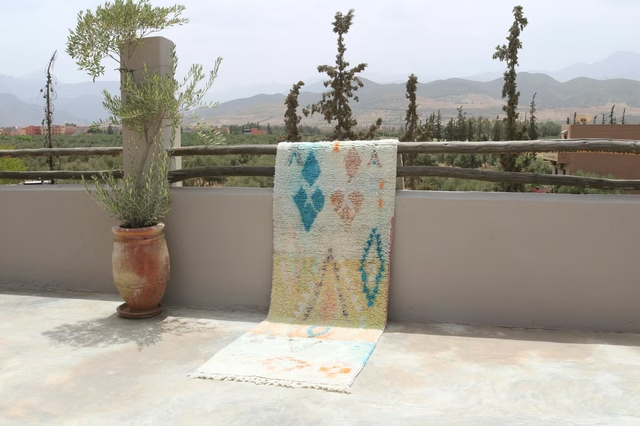
Azilal "Turquoise Kites"
310 × 82 cm
€1,547
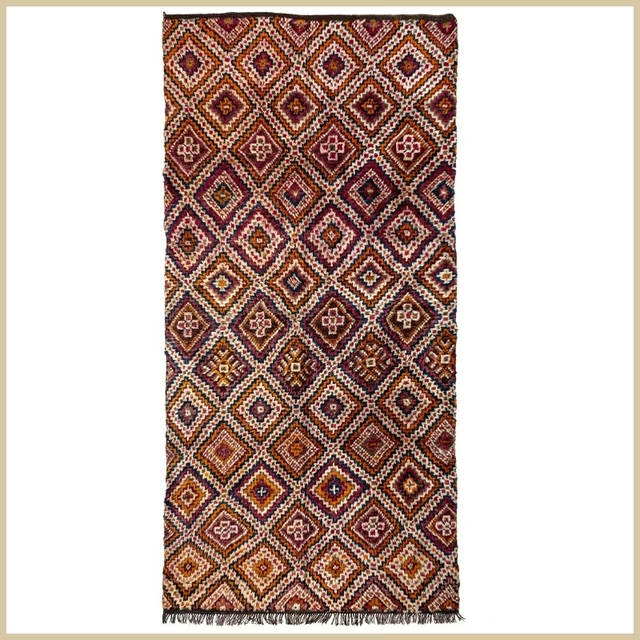
Boujaad "Burgundy Ornament"
419 × 185 cm
€5,490
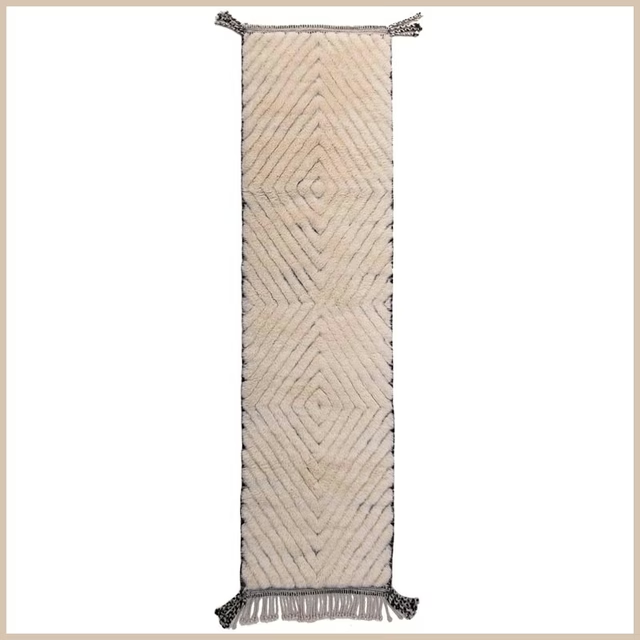
Beni Mrirt "Slender Lattice"
300 × 93 cm
€1,746
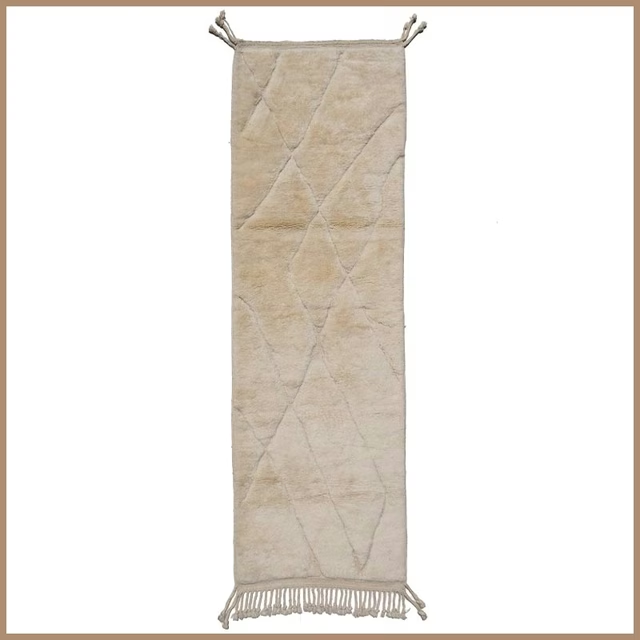
Beni Mrirt "Minimal Path"
300 × 95 cm
€1,564
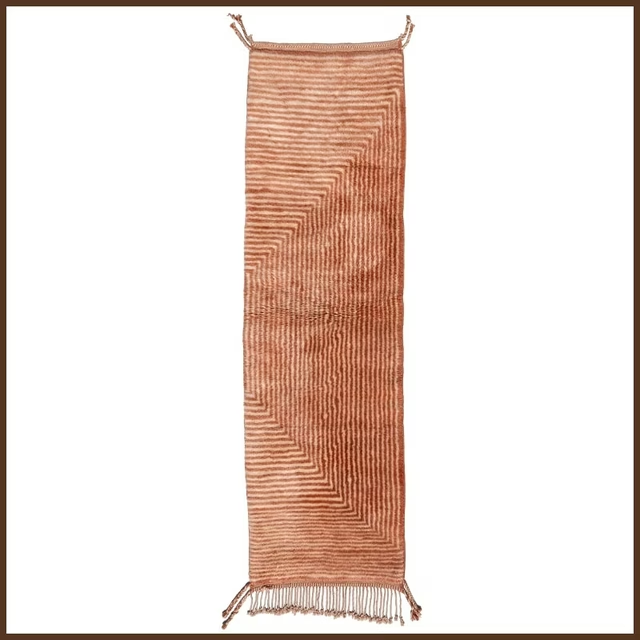
Beni Mrirt "Rust Runner"
320 × 95 cm
€1,629
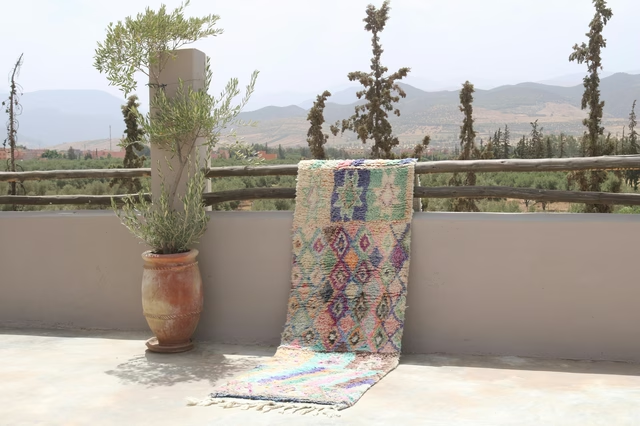
Azilal "Pastel Lattice"
306 × 80 cm
€1,547
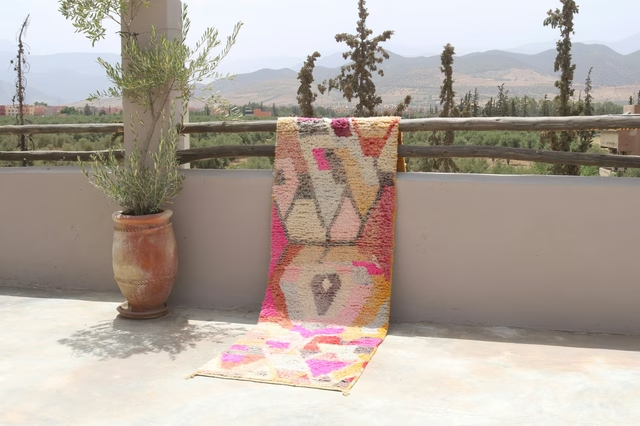
Azilal "Peach Geometry"
300 × 75 cm
€1,547
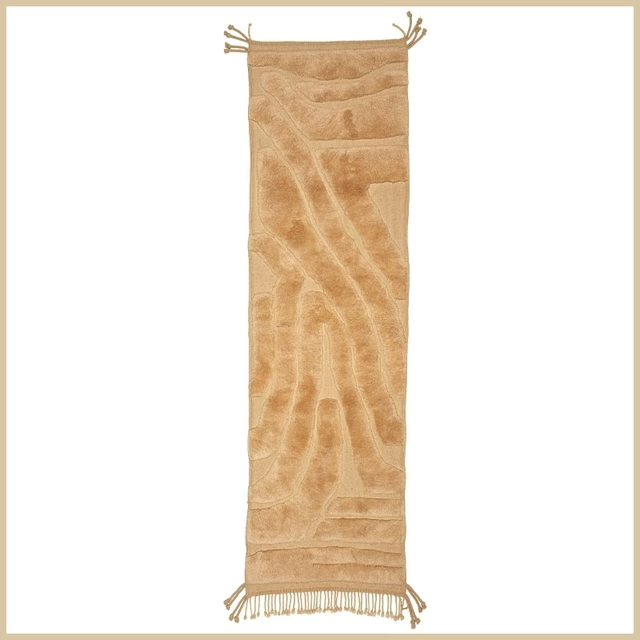
Beni Mrirt "Camel Runner"
296 × 86 cm
€1,642
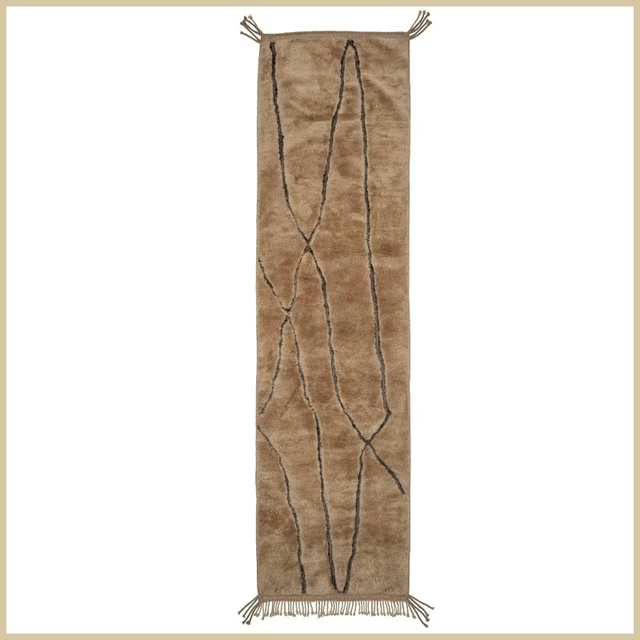
Beni Mrirt "Taupe Runner"
411 × 111 cm
€2,513
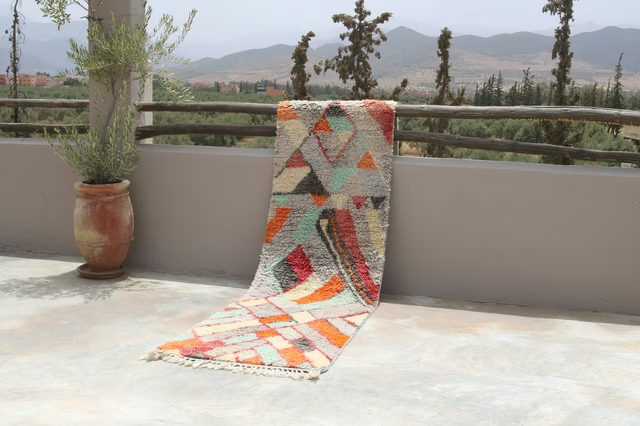
Azilal "Sunset Chevrons"
390 × 81 cm
€1,547
Show all 33
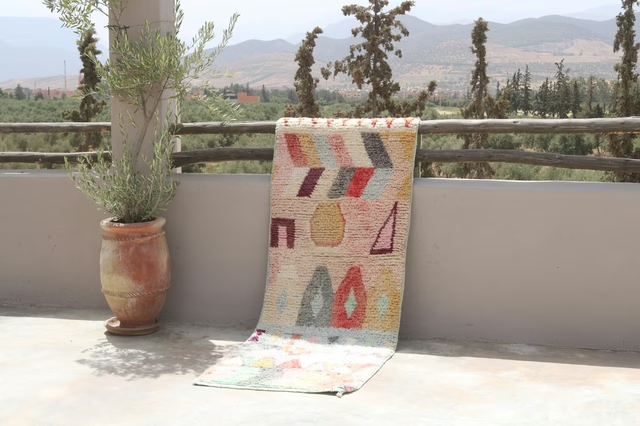
Azilal "Arch Sampler"
300 × 81 cm
€1,547
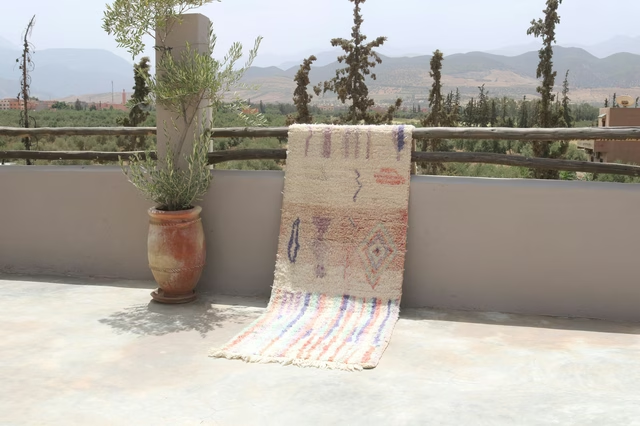
Azilal "Faded Ribbons"
310 × 87 cm
€1,547
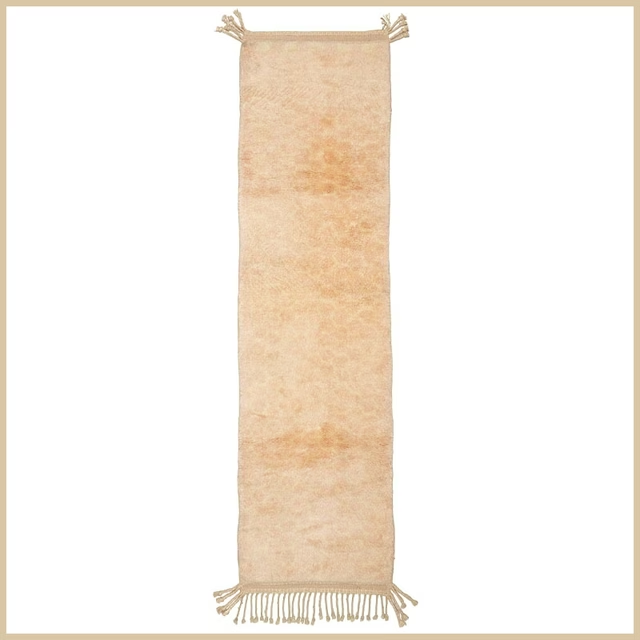
Beni Mrirt "Narrow Neutral"
298 × 80 cm
€1,629
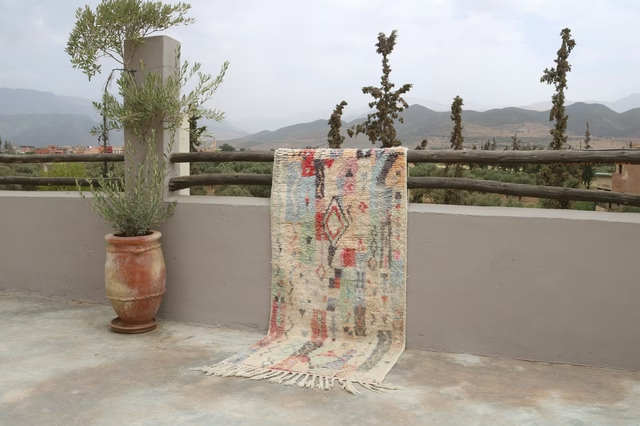
Azilal "Faded Garden"
300 × 92 cm
€1,547
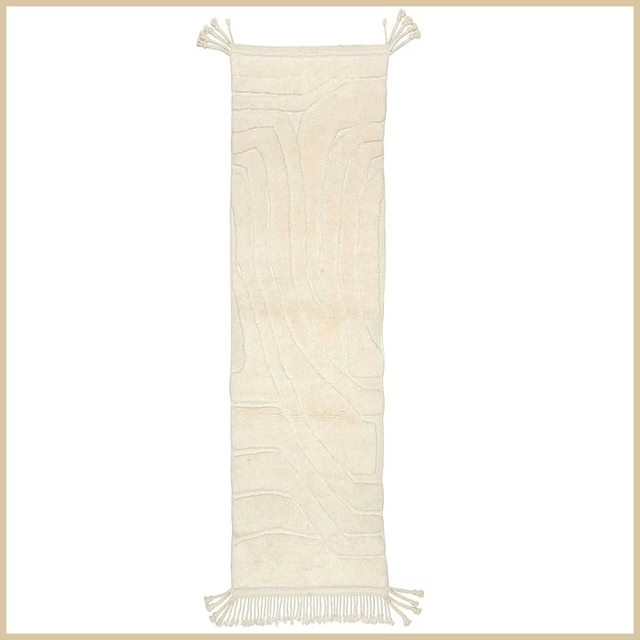
Beni Mrirt "Minimal Runner"
325 × 93 cm
€1,603
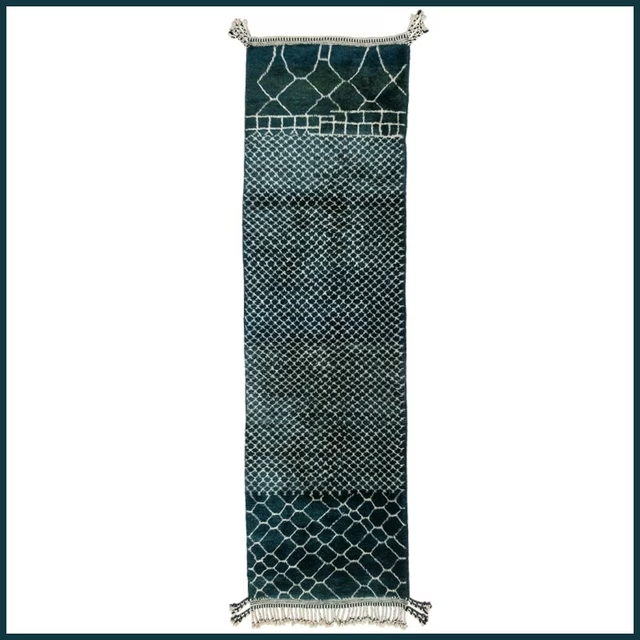
Beni Mrirt "Teal Ornament"
300 × 95 cm
€1,564
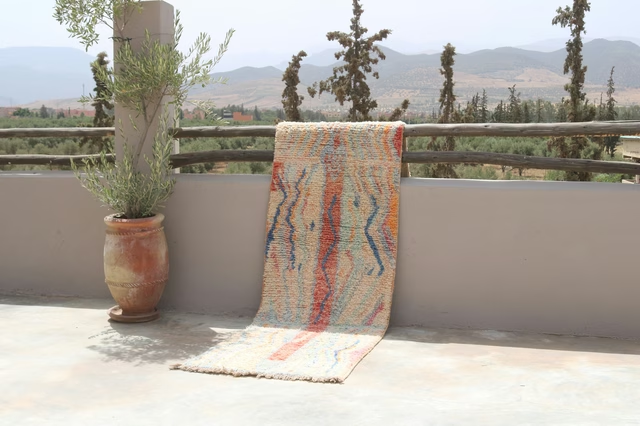
Azilal "Ember Traces"
310 × 82 cm
€1,547
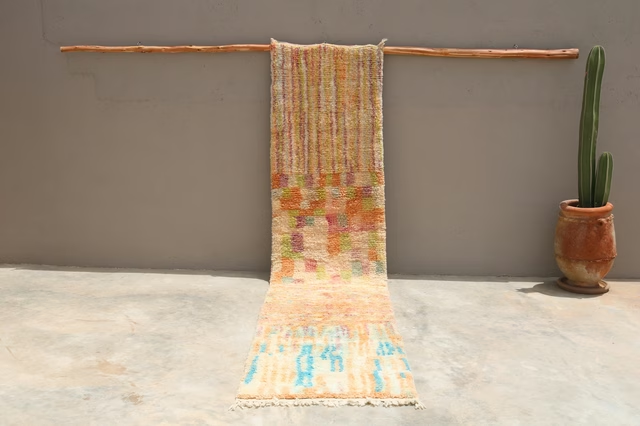
Azilal "Ochre Journey"
380 × 85 cm
€1,547
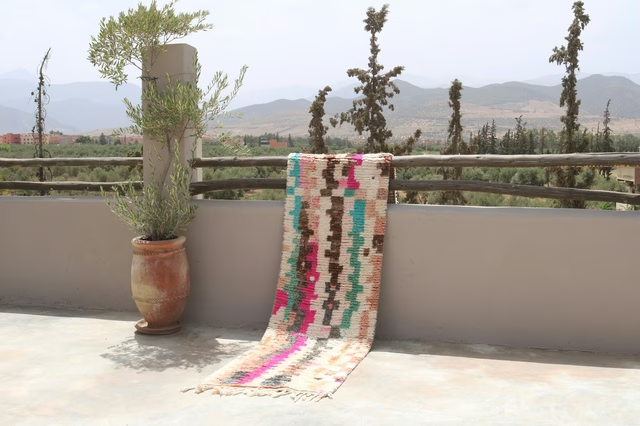
Azilal "Fuchsia Ladder"
305 × 70 cm
€1,547
How long and how wide
Measure the hall, then subtract. A runner should stop 6 to 12 inches short of the wall or doorway at each end, and leave 3 to 5 inches of floor visible along each side. A hallway 3 ft 6 in wide therefore takes a runner about 2 ft 6 in to 2 ft 10 in wide.
Length is where hand-knotted runners need care, because they come in the lengths at which they were woven and are not cut to order. If the hall is longer than the runner, centre it and accept more floor at each end, or use two runners with a stretch of bare floor between them, placed so that the gap falls at a doorway. Do not let a runner end in the middle of a door opening.
Doors, thresholds and corners
Open every door onto the hall before you buy. Each one has to clear the pile and the pad. Measure the gap under the lowest door and compare it with the thickness of the rug. Where a door will not clear, end the runner before it.
In an L-shaped hall, use two runners that meet at the corner at right angles, with a few inches between them, and do not try to turn one rug around the bend. At the front door, start the runner a step or two inside, and put a separate, tougher mat at the threshold to catch grit and water before they reach the wool.
What a hallway asks of the rug
Density first. In a corridor, feet land on the same strip thousands of times a year. A dense wool pile takes this far better than a loose or very long one, and wool springs back where synthetics crush into a visible track. Hand-knotted construction matters too, since there is no glued backing to break down under traffic.
Then colour and pattern. A hall collects more dirt than any other room and usually has the least daylight. A mid-toned, patterned runner hides the line of wear and the daily dust. Pale plain runners are for upstairs landings where people are in socks. Diamonds and bands running down the length also draw the eye along and make a short hall feel longer.
Keeping a hallway runner in place and in shape
A runner on a hard floor must have a non-slip pad, cut an inch narrower than the rug all round. A long narrow rug has little weight to hold it, and a sliding runner at the top of a staircase is dangerous. A pad also stops the edges from rippling.
Turn the runner end for end every three or four months, so that the wear from the entrance end is shared. Vacuum with suction only, along the length, and lift it now and then to clean the floor beneath, where grit collects. If the hall leads from the front door, expect to vacuum twice a week.
The hallway runners in this selection
Thirty-three rugs of runner proportions. Thirty-one are true runners between 2 ft 4 in and 3 ft 8 in wide: twenty Azilal, lighter and mostly patterned, and eleven Beni Mrirt, denser and quieter. Twenty-two of them are between 9 ft 10 in and 10 ft 8 in long, three are a little shorter, and six are between 12 ft 6 in and 13 ft 6 in. Two wider Boujaad pieces, about 5 ft 7 in to 6 ft 1 in by 13 ft 8 in, suit a broad gallery or landing.
Six are multicoloured, six have an ivory ground, five are sand and five are in faded vintage tones, with others in pink, terracotta, teal and gold. We have no runners shorter than 9 feet. For a short hall, or an exact length, the bespoke studio makes one to measure. Each rug is one of a kind, with its exact measurements on its own page. Delivery is free worldwide, duties and taxes included.
What you can verify about us
- Origin
- Made in MoroccoHand-knotted Berber rugs from the Atlas regions. Every rug is one of a kind.
- Construction
- Hand-knotted woolVerified at every stage — never machine-tufted.
- Delivery
- Duties includedFree shipping; import duties and taxes are included in the price.
- Returns
- 14 daysIn condition received, full refund of the purchase price.
Frequently Asked
Questions
- How long should a hallway runner be?
- Long enough to leave 6 to 12 inches of floor at each end. In a long hall, two runners with a gap at a doorway work well.
- How wide should a hallway runner be?
- Narrow enough to show 3 to 5 inches of floor on each side. Most halls take 2 ft 6 in to 3 ft.
- Is wool good for a hallway runner?
- Yes. A dense wool pile recovers from traffic and hides soil. Choose pattern and a mid-tone for an entrance hall.
- Do hallway runners need a rug pad?
- On hard floors, always. A long narrow rug slides easily, which is a hazard near stairs.
Sources & References
What this page rests on
- 1. internal_researchHallway runner sizing methodology
- 2. competitor_pricingRunner pricing across Moroccan rug categories

The person behind the piece
“Before you buy, I’ll send you a video of the actual rug in natural light — not a stock photo. I answer the messages myself.”
I’m Youssef. I started ARINID because this market is full of middlemen and machine-made imitations sold as the real thing — and I grew up close enough to the looms to know the difference.
Every piece we list is one of a kind, hand-knotted in Morocco. If you want to talk through sizing for your room, I’m on the other end of the message. A rug at this level is a thirty-year decision. You should be able to look the person selling it to you in the eye.
Youssef
Founder, ARINID
The next step
See every rug we currently offer
Each piece is hand-knotted in Morocco and delivered to your door, with shipping, duties and taxes included.