Hand Woven Rugs: What to Expect in the First Year
Last updated
Hand woven rugs do not behave like machine-made ones, and most of the worried questions people ask in the first weeks have reassuring answers. A new handmade wool rug sheds. Its colour looks different from each end of the room. A tuft stands up above the rest. One side measures slightly more than the other. All of this is normal, and almost all of it settles. This page describes what to expect from hand woven rugs in the first year, what each of these things is called, what to do about it, and the few signs that do deserve attention.
From the Atelier
Currently in our collection
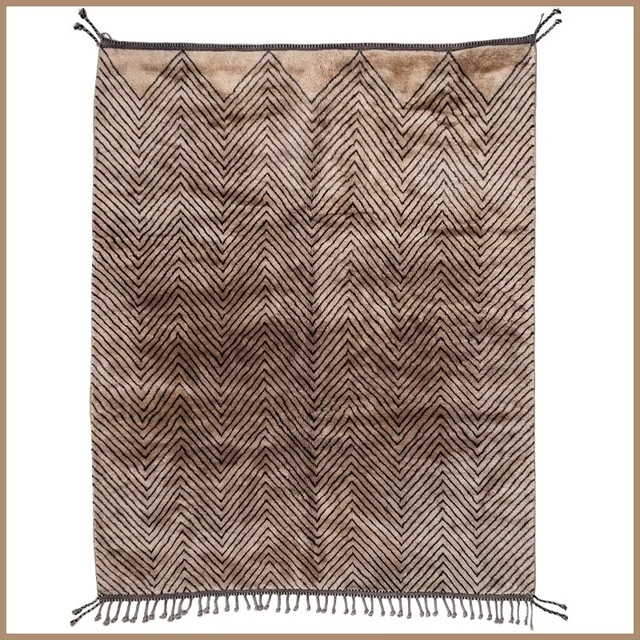
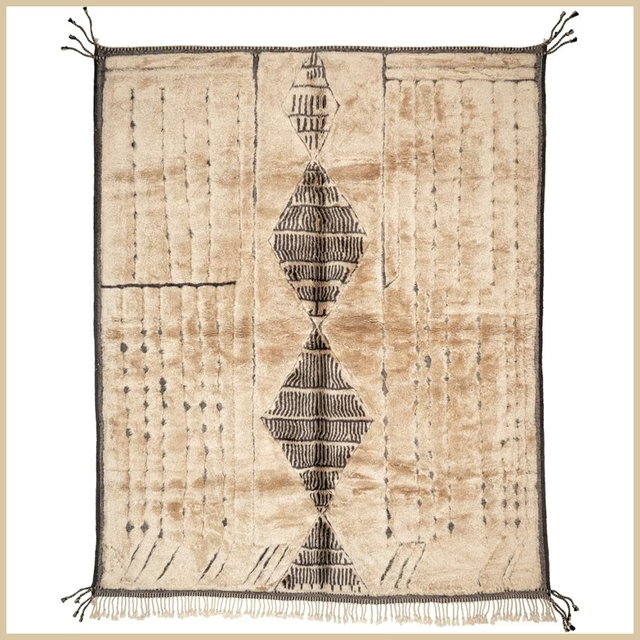
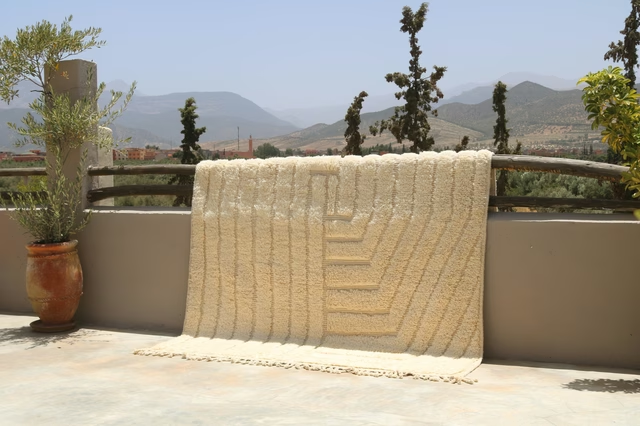
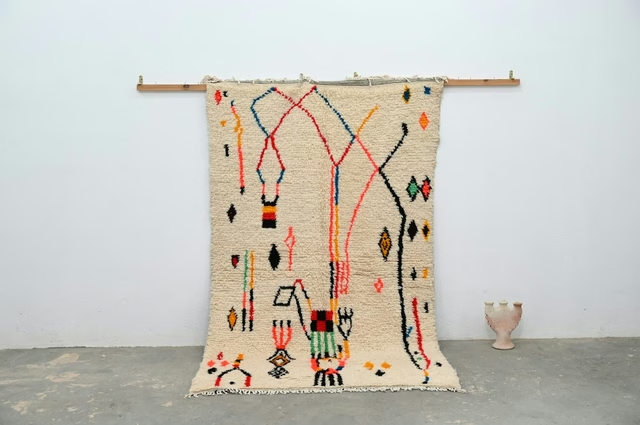
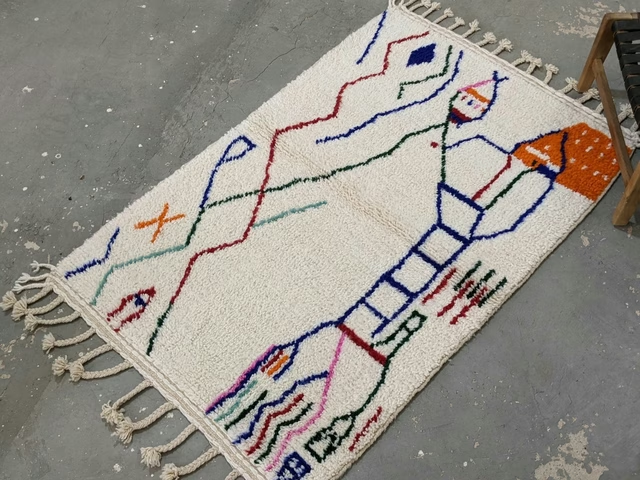
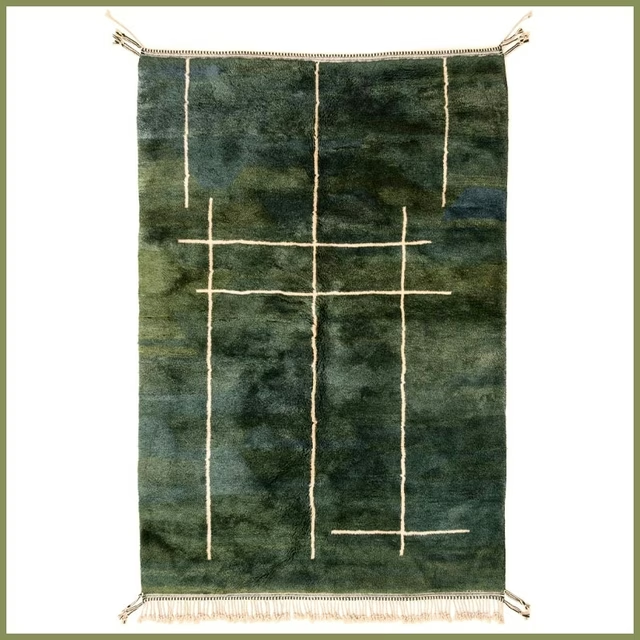
Shedding and sprouts
For the first few months a new wool rug releases loose fibre: short ends left in the pile from spinning and shearing. You will find fluff in the vacuum and on dark socks. This is not the rug wearing out. Vacuum gently with suction only, once or twice a week, and it tapers off. Rugs of thick, loosely spun yarn shed for longest.
A sprout is a single tuft that stands taller than its neighbours, usually a knot end that has worked its way up to the surface. Do not pull it. Trim it level with the pile using a pair of scissors. Pulling can draw the knot out and leave a small gap.
Light side, dark side
Walk around a hand-knotted rug and its colour changes. From one end it looks lighter and slightly silvery, and from the other deeper and richer. The pile leans in one direction, the direction in which the knots were tied, so you see either the sides of the fibres or their tips.
Use this. Turn the rug so that the view you like best faces the door or the sofa. The same effect makes footprints and vacuum tracks visible as patches, which brush out. Within a single colour you may also see faint horizontal bands of lighter and darker tone. That is abrash, the result of yarn dyed in separate batches.
Shape, creases and corners
A hand woven rug is seldom a perfect rectangle. Tension on a hand loom varies, so one end may be an inch or so wider than the other and the sides may curve very slightly. Measurements are taken after the rug is finished and rarely fall on round numbers.
A rug that has travelled folded or rolled will show creases and may have corners that lift. Lay it flat, roll the stubborn parts the opposite way for a day, and give it one to two weeks under its own weight. Creases relax as the wool takes up moisture from the air. A pad underneath helps the rug lie flat and stay put.
Smell, fringe and colour in hand woven rugs
New wool has a scent: a mild, slightly sweet animal smell that is strongest when the rug is first unwrapped and in humid weather. Air the room and it fades over a few weeks. A sharp chemical smell, or a sour, musty one, is different and is worth raising with the seller.
The fringe is the end of the warp threads. It is part of the structure and not a trim. Keep the vacuum off it and comb it straight with your fingers. As for colour, test before any wet cleaning by pressing a damp white cloth on each colour in turn. If dye transfers to the cloth, use only dry methods and leave washing to a specialist.
What is not normal, and our rugs
A few things do call for action. Bald patches, or pile that comes away in clumps. Holes, or edges that are unravelling. Small sandy grains and thin spots in a rug that has been stored, which point to moths. Colour that runs when the rug gets wet. Any of these in a new rug should be raised with the seller straight away, with photographs.
Everything in our collection is knotted by hand in wool in Morocco: 275 rugs, among them 120 Azilal, 119 Beni Mrirt and twenty-two Beni Ourain. Each rug is one of a kind, with its exact measurements on its own page. Delivery is free worldwide, duties and taxes included.
What you can verify about us
- Origin
- Made in MoroccoHand-knotted Berber rugs from the Atlas regions. Every rug is one of a kind.
- Construction
- Hand-knotted woolVerified at every stage — never machine-tufted.
- Delivery
- Duties includedFree shipping; import duties and taxes are included in the price.
- Returns
- 14 daysIn condition received, full refund of the purchase price.
Frequently Asked
Questions
- Why is my new hand woven rug shedding?
- Loose fibre left from spinning works its way out in the first months. Vacuum gently with suction only and it reduces.
- Why does my rug look a different colour from each side?
- The pile leans one way, so light reflects differently from each end. It is a normal feature of hand-knotted pile.
- Should I pull out a loose tuft?
- No. Trim it level with scissors. Pulling can remove the knot.
- How long does a new rug take to lie flat?
- Usually one to two weeks. Rolling the creased parts the opposite way and using a pad speeds it up.
Sources & References
What this page rests on
- 1. Atlas Weaving Method Documentation
- 2. Hand Weavers Guild

The person behind the piece
“Before you buy, I’ll send you a video of the actual rug in natural light — not a stock photo. I answer the messages myself.”
I’m Youssef. I started ARINID because this market is full of middlemen and machine-made imitations sold as the real thing — and I grew up close enough to the looms to know the difference.
Every piece we list is one of a kind, hand-knotted in Morocco. If you want to talk through sizing for your room, I’m on the other end of the message. A rug at this level is a thirty-year decision. You should be able to look the person selling it to you in the eye.
Youssef
Founder, ARINID
The next step
See every rug we currently offer
Each piece is hand-knotted in Morocco and delivered to your door, with shipping, duties and taxes included.