Rugs for Allergies: What a Rug Does with Dust, and What Helps
Last updated
Rugs for allergies is a subject full of confident claims, most of them made by people selling rugs. We sell rugs too, so we will be careful. No rug is allergy-proof, no fibre is free of dust, and nothing on this page is medical advice. What can usefully be said is practical: what any rug does with household dust, which features make a rug easier to keep clean, what to expect from a new rug in the first weeks, and which questions belong with a doctor and not with a rug shop. If you or your child has a diagnosed allergy or asthma, follow your doctor's advice about floor coverings first.
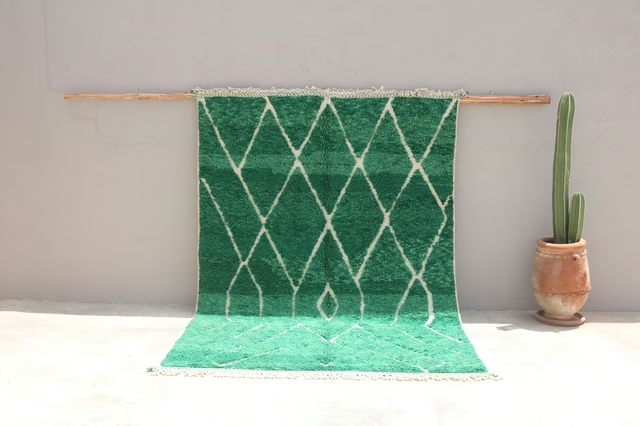
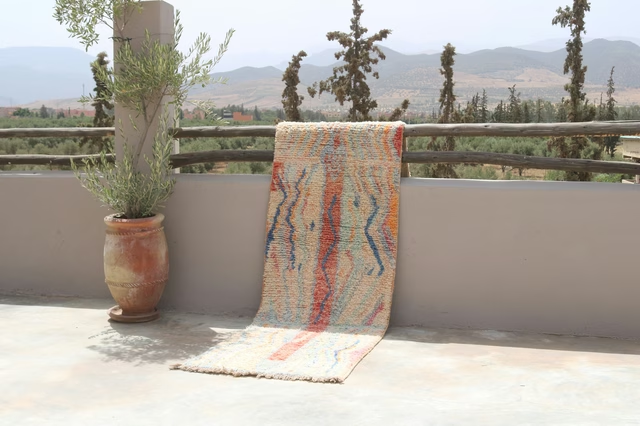
What any rug does with dust
Every textile floor covering, of any fibre, collects dust, hair, pollen brought in on shoes and whatever else is in the air of a house. A rug holds it in the pile until it is vacuumed out. A hard floor holds nothing, so the same dust lies loose and moves when people walk or a door opens.
Which of these is preferable for a particular person is a medical question, and advice differs from case to case. What is not in doubt is that a rug which is cleaned regularly holds less than one which is not, and that a rug you cannot clean properly is a poor choice for anyone sensitive to dust.
Features that make a rug easier to keep clean
A shorter, denser pile gives up dust to a vacuum more readily than a long, shaggy one. A rug that can be lifted lets you clean both sides and the floor beneath, which fitted carpet does not allow. A size you can carry outside to shake and air is an advantage.
Construction matters as well. A hand-knotted rug has no glued backing, so it can be washed through by a specialist and has no adhesive layer to break down into powder with age. Tufted rugs are held together with latex, which can have a smell when new and which crumbles when old.
Wool, specifically
Wool is an animal fibre. A small number of people react to wool against the skin, and they generally know it from clothing. If that is you, or your child, speak to your doctor before buying a wool rug, and consider cotton.
A new wool rug sheds loose fibre for the first months, which you will see as fluff. It is not dust, but it is something in the air and on the floor, and it needs frequent gentle vacuuming until it tapers off. New wool also has a mild smell of its own that fades with airing. We make no claim that wool is better or worse for allergies than other fibres.
A cleaning routine that helps
Vacuum once or twice a week with suction only, slowly, and use a machine with a sealed body and a fine filter, so that what is picked up stays in the machine. Vacuum the back of the rug and the floor under it every month or two. Take small rugs outside and shake them.
Keep shoes off the rug, which removes much of what is tracked in. Air the room. Have the rug washed by a specialist every few years, or sooner if needed. Keep humidity moderate, since damp encourages mould in any textile. If symptoms are worse in one room, try taking the rug out of that room for a few weeks and see.
Rugs for allergies: what we state about ours
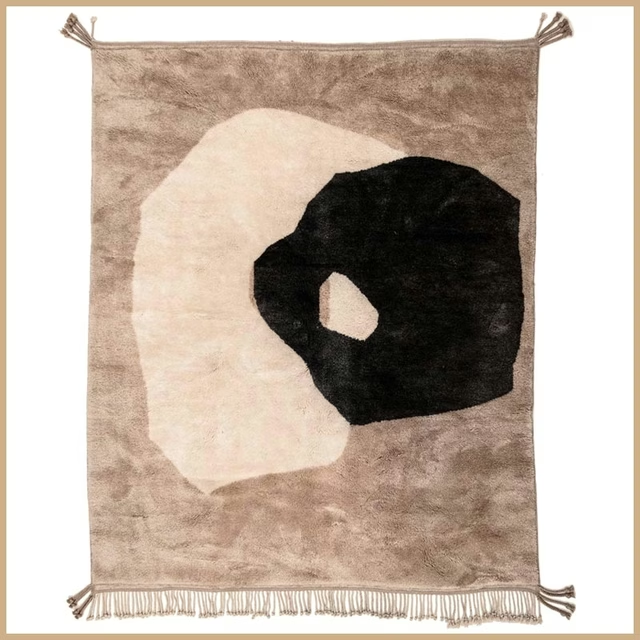
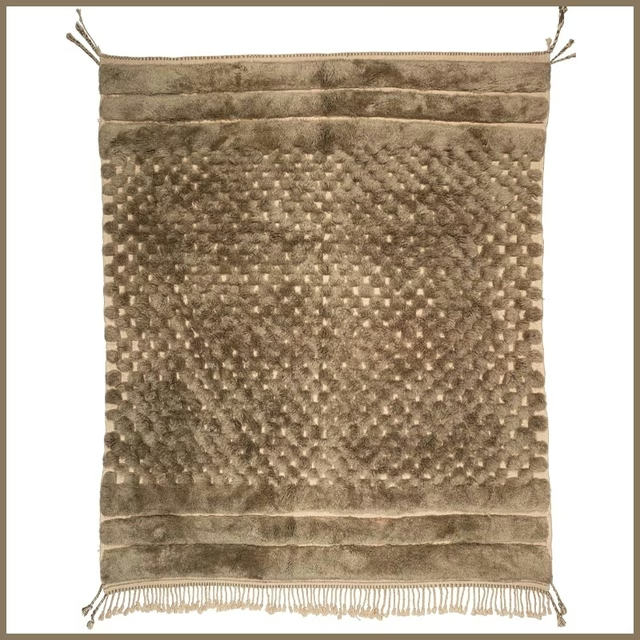
We make no health claims for any rug we sell. We do not describe them as anti-allergy or as suitable for any medical condition. What we can state is what they are made of and how: a wool pile, knotted by hand, with no latex backing.
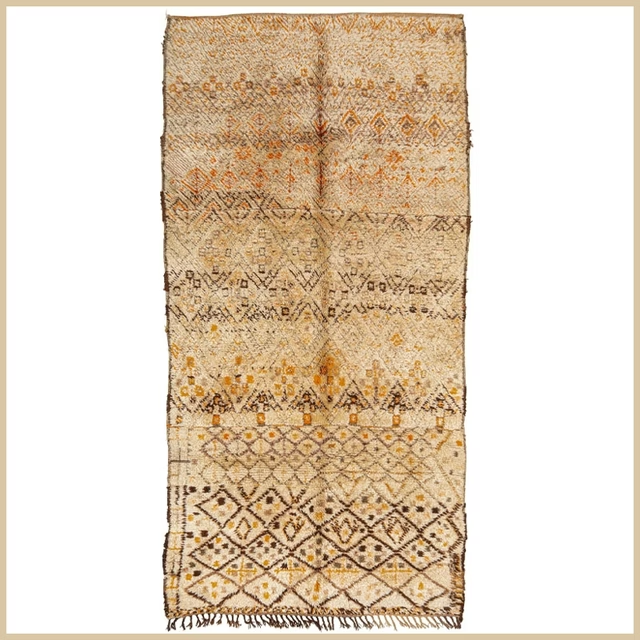
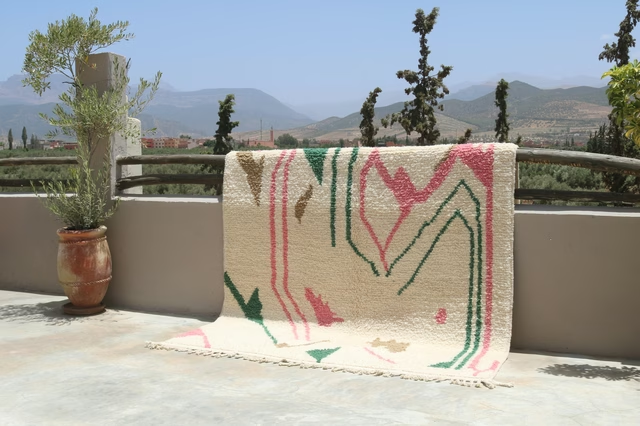
Our collection is 275 hand-knotted wool rugs from Morocco, from small pieces that can be shaken outdoors to room-sized ones. Each rug is one of a kind, with its exact measurements on its own page. Delivery is free worldwide, duties and taxes included.
What you can verify about us
- Origin
- Made in MoroccoHand-knotted Berber rugs from the Atlas regions. Every rug is one of a kind.
- Construction
- Hand-knotted woolVerified at every stage — never machine-tufted.
- Delivery
- Duties includedFree shipping; import duties and taxes are included in the price.
- Returns
- 14 daysIn condition received, full refund of the purchase price.
Frequently Asked
Questions
- Are rugs bad for allergies?
- It depends on the person and on how the rug is cleaned. That is a question for your doctor. Any rug needs regular vacuuming.
- What kind of rug is easiest to keep free of dust?
- A shorter, dense pile that can be lifted, vacuumed on both sides and washed.
- Can I be allergic to a wool rug?
- A small number of people are sensitive to wool. If you react to wool clothing, ask your doctor before buying.
- Do you claim your rugs are allergy-friendly?
- No. We make no health claims for our rugs.
Sources & References
What this page rests on
- 1. Norwegian Institute of Public Health
- 2. International Wool Textile Organisation

The person behind the piece
“Before you buy, I’ll send you a video of the actual rug in natural light — not a stock photo. I answer the messages myself.”
I’m Youssef. I started ARINID because this market is full of middlemen and machine-made imitations sold as the real thing — and I grew up close enough to the looms to know the difference.
Every piece we list is one of a kind, hand-knotted in Morocco. If you want to talk through sizing for your room, I’m on the other end of the message. A rug at this level is a thirty-year decision. You should be able to look the person selling it to you in the eye.
Youssef
Founder, ARINID
The next step
See every rug we currently offer
Each piece is hand-knotted in Morocco and delivered to your door, with shipping, duties and taxes included.