How to Flatten a Rug: Creases, Curled Corners and Ripples
Working out how to flatten a rug is usually the first job after unpacking one. A rug that has travelled folded or rolled remembers the shape it was packed in: fold lines across the middle, corners that curl up, an end that will not lie down. With wool this is temporary. The fibre relaxes with weight, a little warmth and time, and most creases are gone within one to two weeks without any help. The methods below speed that up, and one or two popular tricks are worth avoiding.

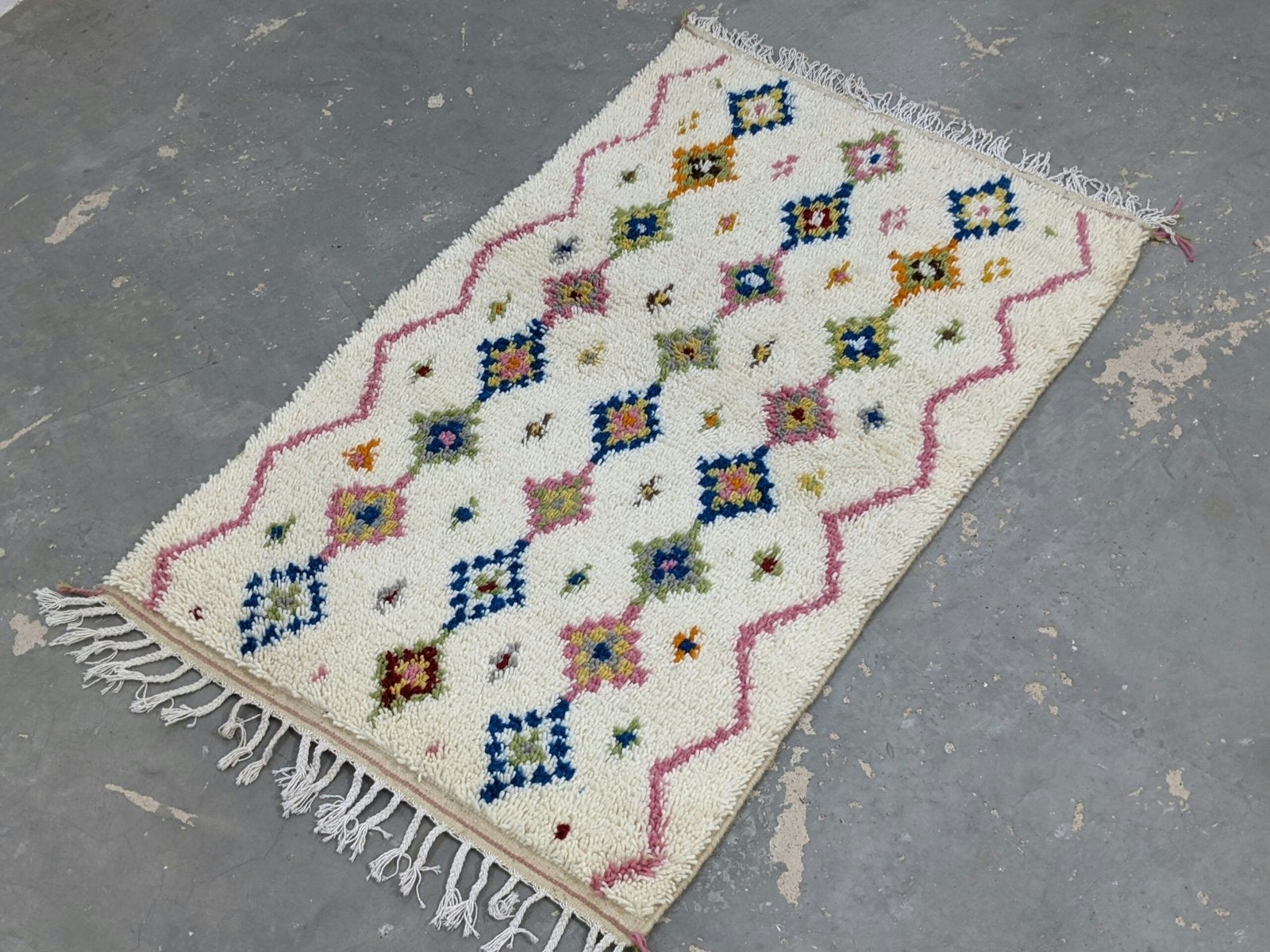
Start with the simplest thing: lay it out and wait
Unroll the rug in the room where it will live, pile side up, and leave it. Normal room temperature and humidity do most of the work. Walk on it, put the furniture on it, and vacuum it gently. Each of those presses the foundation flat a little more.
Fold lines from shipping look alarming on day one because light catches the ridge. They are not damage. On a hand-knotted wool rug they soften noticeably within a few days and normally disappear in one to two weeks. A dense, heavy rug flattens faster under its own weight than a thin, light one.
Reverse rolling for curled ends and corners
If an end curls upward, roll the rug the opposite way: turn it so the pile faces out, roll it firmly from the curling end, and leave it rolled for a day or two. Unroll it and the curl has usually gone or reversed slightly, which then settles flat.
For a single corner, fold it back against the curl and put a heavy book on the fold overnight. Do it gently on a hand-knotted rug. You are persuading the foundation, not creasing it sharply. If the corner keeps lifting on a slippery floor, a rug pad underneath gives it something to hold on to.
Weight and warmth
A stubborn crease responds to weight spread along its length. Lay a board or a row of large books on the ridge and leave it for two or three days. Heavy furniture placed on the line does the same job while the room is in use.
Gentle warmth relaxes wool. A few hours in a sunlit room is enough; turn the rug face down if the sun is strong, so the colours are not exposed for long. Slightly raised humidity helps too. A light mist of clean water on the back of the crease, then weight on top until it dries, is safe for wool as long as the rug is only damp, never wet.
What to avoid
Do not iron a wool rug directly and do not hold a steam iron against the pile. High heat with moisture can felt wool and can make dyes migrate. If you must use an iron on a severe crease, work from the back through a damp cotton cloth, on a low wool setting, for a few seconds at a time. For most rugs it is not worth the risk.
Do not fold the rug hard the other way to break a crease, and do not tape corners down to a wood floor; tape leaves residue and can lift the finish. Ripples that come back again and again in the same place on a hard floor are usually a sign that the rug is sliding, and a rug pad fixes that. On wall-to-wall carpet, rippling has a different cause, and a firm felt pad made for carpet is the answer.
When a new hand-knotted rug arrives
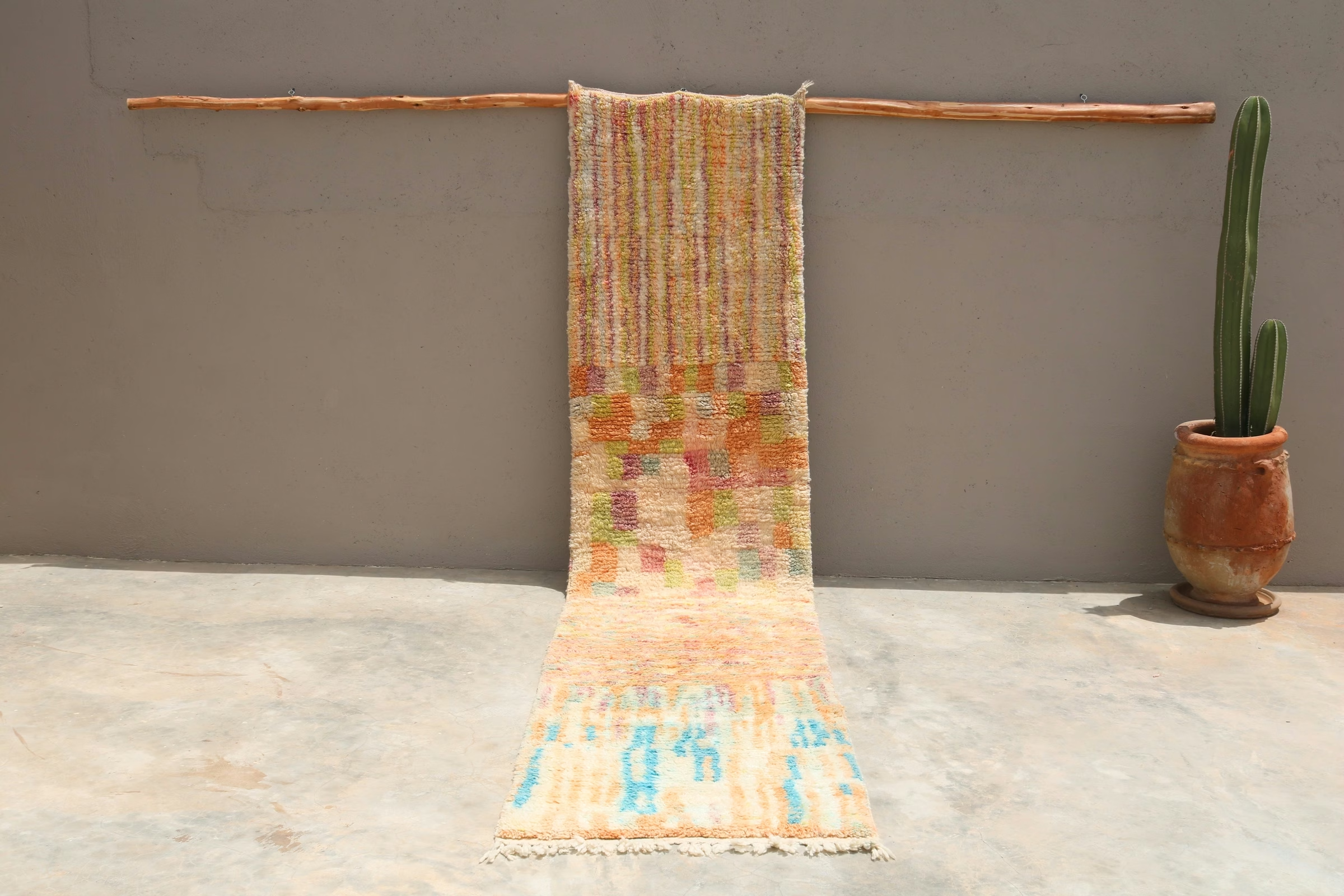
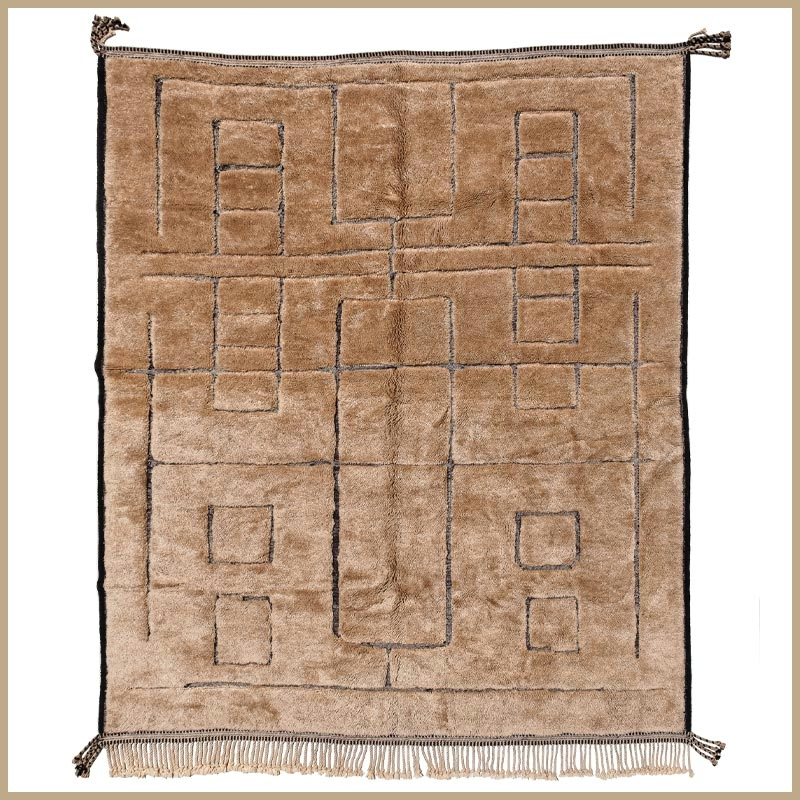
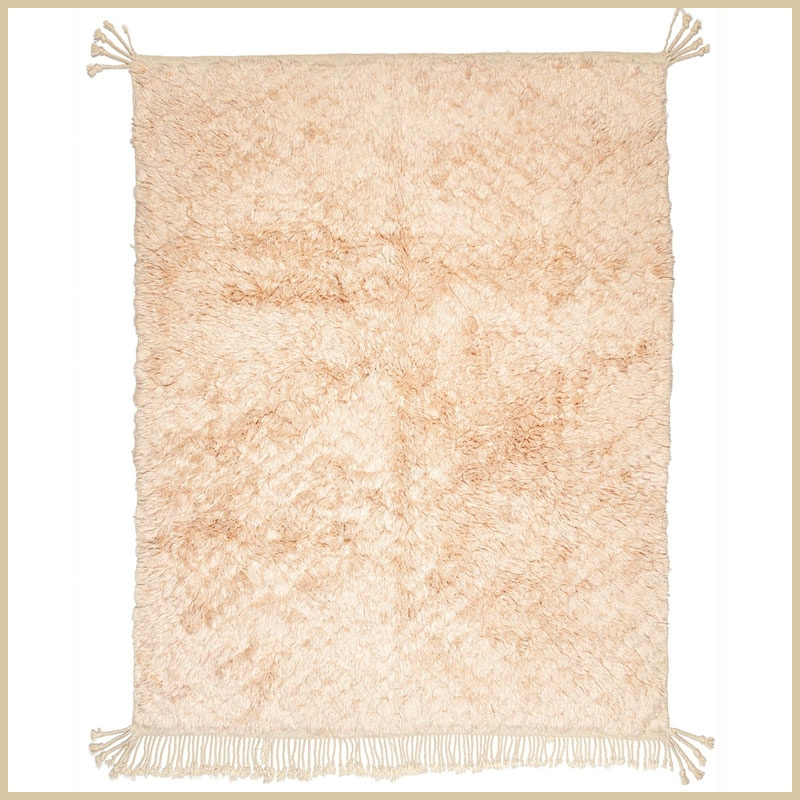
A hand-knotted rug that has travelled a long way may show fold or roll lines when you unpack it. That is normal and is not a fault in the rug. Dense Beni Mrirt pieces settle quickly because of their weight. Lighter Azilal rugs and long runners can take a little longer, and a pad helps them lie flat from the first day.
This page shows our whole collection of hand-knotted wool rugs from Morocco. Each rug is one of a kind, with its exact measurements on its own page. Delivery is free worldwide, duties and taxes included.
What you can verify about us
- Origin
- Made in MoroccoHand-knotted Berber rugs from the Atlas regions. Every rug is a one-off.
- Construction
- Hand-knotted woolVerified at every stage — never machine-tufted.
- Delivery
- Duties includedFree shipping; import duties and taxes are included in the price.
- Returns
- 14 daysIn condition received, full refund of the purchase price.
Frequently Asked
Questions
- How long does it take for a rug to flatten?
- Most wool rugs lie flat within one to two weeks of normal use. Reverse rolling and weight shorten that to a few days.
- How do I flatten the corners of a rug?
- Fold the corner back against the curl and leave a heavy book on it overnight. A rug pad underneath helps the corner stay down.
- Can I use an iron or steamer to flatten a wool rug?
- It is risky. Heat and moisture together can felt wool and move dyes. If you do, iron the back through a damp cloth on a low setting, briefly.
- Why does my rug keep rippling?
- On a hard floor it is usually sliding and needs a rug pad. On carpet the pile underneath pushes it, and a firm felt pad made for carpet solves it.

The person behind the piece
“Before you buy, I’ll send you a video of the actual rug in natural light — not a stock photo. I answer the messages myself.”
I’m Youssef. I started ARINID because this market is full of middlemen and machine-made imitations sold as the real thing — and I grew up close enough to the looms to know the difference.
Every piece we list is a one-off, hand-knotted in Morocco. If you want to talk through sizing for your room, I’m on the other end of the message. A rug at this level is a thirty-year decision. You should be able to look the person selling it to you in the eye.
Youssef
Founder, ARINID
The next step
See every rug we currently offer
Each piece is hand-knotted in Morocco and delivered to your door, with shipping, duties and taxes included.