Rug Under Bed: How Far Under, How Far Out
Last updated
A rug under the bed has one job that matters more than any other: when you get up, your feet should land on it. Everything else follows from that. Most of the rug will be hidden by the bed, so what counts is how much shows at the sides and the foot, and whether it looks intended. There are four placements that work, each suited to a different room. This page explains them, gives the distances to aim for, and deals with the practical questions: nightstands, bed legs, radiators, and what happens to the part of the rug nobody sees.
From the Atelier
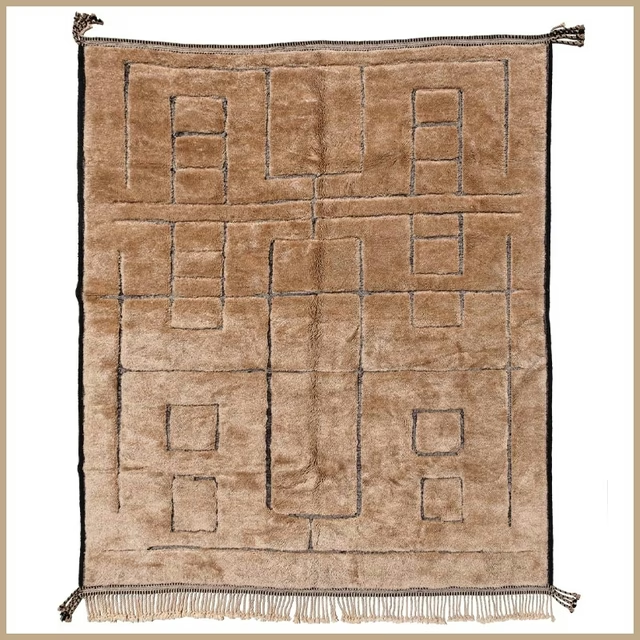
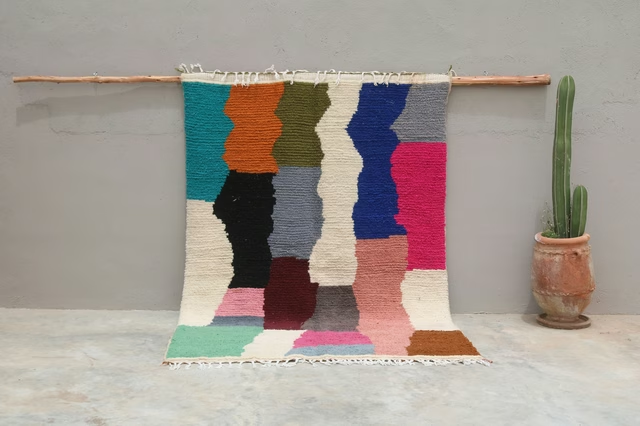
Currently in our collection
The rule of two feet
Whatever the layout, aim for 18 to 24 inches of rug showing on each side of the bed where you get in and out, and the same or a little more at the foot. Less than a foot looks skimpy and misses your second step. Much more than three feet, and the rug starts to compete with the rest of the room.
Keep the rug at least 6 inches away from the walls and from the fronts of wardrobes and chests, so that doors and drawers open over floor and not over pile. If one side of the bed stands against a wall, the rug only needs to show on the open side and at the foot.
A rug under the bed: fully under, or two thirds under
Fully under: the rug runs beneath the whole bed and both nightstands, with a border all round. It is the most generous layout, needs the biggest rug and suits large bedrooms. The nightstands must stand entirely on the rug, or one pair of legs will sit lower than the other and the lamps will lean.
Two thirds under: the rug starts just in front of the nightstands, which stay on the bare floor, and runs out past the foot of the bed. It is the layout most bedrooms use. It needs a smaller rug, puts all the visible rug where you walk, and avoids the wobble of nightstands that are half on.
At the foot, or runners at the sides
At the foot: a smaller rug lies under the lower third of the bed and extends into the room, or sits entirely beyond the bed under a bench. This works in a narrow room where there is no space at the sides, and with a bed in a corner.
Runners: one on each side of the bed, or one on the side you use. Each should be a little shorter than the mattress, so that it stops before the nightstand. This layout uses the least rug, shows the most floor, and lets you use two different pieces. Add a third across the foot if you want to frame the bed.
The practical side
Bed legs dent pile. Under a heavy bed, put furniture cups under the legs, and move the bed an inch or two when you rotate the rug. With a platform bed or a divan base that sits flat on the floor, a thick rug that stops halfway can make the bed rock slightly: either put the whole base on the rug or keep the rug clear of it.
The hidden part of the rug is exactly where moths settle: dark, undisturbed and warm. Twice a year, vacuum under the bed and the rug there, and turn the rug end for end so that the hidden half comes into the light. Keep the rug clear of a radiator or a heating vent beside the bed.
Choosing the rug, and our collection
The bedroom is the place for the softest rug you own, since shoes rarely come in, and for pale colours that would not survive a hallway. As a quick guide to size, a queen bed takes about 7x10 or 8x10 for the two-thirds layout and a king takes 8x10 or 9x12. Our pages on rug sizes for king, queen and full beds go into the detail.
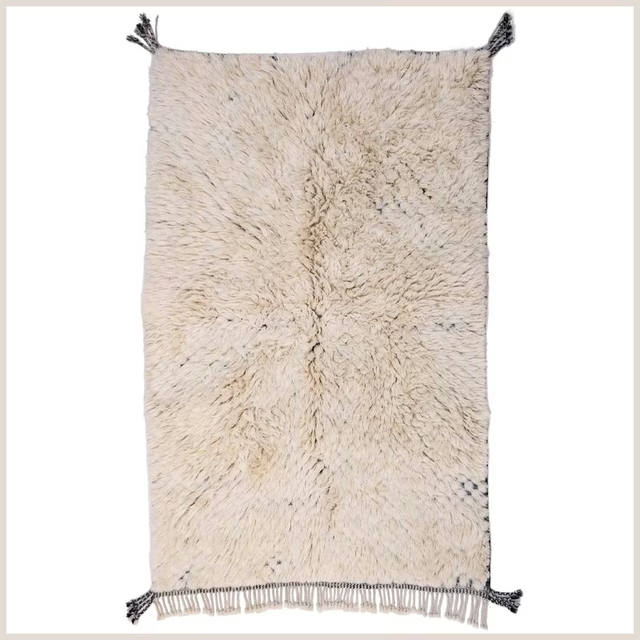
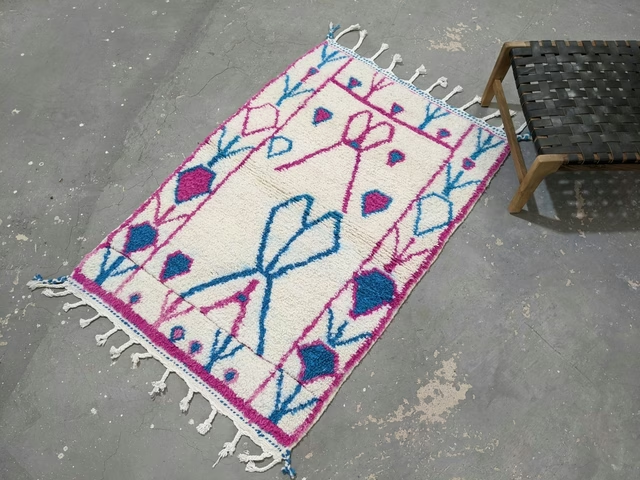
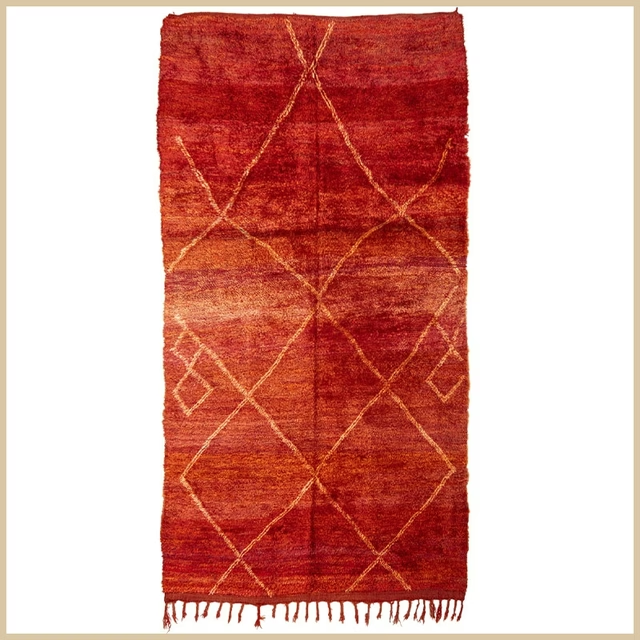
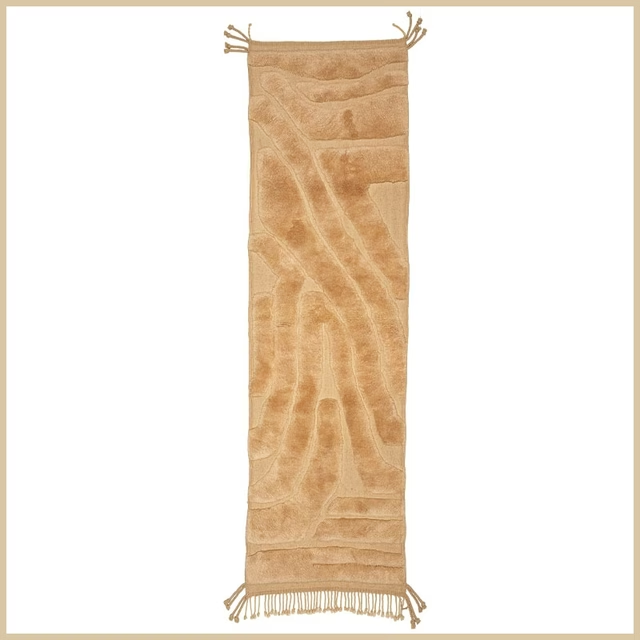
The rugs shown on this page come from our whole collection of 275 hand-knotted wool rugs. One hundred and twenty-eight measure around 6 ft 7 in by 9 ft 10 in, fifty-six are larger and thirty-one are runners for the sides of a bed. Each rug is one of a kind, with its exact measurements on its own page. Delivery is free worldwide, duties and taxes included.
What you can verify about us
- Origin
- Made in MoroccoHand-knotted Berber rugs from the Atlas regions. Every rug is one of a kind.
- Construction
- Hand-knotted woolVerified at every stage — never machine-tufted.
- Delivery
- Duties includedFree shipping; import duties and taxes are included in the price.
- Returns
- 14 daysIn condition received, full refund of the purchase price.
Frequently Asked
Questions
- How far should a rug extend from the bed?
- 18 to 24 inches on each side you use, and the same or a little more at the foot.
- Should a rug go under the nightstands?
- Either entirely under them or not at all. Half on makes them tilt.
- Can you put a rug under only part of the bed?
- Yes. Starting the rug in front of the nightstands, under the lower two thirds of the bed, is the commonest layout.
- Are runners beside the bed a good alternative?
- Yes. They put wool where your feet land and suit narrow rooms.
Sources & References
What this page rests on
- 1. Bedroom Design Standards
- 2. Atlas Cooperative Bedroom Specifications

The person behind the piece
“Before you buy, I’ll send you a video of the actual rug in natural light — not a stock photo. I answer the messages myself.”
I’m Youssef. I started ARINID because this market is full of middlemen and machine-made imitations sold as the real thing — and I grew up close enough to the looms to know the difference.
Every piece we list is one of a kind, hand-knotted in Morocco. If you want to talk through sizing for your room, I’m on the other end of the message. A rug at this level is a thirty-year decision. You should be able to look the person selling it to you in the eye.
Youssef
Founder, ARINID
The next step
See every rug we currently offer
Each piece is hand-knotted in Morocco and delivered to your door, with shipping, duties and taxes included.