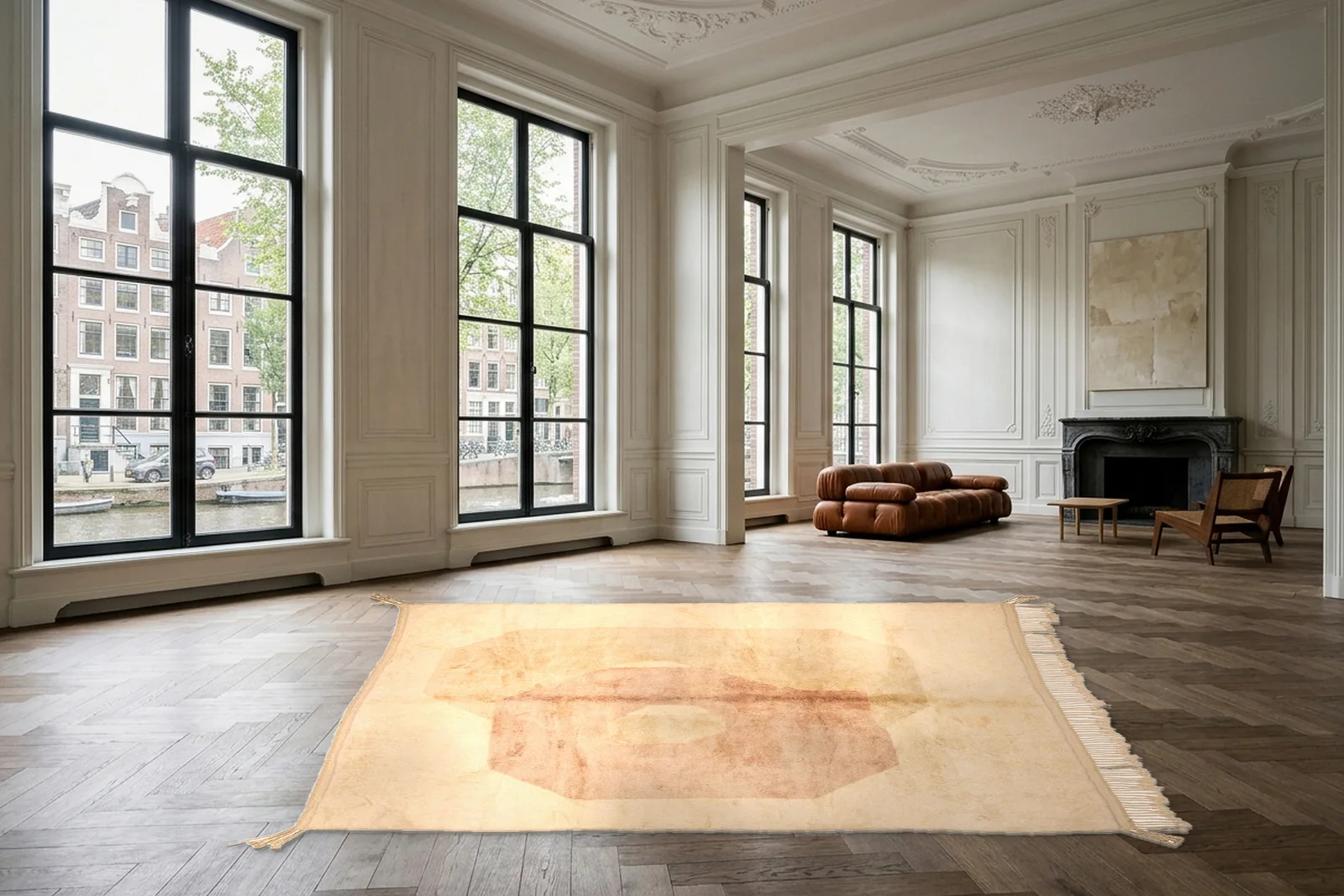
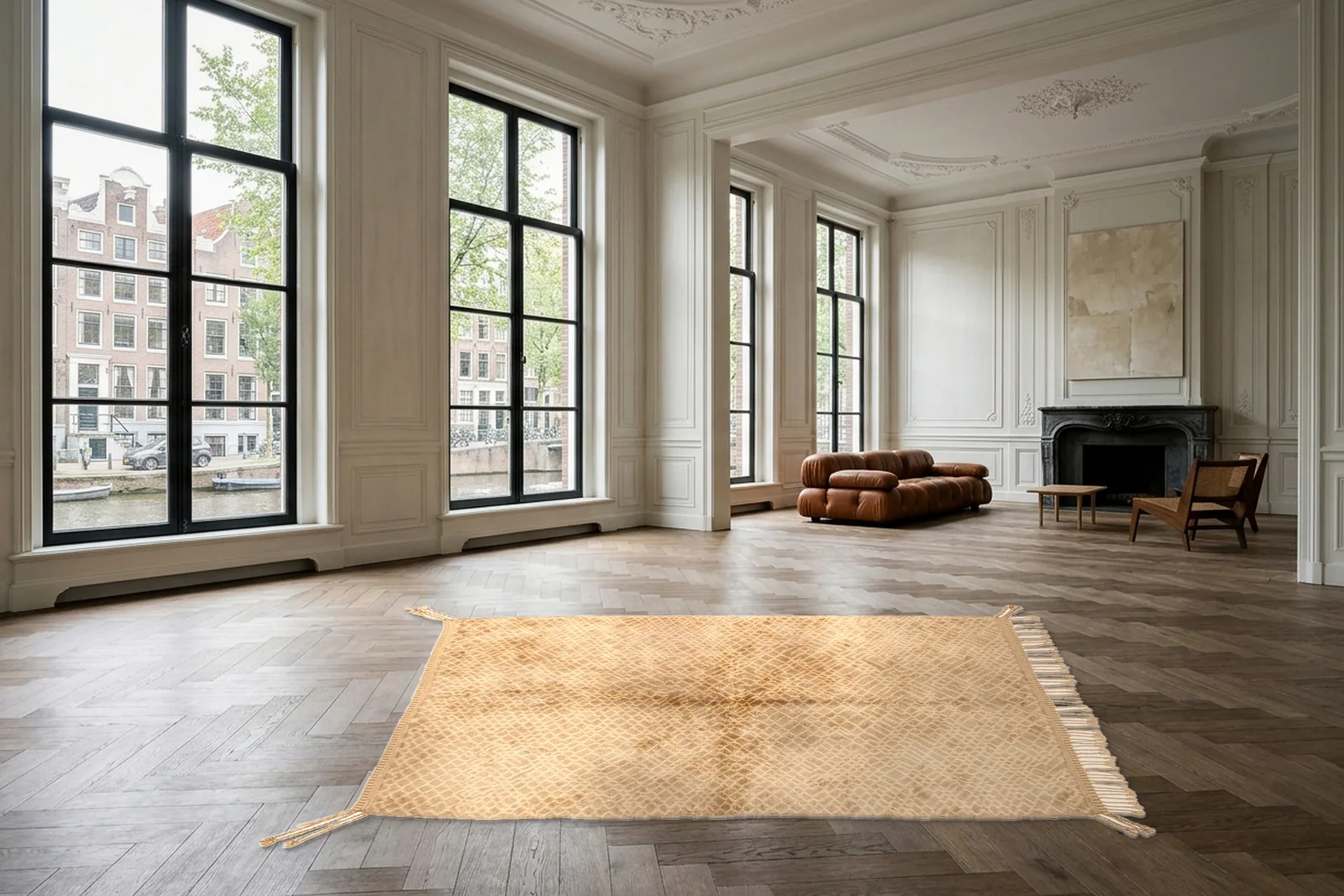
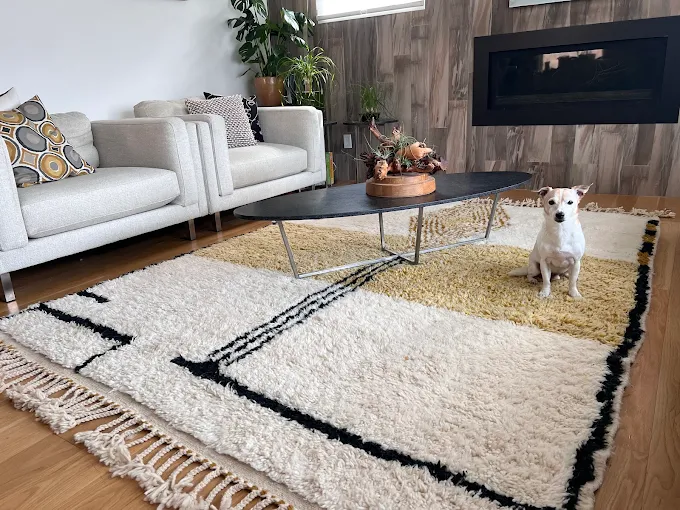
Inside Mrirt: How Middle Atlas Weavers Created Morocco's Most Luxurious High-Density Wool Rug
Why architects and collectors are looking past standard Beni Ourain weaves toward the double-knotted, multi-washed highland wool rugs of Mrirt in Khénifra Province.
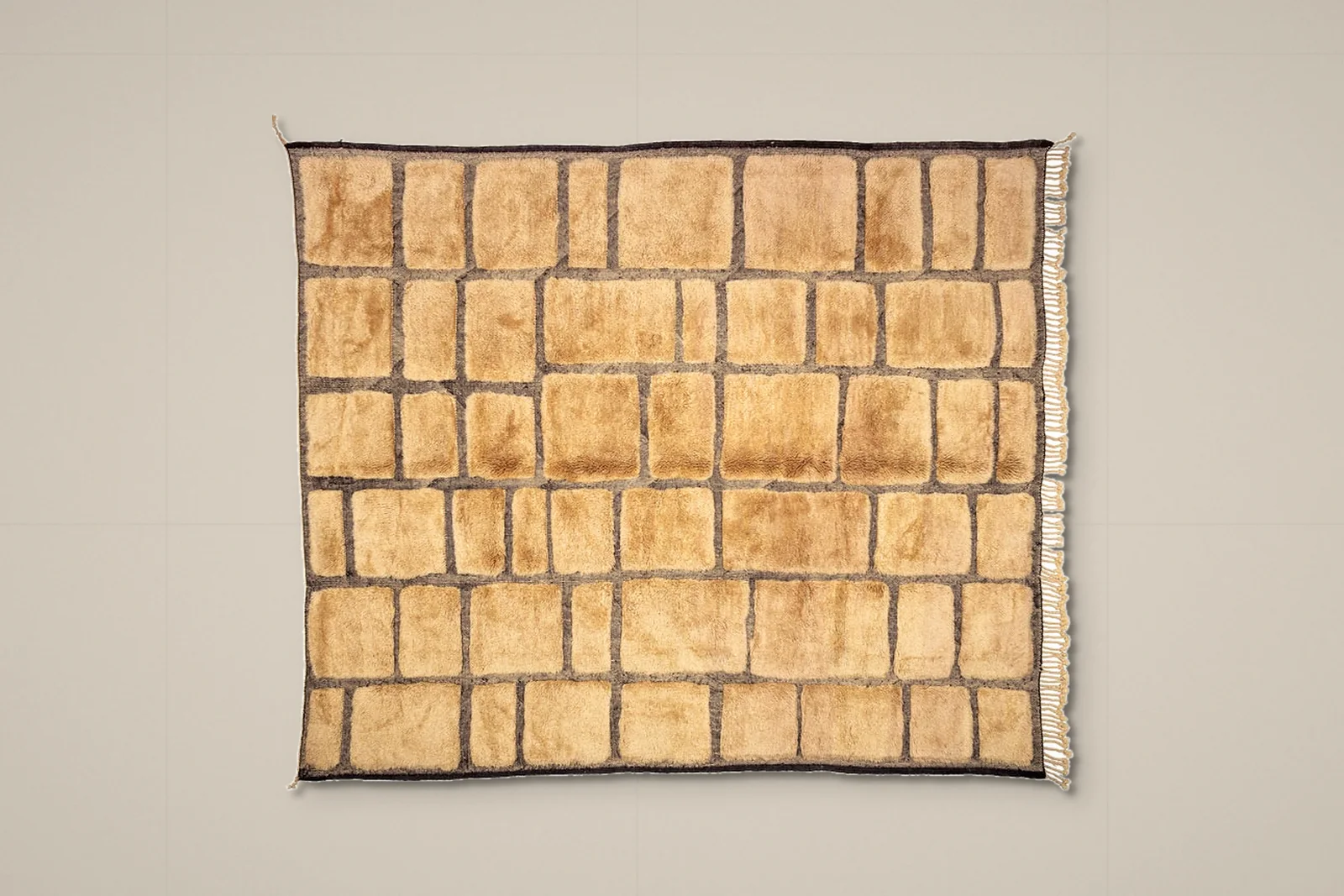
Drive south from Meknes into Khénifra Province and the cedar-lined limestone plateaus of Morocco's Middle Atlas climb steadily past 1,100 meters. Around the market town of Mrirt, winters bring frost and snowmelt, and the sheep grazing the surrounding pastures grow long, resilient, lanolin-rich fleeces. Over the past three decades, master weavers in and around Mrirt have quietly transformed traditional Amazigh pile weaving into one of the most sought-after architectural textiles in the world: the Beni Mrirt rug.
For years, international interior design treated "Moroccan rug" as nearly synonymous with the ivory diamond-patterned Beni Ourain. Yet anyone who has stood barefoot on both weaves side by side understands why designers from Zurich and Stockholm to Tokyo and New York increasingly specify Beni Mrirt for primary living spaces.
Double the Knot Density, Twice the Structural Gravity
A classic Beni Ourain owes its charm to a relaxed, airy construction — typically 10 to 18 symmetric knots per square decimeter tied with thick, loosely spun yarn. That openness feels wonderfully rustic in a low-traffic bedroom, but across a three-meter living room span it can ripple under heavy furniture or mat along daily walkways.
Weavers in Mrirt work to a fundamentally denser engineering standard. Using finer, more evenly hand-spun highland wool, they pack 25 to 45 symmetric Ghiordes knots into every square decimeter, beating each row down firmly with a heavy iron comb (tassourt). A finished 200×300 cm (approx. 7×10 to 8×10 ft) Beni Mrirt regularly weighs 28 to 36 kilograms; palace-scale works in our oversized Moroccan rug collection reaching 300×400 cm or 364×467 cm surpass 55 kilograms of pure wool.
- Zero synthetic backing: Every ARINID Beni Mrirt is 100% pure knotted wool on warp threads — no latex glue, no plastic scrim, and full breathability over radiant underfloor heating.
- Furniture resilience: Dense upright pile springs back beneath deep modular sectionals, lounge chairs, and dining tables.
- Acoustic calm: High wool mass absorbs mid- and high-frequency room echo in concrete, stone, and wide-plank oak spaces.
The Secret of the Stone Wash Basins
What gives a genuine Beni Mrirt its unmistakable velvety sheen is not silk — unless a specific piece incorporates botanical cactus silk accents — but water, natural soap, sun, and labor. Once cut from the vertical steel loom, each rug undergoes repeated high-pressure washings with natural olive-oil soap, vigorous hand brushing with stiff paddles, and open-air mountain sun drying.
This finishing ritual accomplishes two things at once. First, it flushes out short loose wool staples before the rug ever leaves Morocco, dramatically reducing initial shedding in your home. Second, it polishes the natural lanolin coating each wool fiber, awakening subtle tonal shifts known as abrash. Across an oatmeal, sand, or taupe Beni Mrirt, morning light reveals dozens of organic micro-shades that flat factory-dyed carpets can never imitate.
Exploring One-of-a-Kind Pieces Ready to Ship
Because three or four weavers may spend ten to sixteen weeks knotting a single room-sized Beni Mrirt in perfect tension harmony, commissioning one from scratch requires patience. At ARINID, we curate over 120 finished, multi-washed Beni Mrirt rugs in stock, individually photographed in daylight-balanced studio conditions so you can examine the exact weave, pile loft, and centimeter-accurate footprint before ordering — delivered worldwide in 5 to 7 business days.