Flat-Weave vs. Pile Rugs: Understanding the Difference
Berber weavers employ two primary techniques—flat-weaving for thinner, durable textiles and pile-weaving for thick, plush rugs.

Two Weaving Traditions
Moroccan Berber weavers employ two fundamentally different techniques, each producing textiles with distinct characteristics suited to different purposes and climates.
Flat-Weave Rugs (Kilims and Hanbels)
Technique: In flat-weaving, the horizontal (weft) threads are simply passed over and under the vertical (warp) threads. There are no knots, resulting in a textile without pile.
Characteristics: - Thinner and lighter weight - Reversible—both sides are usable - Durable and compact texture - More portable—easier to roll and transport - Typically less expensive due to faster production
Best For: - Warmer climates - Wall hangings - Layering over other rugs - High-traffic areas where a flat surface is preferred
Common Types: Kilims, Hanbels, Zanafi
Pile Rugs
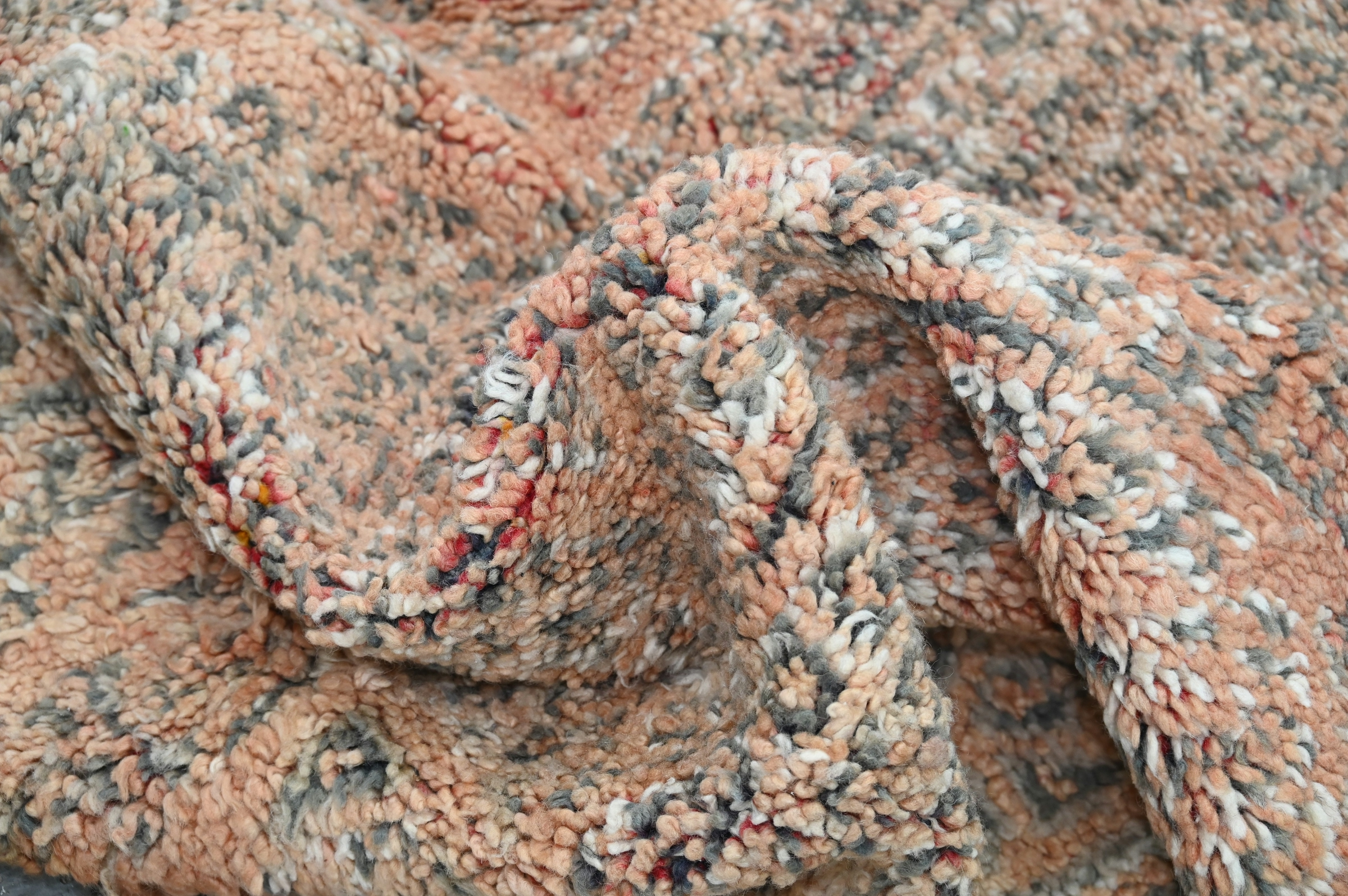
Technique: Pile rugs are created by tying individual knots around the warp threads, then cutting these knots to create a raised surface. This is far more time-intensive than flat-weaving.
Characteristics: - Thick and plush - Superior insulation and warmth - Soft underfoot - Generally one-sided (the back shows the knot structure) - More time to produce, often more valuable
Best For: - Cold climates - Bedrooms and living areas where comfort matters - Spaces where acoustic dampening is beneficial
Common Types: Beni Ourain, Beni Mguild, Azilal (pile versions)
Hybrid Techniques
Some Moroccan rugs combine both techniques. The Glaoua carpets from the High Atlas, for example, incorporate knotted pile sections, flat-woven (tapestry) areas, and structural flat weaving in symmetric windows—all within a single piece.