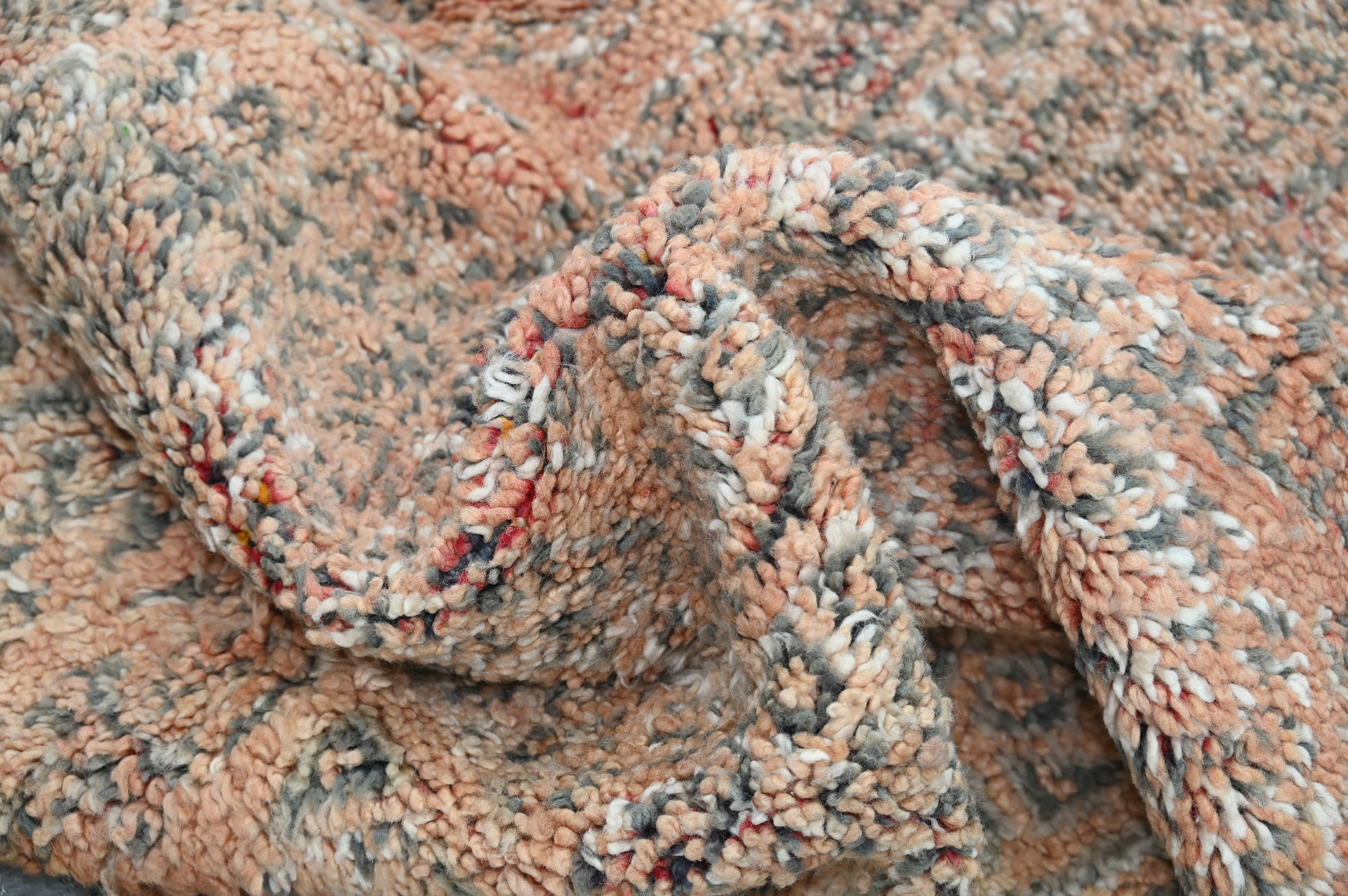
Symbols in Berber Rugs: What the Patterns Mean
The geometric motifs in Berber rugs carry specific meanings—diamonds for protection, zigzags for water, triangles for femininity.
A Visual Language
Berber rugs are not merely decorative—they carry a visual language developed over centuries. The geometric patterns that appear abstract to outside observers often hold specific meanings within Berber culture.
Common Symbols and Their Meanings
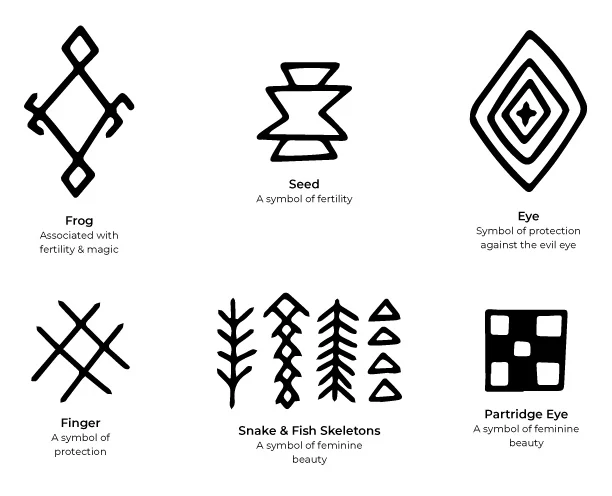
Diamonds (Lozenges): Perhaps the most common motif, diamonds symbolize protection against evil spirits. They appear in various forms—solid, outlined, nested, or arranged in lattice patterns.
Zigzags: These patterns represent water, a precious resource in the arid and semi-arid regions of Morocco. They may also symbolize mountains or the path of life.
Triangles: Often associated with femininity and fertility. When pointing upward, they may represent masculinity; pointing downward, femininity.
Crosses: Reflect harmony and balance in life. The four points may represent the four cardinal directions or the four elements.
Eyes: Stylized eye shapes appear as protection against the evil eye ('ain')—a widespread belief in Mediterranean and North African cultures.
Barley Motifs: Represent prosperity and abundance, reflecting the agricultural heritage of many Berber communities.
Intuitive Weaving
What sets Berber rugs apart from many other textile traditions is that weavers work without predetermined patterns or cartoons (paper designs). The designs emerge organically as the weaver works, guided by tradition but shaped by individual creativity.
Reading a Rug
Understanding these symbols allows one to 'read' a rug—to understand something of the weaver's intentions and the cultural context in which the piece was created. However, interpretations can vary between regions and tribes.