Guide·5 min read
Styling Moroccan Rugs in Contemporary Interiors
The key lies in restraint. A handwoven rug can anchor a room without competing for attention when placed thoughtfully.
The Principle of Restraint
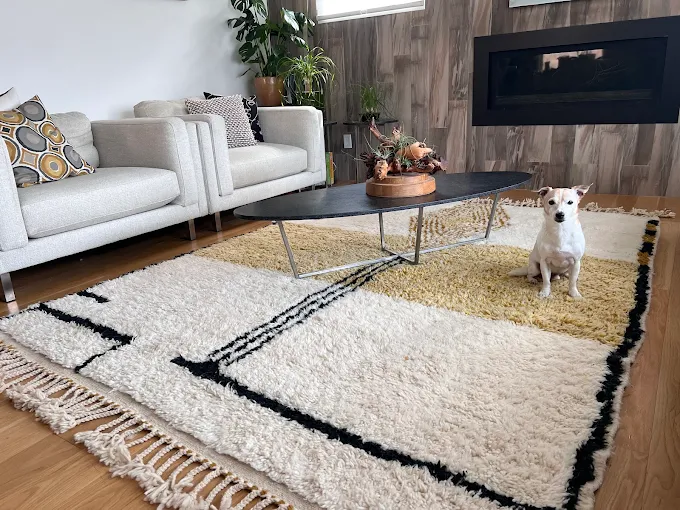
A handwoven Berber rug carries visual weight—texture, pattern, history. The most successful interiors allow the rug to breathe rather than surrounding it with competing elements.
Neutral Foundations
Moroccan rugs, particularly Beni Ourain pieces with their cream backgrounds, pair naturally with:
- White and off-white walls
- Natural wood floors
- Linen and cotton upholstery in neutral tones
- Concrete or stone surfaces
This neutral foundation allows the rug's texture and subtle pattern to become the focal point.
Colorful Rugs in Minimal Spaces
For vibrant Azilal or Boujaad rugs with multiple colors, the approach shifts:
- Pull one accent color from the rug for small decorative elements
- Keep furniture simple and unadorned
- Avoid pattern-on-pattern combinations
- Let the rug be the room's primary color source
Scandinavian Pairing
The marriage of Moroccan rugs with Scandinavian design has become a design staple. The combination works because both traditions value:
- Natural materials
- Craftsmanship
- Functional simplicity
- Organic forms
Modern and Minimalist Spaces
In minimalist interiors, a Berber rug provides:
- Warmth without clutter
- Texture against smooth surfaces
- Historical depth in contemporary settings
- A focal point that doesn't overwhelm
What to Avoid
- Competing patterns in upholstery or curtains
- Too many decorative objects that fragment attention
- Furniture that completely covers the rug's design
- Matching colors too precisely (some contrast adds interest)