Choosing the Right Rug Size for Your Space
Scale matters. A guide to selecting rug dimensions that complement your interior without overwhelming or underwhelming the room.
Why Size Matters
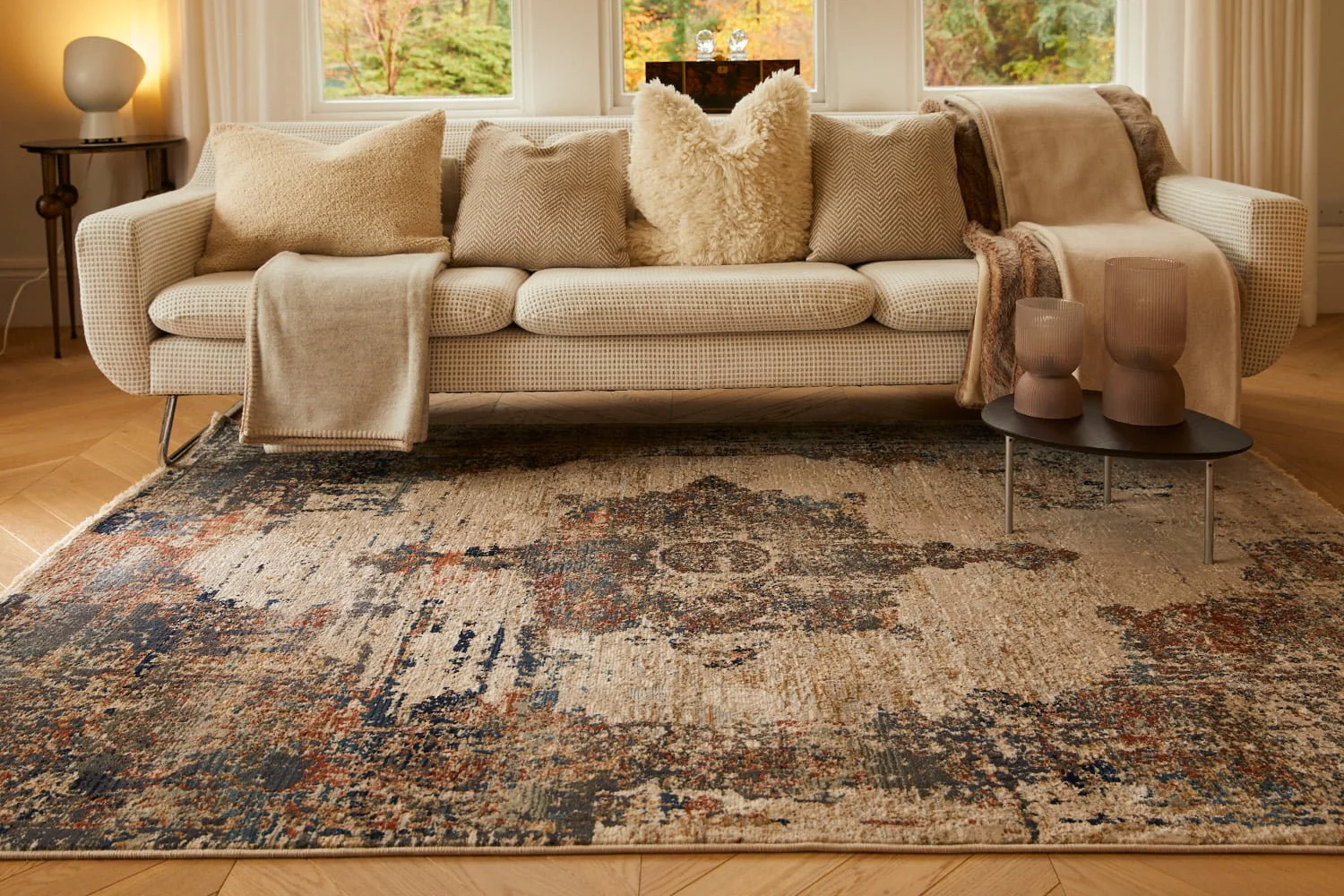
The right rug size anchors a space, defines areas within open floor plans, and creates visual harmony. Too small, and the rug appears lost; too large, and it can overwhelm.
Living Room Guidelines
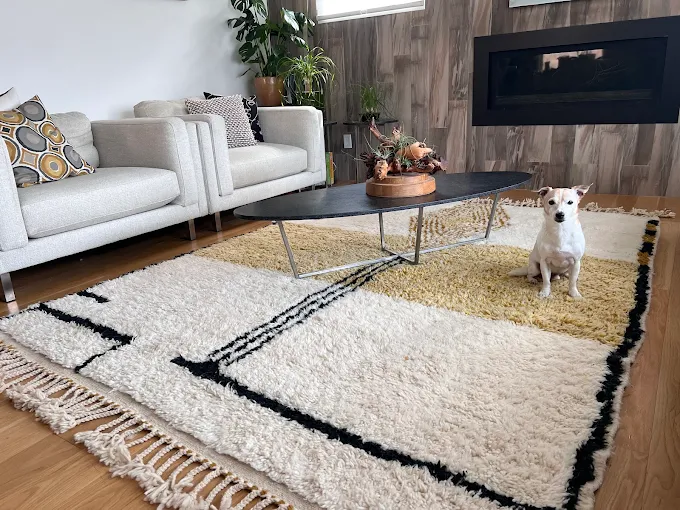
Under Furniture: Ideally, the front legs of your sofa and chairs should rest on the rug. This creates cohesion and makes the seating area feel connected.
All On or All Off: If the rug is large enough, place all furniture legs on it. If not, keep all legs off. Avoid having some pieces partially on and partially off.
Border Space: Leave 30-45cm of floor visible between the rug edge and the walls. This framing effect makes rooms appear larger.
Dining Room Guidelines
Chair Clearance: The rug should extend at least 60cm beyond the table on all sides. This allows chairs to remain on the rug even when pulled out.
Shape Matching: Round tables often work best with round or square rugs. Rectangular tables pair naturally with rectangular rugs.
Bedroom Guidelines
Under the Bed: A large rug can extend under the bed and beyond, creating a soft landing when you rise. Alternatively, runners on each side of the bed achieve a similar effect.
Proportions: The rug should extend at least 60-90cm beyond the sides and foot of the bed.
Measuring Tips
1. Use painter's tape to outline potential rug sizes on your floor 2. Live with the taped outline for a few days to assess the proportions 3. Photograph the space from multiple angles to evaluate 4. When in doubt, size up—a slightly larger rug rarely looks wrong
Layering
Don't dismiss layering smaller rugs over larger ones or over natural flooring. This technique adds depth and allows you to feature a special piece that might otherwise be too small for the space.